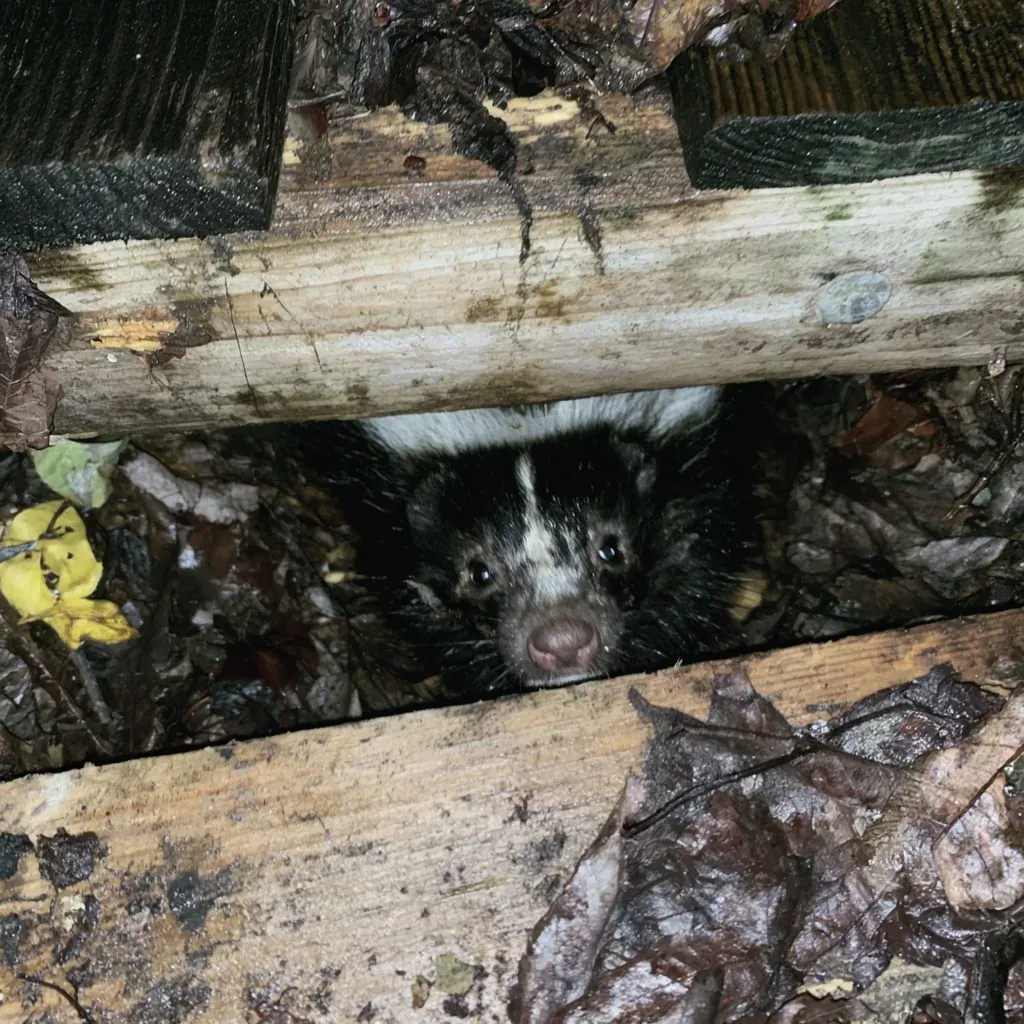
You walk out in the morning and the lawn has been sampled overnight. Dozens of small holes, each about the width of your thumb, scattered in patches rather than in any line. Nothing has been eaten and nothing has been pulled up. It looks like somebody wandered the yard at random with a trowel, and that pattern is specific enough to name the animal from the driveway.
What a skunk leaves behind
Small cone shaped holes, roughly a thumb across, pushed in with the nose and opened with the front feet. They come in patches, because the animal works a spot, moves a few feet and works again. The turf all around each hole stays firmly attached, which is the detail that matters most.
Look at where the patches are, not just how many there are. Skunks favor softer, damper ground, so the strip below a downspout outfall, the shaded side of the house and the edge of an irrigated bed get worked over before the dry open middle of the yard. In sandy soil the digging is easy, so a single animal covers a surprising amount of ground in one night.
A raccoon does something else entirely
Raccoons peel. They get their fingers under the edge of the sod and roll it back in flaps, sometimes in sheets large enough to lay flat again. If your turf is turned over in pieces rather than punched with holes, you are looking at a heavier animal and a different job. Freshly laid or thinly rooted sod comes up in the biggest pieces, which is why a new lawn takes the worst of it and why people assume a new lawn attracted something.
Why grub products are usually the wrong lever
The logic sounds airtight. The animal is after grubs, so remove the grubs. In practice it disappoints for three separate reasons. Digging is not only about grubs, since earthworms, beetle larvae and anything else living in the top inch of sandy soil are all on the menu. A product applied tonight does not empty the soil tonight, so the digging carries on while you wait for it to work. And an animal that has learned your yard is worth checking keeps checking it for a while regardless.
There are good reasons to treat for grubs, mostly to do with turf health and root damage. Treat because the lawn needs it, not as a wildlife plan.
The part worth paying to fix is under the deck
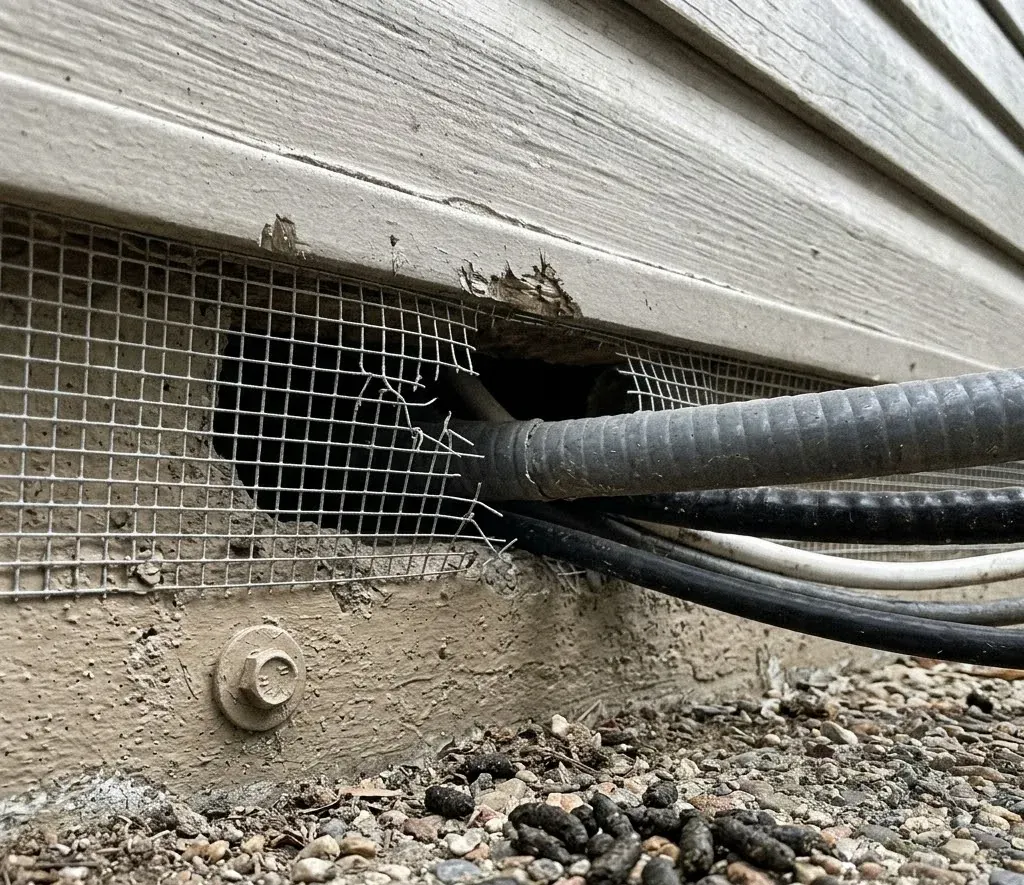
Lawn holes close up on their own. A den under a deck, a porch, a shed floor or a set of concrete steps is the thing that brings the animal back night after night, and that is where money does some good. The exclusion that holds is buried hardware cloth: dug in along the skirt and turned outward in an L about a foot below grade, so an animal digging at the base runs into mesh heading away from it rather than a clean edge to slip under.
Sandy ground makes both halves of that sentence true. It is easy to dig for the skunk, and it is easy to dig for whoever is installing the mesh.
Do not close a den you have not emptied
Sealing first traps the animal, and in spring and early summer it can trap young that cannot follow their mother out. The standard order of work is a one way door or a monitoring period to prove the space is empty, and only then the permanent exclusion. A door propped open with fresh tracks in loose sand in front of it is real evidence. A den somebody assumed was empty is not evidence of anything, and the consequences of getting it wrong land inside your own structure.
Keeping your distance, sensibly
A skunk that is steady on its feet and quietly working the grass is not an emergency. Keep dogs on a leash after dark for a couple of weeks, bring pet food indoors, take the water bowl in overnight, and leave the animal a clear route out of the yard rather than cornering it. Most of the trouble people have with skunks comes from surprising one in a confined space.
If one seems sick, is unsteady, or is out in daylight and untroubled by people, keep everybody away from it and call your local animal control rather than dealing with it yourself. For everything else, exclusion is what ends it, and the licensed local pros we connect you with cover wildlife work in Fayetteville, Hope Mills and the smaller Cumberland County towns. Book the visit that looks under the deck, not the one that looks at the lawn.
Dealing with this in your home?
We offer free inspections and honest recommendations across Fayetteville and the surrounding towns. Call (855) 563-1479 and we’ll help you sort it out.