Why this keeps happening in Fayetteville homes
This is a Sandhills problem in the truest sense. The mix of dry sandy ground, broomsedge and wiregrass, brambles along a ditch bank, and the scrubby transition where a pine stand meets a mown lawn is prime chigger habitat, and Cumberland County has that transition on the edge of most properties. Walk a rough lot in July here and you will find out about it that evening.
The long warm season means the larval stage is out for months rather than weeks, and the sort of ground that produces them is exactly the ground people only cut a few times a year: the back half of a large lot, the strip behind a shed, the bank of a drainage ditch, a vacant lot next door. Nothing about that is a failure of housekeeping, it is just what unmanaged edge does here.
That edge ground shows up all around Fayetteville, not just inside it: the low brush along the Lumber River near Lumberton, the tree lines around Old Bluff Presbyterian Church outside Wade, and the grassy verges near Falcon Tabernacle toward South River all hold the same tall, damp, seldom-cut growth chiggers need. Anyone who worked a lot line in those stretches over the weekend can carry larvae home on socks and cuffs before the itching ever starts, which is why the licensed pros we connect you with treat the yard, not just the bite.
Yard density around Fayetteville isn't uniform, and chigger exposure follows the overgrowth rather than the address. A lot near Hope Mills Lake with waist-high grass along the bank holds far more larvae than a mowed suburban lot, and the same is true where Little Rockfish Creek keeps low ground damp and shaded. Even a tidy yard in Haymount can pick up a load from a single afternoon near an untended tree line, which is why treatment has to follow the vegetation, not the property line.
Chigger exposure does not stop at the city limit, and the drive routes the pros cover make that clear. Head northeast on US 401 toward Linden and the brushy margins around Ellerslie and the banks of The Little River hold the same tall grass chiggers favor, just as the fields bordering Dunn Road near Godwin do closer to Interstate 95 at Exit 65. Fayetteville families who hike or hunt out that way often bring the bites home without ever noticing the crossing.
Wade, Falcon and Godwin all see this, and so does the rest of our Cumberland County service area.
Quick identification
- Size
- Smaller than the period at the end of this sentence, orange-red under a lens
- Stage that bites
- Only the larval mite, which has six legs; later stages do not bother people
- Where they wait
- Tall grass, brambles, brushy transition ground, shaded rough edges
- Where they end up on you
- Sock line, waistband, armpits, behind the knee, anywhere clothing binds
- Time of year
- Worst from late spring through summer into early fall, and quiet once the ground gets cold.
- Estimated cost
- an estimated $69–$139
Or is it something else?
Poison ivy and heat rash. Poison ivy tends to streak where a vine dragged across skin and often blisters. Heat rash sits where sweat collects and comes on during the activity rather than hours later. Chigger welts are separate small bumps in a line at a clothing edge, appearing after a delay. Sorting that out decides whether you need yard work or a bottle of calamine and a cooler shirt.
The treatment, step by step
Yard edge management is the real treatment, and it is mostly a mower and a pair of loppers. Keep the transition strip cut short, take the brambles and low brush back off the boundary, open the shaded rough ground to sunlight where you can, and rake out the thick thatch and litter along the fence. Chigger larvae need humid cover at ground level, and short, sunlit grass does not provide it.
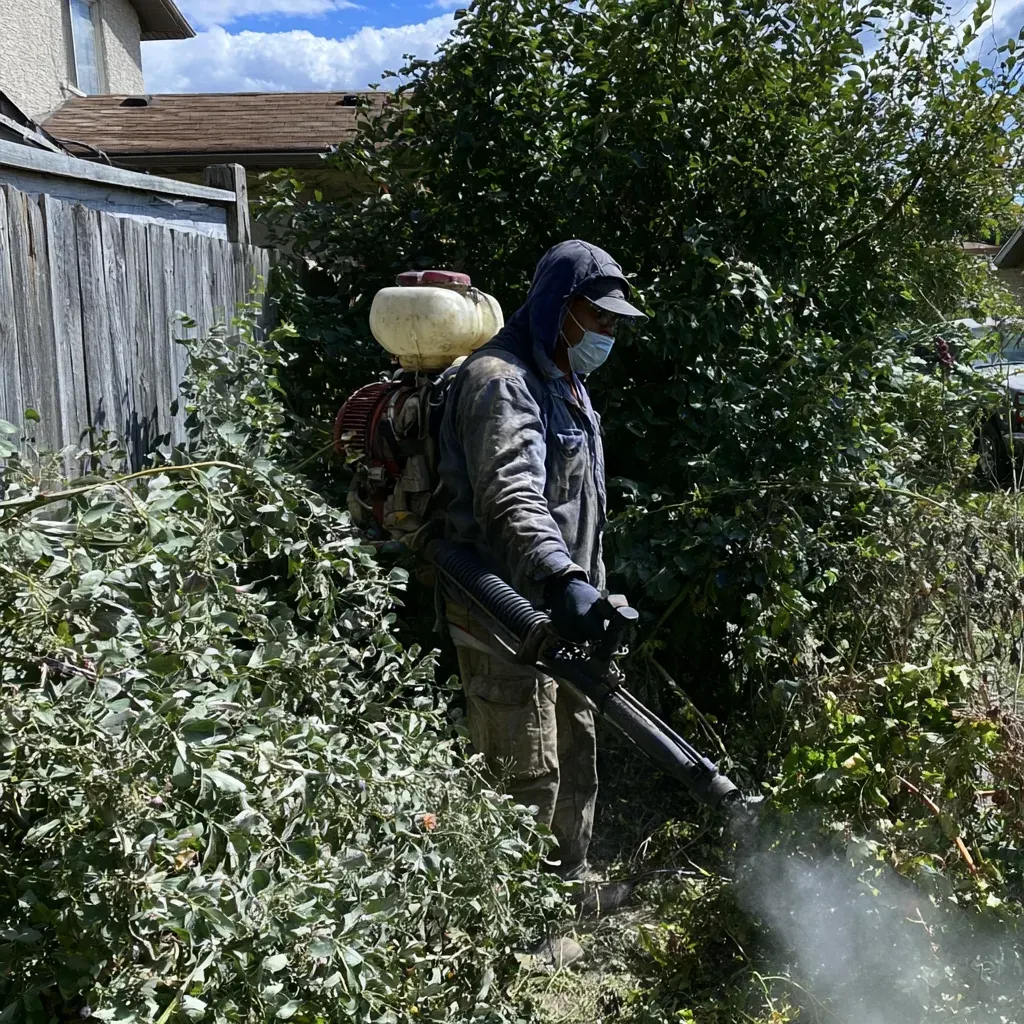
Where the rough ground has to stay, a material can be applied to the edge, the ditch bank and the tall grass rather than across the whole lawn. That is a much smaller and more accurate job than a blanket application, and it works better because it goes onto the ground where the mites actually sit. This is the same visit as tick work in practice, since the habitat overlaps.
Personal steps carry more weight here than with most pests, because the encounter is brief and predictable. Repellent on shoes, socks, cuffs and waistband before rough yard work, long pants, and a shower with soap within an hour of coming in, which removes most of the larvae before they settle. Clothes go straight in the wash and then a hot dryer cycle rather than back on the chair.
Whether chigger wants ongoing cover comes down to the cause. Fix a route in and it is a job. Leave a damp crawl space and it is a season.
Deal with it once, or keep it dealt with?
| How it presents |
What that usually needs |
|---|
| A single event with an obvious source | One call, done |
| Back at the same point every warm spell | A scheduled plan |
| A route in that has clearly been used before | Treat, then seal the route |
Worth trying before you call
The shower is the single most effective thing you can do, and doing it within the hour matters more than what soap you use. Mowing your own rough edges is real, lasting work that no product replaces. Where people waste effort is on nail polish, gasoline, bleach or a dab of alcohol on each welt, all of which are aimed at killing something that is no longer there. By the time you itch, the larva has fed and dropped off. Anything you put on the spot is for comfort only, so pick whatever is soothing and skip the folk remedies.
Whether you need to worry
The reaction is an allergic response to the larva's feeding, not an infection and not something living under your skin. It is intensely itchy for several days and then it fades. Cold packs, a soothing lotion and an antihistamine from the pharmacy are what most people use. The genuine risk comes from scratching: broken skin can get infected. If a welt gets hot, spreads, weeps or you feel unwell, or if the reaction is severe, see a doctor. That is their side of the line, not ours.
What you would be spending
Chigger normally comes in somewhere from an estimated $69 to $139, with access under the floor moving it as much as anything. Having somebody look costs nothing, and you see the number in writing first. See the pricing guide for the complete set of ranges, and this one is handled under Mosquito and Tick Control.