Identification
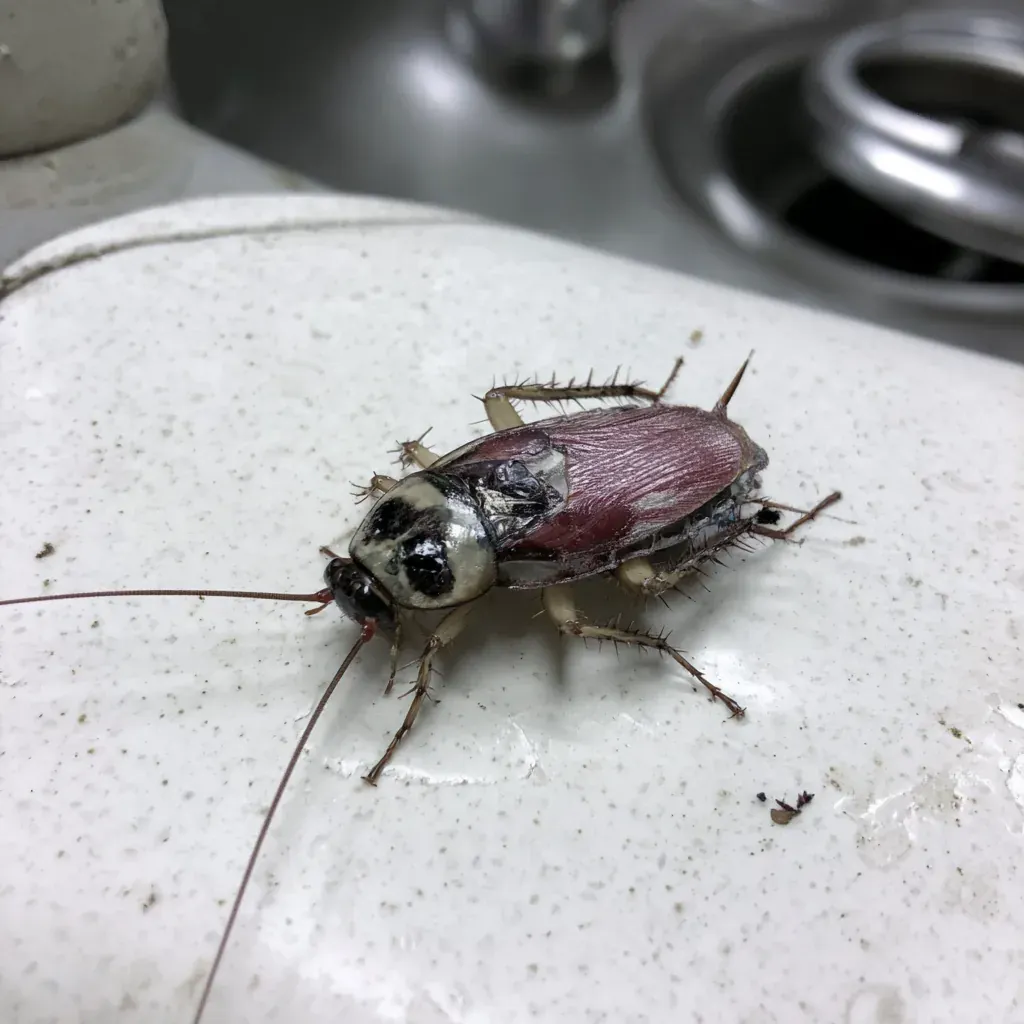
Why Roaches Come Inside After Heavy Rain in Fayetteville, NC
Big roaches after a summer storm are a water story rather than a kitchen story. Here is where they come from and…
Read article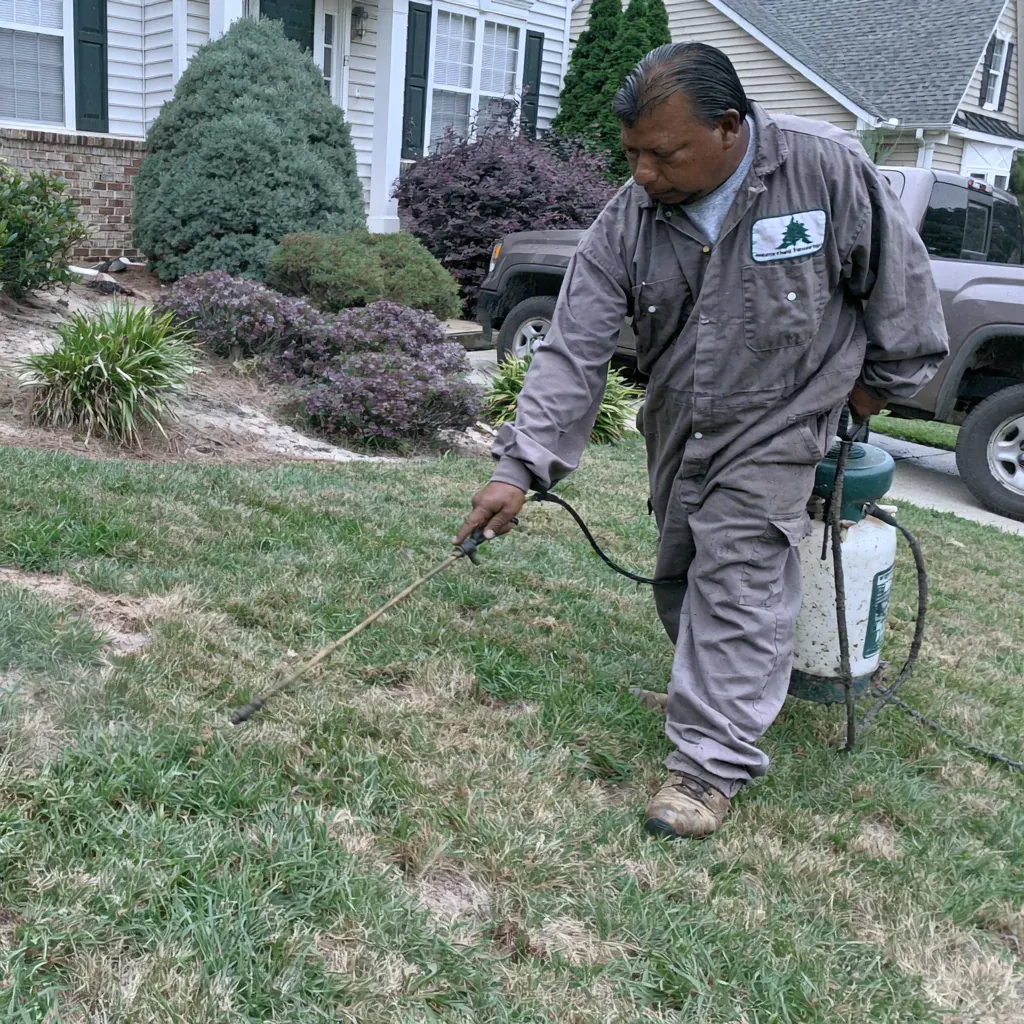
Loose sandy soil, fast drainage after a storm, and a colony that relocates instead of dying when one mound gets soaked.
Sandy Sandhills soil is a large part of why fire ants do so well across Cumberland County. It is loose, it warms early in the year, it drains quickly after a thunderstorm, and it lets a colony work down and sideways with very little effort. Mounds appear in the sunny open ground: along a driveway edge, at the foot of a mailbox post, out in the middle of a lawn, around an irrigation box, often within a day of heavy rain when the ants push damp soil up to dry. What shows above grade is the roof of something considerably wider.
Which is exactly why treating one mound at a time rarely finishes anything. Soak the top and the workers you can see die, but if the queen comes through it the colony picks up and relocates, sometimes only a few feet, and a fresh mound appears in a new spot while it looks as though the treatment failed. The approach that holds is a broadcast bait across the whole yard, carried down into the nests by the ants themselves, combined with direct treatment of the mounds that matter most: beside a door, a play set, a dog run or a walkway.
Fayetteville's sandy soil is exactly what fire ants favor, and the pattern holds well past city limits: a mound thrown up along Little River near Spring Lake, another working loose sand beside Toneys Creek out toward Raeford, or a colony spreading through a lawn near Rockfish Creek in Hope Mills. Wherever the ground drains fast and stays warm, mounds multiply faster than a single treatment can keep up, which is why the licensed pros we connect you with plan for the whole yard, not just the mound somebody happened to step in.
Sandy, well-drained soil isn't unique to any one neighborhood, which is why the same mound pressure shows up on properties well outside Fayetteville proper. Along NC 24 toward Roseboro and on past Clinton, and south on NC 87 toward Elizabethtown, yards with the same loose, warm topsoil see identical colonies forming in open sun near driveways and utility boxes. The licensed pros we connect you with treat that whole stretch the same way, because the ground doesn't change at the city line.
Sandy shoulders along US 301 and the back roads near St. Pauls show the same bare, sun-baked patches fire ants favor, and the pattern doesn't stop at a county line either — mounds turn up near the Sampson County government offices in Clinton and along the open lots by Tory Hole Park in Elizabethtown just as readily as they do on a Fayetteville lawn. Wherever the topsoil stays loose and exposed to full sun, colonies find it, regardless of which town's address is on the mailbox.
Whether you're in Raeford, Eastover, Stedman, or elsewhere around Fayetteville, fire ant treatment has to account for sand that drains fast and then holds damp underneath anyway, plus a warm season long enough that nothing gets a proper reset. That is why this outlasts a straight interior spray.
The bulk of this is private houses, and residential pest control sets out what a visit involves. Tenanted stock, shops and anything trading sits on commercial pest control.
Fire ant mounds have no single entrance hole on top. The ants come and go through tunnels that start below grade, which is why the mound looks sealed until something disturbs it and then hundreds pour out at once.
The sting usually leaves a small raised blister after a day or so, often several in a group because the ants hold on and sting repeatedly. Keep it clean and leave it alone. Get medical help straight away if there is any swelling of the face or difficulty breathing.
A mound that vanishes and reappears three feet away is the classic sign of a colony that moved rather than died. This is the single most common outcome of treating mounds one at a time and it is why bait is used across the whole area.
Mounds concentrate in open ground that gets full sun and stay out of deep shade. If the front lawn is covered and the shaded back yard is clear, that is normal, and it tells you where the broadcast treatment needs to be heaviest.
The walk records how many mounds there are, where they sit relative to doors, play areas and utility boxes, and how far the pressure runs toward each property line. That decides how much of the yard gets baited.
Bait goes out over the treated area on dry ground with no rain due and while the ants are actively foraging. Timing is most of the result here, because bait that gets wet or sits unfound does nothing at all.
Mounds next to a doorway, a walkway, a swing set or a dog run get direct treatment as well, so the ones with the highest chance of stinging somebody are dealt with faster than bait alone would manage.
A follow-up checks the count and picks up new mounds, with attention along fence lines where colonies push in from land nobody is treating. Two rounds a year holds most yards through the season.
Fire ants are the yard pest most likely to hurt a child, a visitor or a dog before anyone knew the mound was there, and they also nest inside irrigation valve boxes, air conditioning units and electrical enclosures where they cause real damage. The other honest point is the fence line. A yard treated properly still borders land that is not, so this is a service that gets renewed rather than finished.
North Carolina's prevention guidance is written for termites, and the tidying it calls for is the same work that keeps ant and insect harborage off a foundation: exterior woodwork a minimum of 6 inches above ground, no wood-to-soil contact anywhere, stumps, roots, wood and cellulose debris removed from the site, foundation areas kept accessible, and the ground graded to move water away from the structure. Useful list, wrong insect on the label.
Complaints and inspection requests are handled by the Structural Pest Control Division at NCDA&CS through its published request form, and the division routinely inspects structural pest control work. Its public line is 984-236-4625. Knowing that a state body will come out and look carries more weight than any assurance printed on a website, including this one.
Where fire ant treatment tends to land locally. How far it has traveled, and whether the house is a slab or a raised floor, account for most of the spread.
| Stage | Work in it | Band |
|---|---|---|
| Early | Caught early enough that it is still in the place it started | an estimated $75–$240 |
| Typical | The full visit: perimeter soil, vents or slab line, and the pipe collars | an estimated $90–$345 |
| Heavier | More building to cover, an addition on the back, or two separate outbreaks | an estimated $135–$550 |
| Long established | Left long enough that it needs repeat visits and exclusion work | an estimated $215–$915 |
Closing the routes in under the floor, and clearing out an attic, are their own lines rather than folded into the figures above. The Fayetteville pricing guide lists every service and what pushes each one upward.
Slowly by design. The ants have to find it, carry it down and share it, so expect a few weeks before the mound count drops rather than results the same afternoon. Bait that killed foragers instantly would never reach the queen, which is precisely the failure mode of pouring something on the top.
You can, and the two things that decide whether it works are freshness and timing. Bait that has sat open in a shed loses its appeal, and bait spread on wet ground or when the ants are not foraging is wasted. Put it out over the whole affected area rather than in a ring around each mound.
A broadcast treatment on an ordinary residential lot runs an estimated $95 to $150, and most properties need two rounds in a year to stay ahead of it. Larger acreage is priced after someone has seen the ground. Treat those as guide figures and get the real number in writing.
New colonies arrive from surrounding land, so the realistic goal is keeping the count low rather than reaching zero and staying there. Yards backing onto fields, wood lines or vacant lots see the most pressure. Where neighbors treat in the same season the whole block does better than any single yard does alone.
Granular bait is applied at a low rate over a wide area rather than piled anywhere, and the product label sets how long anyone stays off the treated ground. Ask for the product name and that interval on the ticket, and keep pets in until it is met. Say up front where the dog run and the play area are.
Regularly. Irrigation valve boxes, pump housings, air conditioning disconnects and meter boxes all stay warm and dry, and a colony will move into one. If a zone stops working or a unit trips for no clear reason in summer, opening the box is worth doing before calling out an electrician.
Point both out before anything is applied. Treatment then stays off the beds and away from the wellhead, with mound-by-mound work used near anything sensitive instead of broadcast material. This is the same conversation that comes up with termite work, where baiting is used specifically because a well is present.
Most people pay an estimated $89–$229 per treatment for fire ant treatment around here. The reason timing matters so much locally is that the season barely closes: swarming runs from late winter into September or October, so something that has been going for months takes more work to put down than something spotted in week one. The figure follows the free inspection and is never quoted firm over a phone.
The long version, for anyone who would rather understand it before booking anything.
Big roaches after a summer storm are a water story rather than a kitchen story. Here is where they come from and…
Read article
The empty unit between tenants is the cheapest and cleanest time to deal with bed bugs, provided nobody reaches for a fogger…
Read article
Drenching the mound you can see usually shifts the colony a few feet. Bait first, then mound work, is what holds a…
Read articleRing and describe what you are dealing with. Somebody who works Fayetteville and the towns either side of it looks before quoting, and the looking is free.
Call (855) 563-1479