Homeowner Tips
Bed Bugs at Turnover: A Landlord's Playbook in Fayetteville
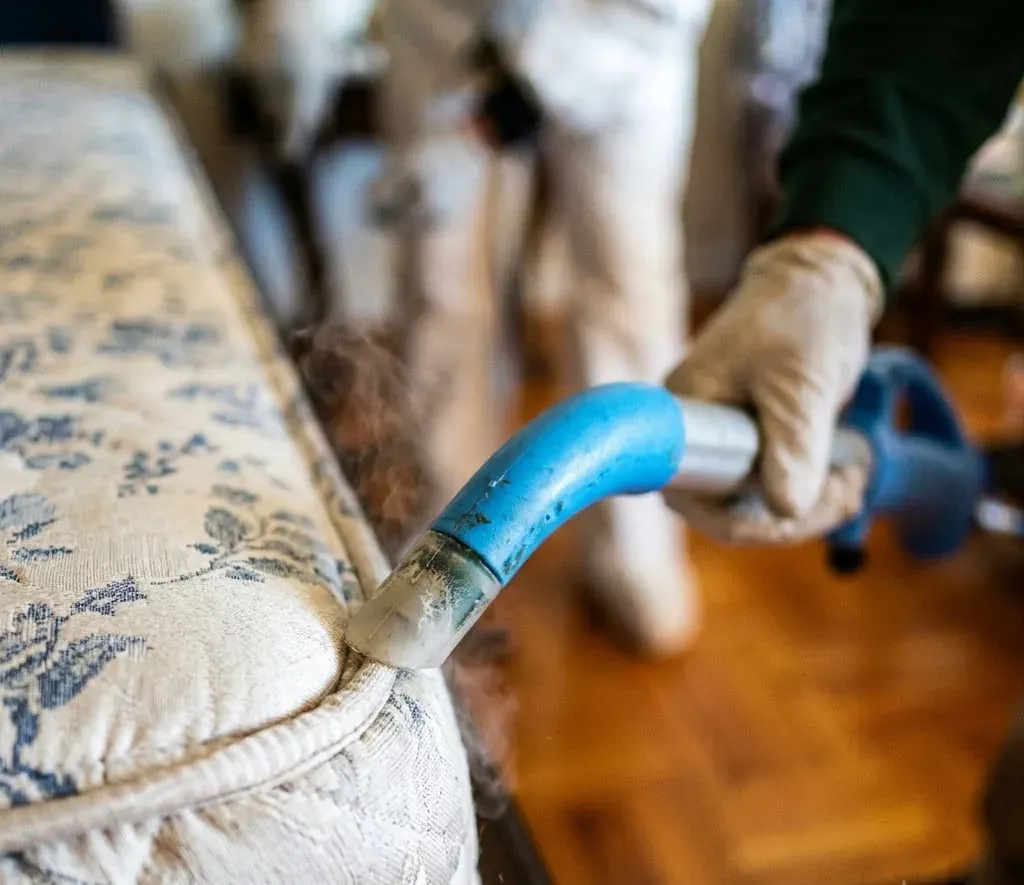
The empty unit between tenants is the cheapest and cleanest time to deal with bed bugs, provided nobody reaches for a fogger…
Read article
Service tickets, a numbered site map, a corrective action list and a log somebody can read standing in your kitchen.
An inspector walking your kitchen rarely opens with a question about pests. The first request is for the file. What is in the log, when was the last service, what was found, what was recommended, and what did you do about it. On a commercial account the documentation is as much the deliverable as the treatment, because a site with a clean floor and no paperwork still gets written up, while a site with two rodent hits and a signed corrective action list showing them closed out generally does not.
The Fayetteville side of it is who is buying. Apartment communities across Cumberland County with steady tenant turnover. Restaurants and commercial kitchens downtown and along the main retail corridors. Warehouse and distribution space near Interstate 95, where dock doors stand open all day. Builders working new subdivisions. Schools and childcare centers, which carry a state notification duty on top of everything else. Those are different programs sharing one spine: a site map, scheduled visits, numbered and sealed devices, and a report you can hand over without having to explain it.
Fayetteville property managers running these programs cover ground that does not stop at city limits. A church daycare near Vander needs the same sealed-device log as a strip mall client, and a rural account out toward Gray's Creek Elementary School gets the same numbered station map as one downtown. The licensed pros we connect you with keep that spine consistent even for accounts as far out as Lillington, so the paperwork matches regardless of which lot the visit happened on.
Auditors reviewing commercial pest files rarely stay in one jurisdiction, and that reach shapes how the log has to travel. A property group with a unit near Hope Mills Lake and another off Arsenal Avenue in Haymount expects one folder, not two formats, and the same goes for a client whose second site sits closer to Harnett County government offices in Lillington. The licensed pros we connect you with build the record to survive that handoff, so a Fayetteville portfolio audit never stalls on paperwork that only makes sense at one address.
Portfolio managers juggling scattered addresses see the same gap play out across property types near Fayetteville. A rental office holding units from Haymount Historic District down toward Hope Mills Historic District often has one inspection log for the whole book, when investors and lenders expect a separate paper trail per parcel. The pros we connect you with set up that structure once, tagged by address, so a due-diligence request never means reconstructing history for a building near Cross Creek or Little Rockfish Creek from memory.
Whether you're in Dunn, Erwin, Lumberton, or elsewhere around Fayetteville, commercial pest control has to account for sand that drains fast and then holds damp underneath anyway, plus a warm season long enough that nothing gets a proper reset. That is why this outlasts a straight interior spray.
Managing an apartment block, a kitchen or a warehouse off I-95? commercial pest control covers fixed rotas and records an inspector can read, and residential pest control is the same work written for a household.
The gap in the paperwork is what gets scored, whatever the floor looks like. A log with missing visits, unsigned tickets or recommendations that were never closed out is the most common finding on an account that thought it was covered.
A device with a hit on it week after week is not a working control point, it is an unclosed hole nearby. Repeat catches in one location should trigger a look at the structure at that end of the building rather than another replacement trap.
Drain and fruit flies breed in the organic film inside floor drains, under equipment legs and in mop sinks. Where they return on a weekly cycle the treatment is not the problem, the breeding site is, and that is a cleaning schedule item rather than a spray.
If nobody can say how many stations are on site or where number seven is, the program cannot be audited and neither can the technician's work. Numbered devices tied to a site diagram is the baseline any inspector or third-party auditor expects to see.
In apartment communities the same building keeps producing roaches or bed bugs because units are treated one at a time as complaints arrive. Treating at turnover, while the unit is empty, is both cheaper and the only version of this that gets ahead.
A diagram of the building with every station, monitor and trap numbered on it comes first. Everything afterward, including trend review and any audit, refers back to that map.
Scheduled visits at a set frequency, with the ticket completed before the technician leaves and left in the log. Findings, materials used and locations serviced all recorded rather than remembered.
A gap under a dock door or a drain that needs cleaning is somebody's task with a deadline, not a note. That list, with items closed out and initialed, is what turns a finding into evidence you managed it.
Catch counts read across months show where the building is losing, which is the conversation to have while there is time to fix it. Cleaning and sanitizing schedules get reviewed alongside it, since most kitchen pest pressure is a food supply question.
Commercial exposure is rarely the insects on their own. It is a health score posted in a window, a third-party audit that gates a contract, a tenant complaint that becomes a housing issue, or a load rejected at a warehouse door. All of those turn on records as much as on treatment, which is why a program that produces a readable file every visit is worth more than one that quietly sprays and leaves.
The Schoolchildren's Health Act of 2006, N.C. Session Law 2006-143, governs pesticide use in North Carolina schools. The principal or designee must annually notify parents, guardians, custodians and school staff of the schedule of pesticide use on school property and of their right to request notification, and that annual notice must cover the right to 72 hours advance notice of a non-exempt application that was not previously scheduled. School districts adopt Integrated Pest Management policies to meet it. Certain categories are exempt from the notification requirement, so ask rather than assume.
Any agreement in this state for the control or prevention of wood-destroying organisms has to be in writing, and it has to carry at least six things: the company's full name with the license number and phases of the licensee, a foundation diagram indicating whether the infestation is active or inactive, the location of visibly damaged timbers marked on that diagram, whether re-inspections will be made and roughly how often, the conditions under which re-treatment will be done, and the total price for the service. For anyone filing contracts across a portfolio, that is the checklist to hold vendors to.
Where commercial pest control tends to land locally. How far it has traveled, and whether the house is a slab or a raised floor, account for most of the spread.
| Stage | Work in it | Band |
|---|---|---|
| Early | Caught early enough that it is still in the place it started | an estimated $70–$250 |
| Typical | The full visit: perimeter soil, vents or slab line, and the pipe collars | an estimated $85–$360 |
| Heavier | More building to cover, an addition on the back, or two separate outbreaks | an estimated $130–$575 |
| Long established | Left long enough that it needs repeat visits and exclusion work | an estimated $205–$955 |
Closing the routes in under the floor, and clearing out an attic, are their own lines rather than folded into the figures above. The Fayetteville pricing guide lists every service and what pushes each one upward.
A small storefront or office on a monthly route lands at an estimated $55 to $95 a visit, and quarterly service on a comparable site starts around an estimated $85. Kitchens, apartment communities and warehouse space get priced after a walkthrough, because square footage, device count and visit frequency drive it. Guide figures, not a quote.
Yes, and for kitchens it usually should. Working before open or after close keeps the material away from food handling and gives access to areas that are covered during service. Say at the start which hours are workable, because it affects scheduling more than it affects price.
Pesticide use at schools in North Carolina is governed by the Schoolchildren's Health Act of 2006, which requires annual notification of the pesticide use schedule and of the right to request notification, including the right to 72 hours advance notice of a non-exempt application that was not previously scheduled. Districts here adopt Integrated Pest Management policies to comply. Some low-risk categories are exempt, so ask which apply to your site.
Through notices posted and delivered ahead of the visit, a scheduled route by building, and treatment at turnover while units are empty. For roaches and bed bugs, adjoining units get inspected together rather than one at a time. Remember that a landlord's repair duty in this state runs for the whole tenancy, so a documented response matters.
The current service log with signed tickets, the site diagram with numbered devices, the corrective action list showing what was closed out and when, product information for anything applied, and the licensing details of the company doing the work. If any of those live in a truck rather than on site, they are not much use on inspection day.
Realistic, with the emphasis moved outward. Dock seals and door sweeps, a perimeter device line, attention to the dumpster pad and pallet storage, and lighting choices that stop pulling insects to the opening. The aim on that kind of site is keeping pressure at the boundary rather than an insect-free building.
Yes, and the termite side of new construction is a separate scope with its own staged treatment during the build and its own paperwork, so it gets planned against the construction schedule rather than added afterward. General pest work on the finished units is usually straightforward once the site is closed in and the landscaping is down.
Use an estimated $85–$239 per visit as the planning band for commercial pest control in Fayetteville. Three things move it: how much area gets treated, how hard the substructure is to reach, and whether the yard needs covering as well as the building. The visit that produces the exact number costs nothing, and nothing is added to it afterwards.
The long version, for anyone who would rather understand it before booking anything.
The empty unit between tenants is the cheapest and cleanest time to deal with bed bugs, provided nobody reaches for a fogger…
Read article
Search results hand you ads. These are the questions to ask before you book, the red flags, and the six items North…
Read article
What actually moves a pest control price around here, with hedged ranges and the one charge people forget to ask about separately.
Read articleOne call gets you a licensed local pro, an inspection at no cost, and a scope in writing before a thing is treated. Walk away afterwards if you want to.
Call (855) 563-1479