Termites
Termite Swarm Season in Fayetteville Runs Long
Wings on a sill in March, and again in August. The North Carolina swarm window runs from late winter into fall, in…
Read article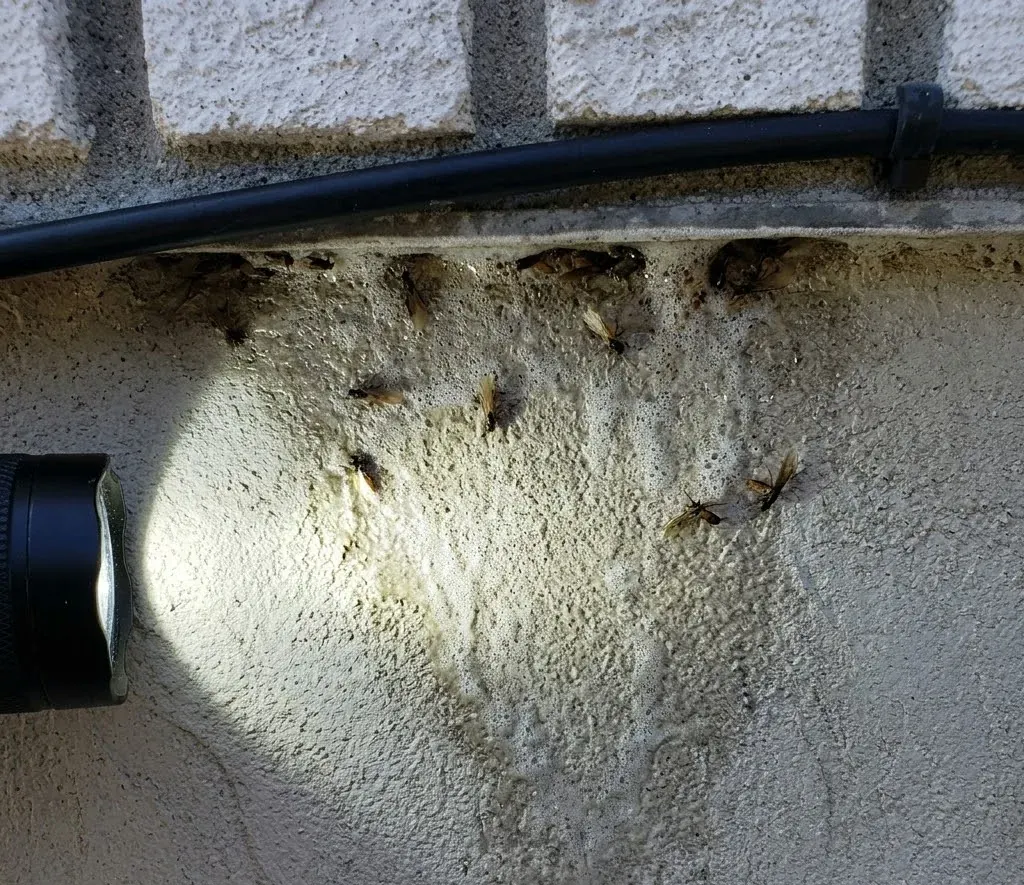
A long swarm season, two very different treatment methods, and three kinds of warranty worth reading closely.
Swarming in North Carolina begins in late winter and carries on into September or October, and the swarms come out during the day, most often on a warm afternoon following rain. That single fact undoes the advice printed on most national pest pages, which tells homeowners to watch for one spring flight and relax afterward. Here the window is most of the year and the flights are in daylight, so the wings on a windowsill in August are just as meaningful as the ones in March. Subterranean termites are by far the most common in this state, with at least three native species behaving in essentially the same way.
There is no Formosan termite problem in Cumberland County, whatever a national article implies. That species was first detected in Brunswick County in 1992 and has been identified in only a few locations statewide, and Brunswick County is on the coast roughly a hundred miles from here. What matters locally is the construction. Concrete slab on soil is one of the most common building types in North Carolina, and slabs crack or shrink back from the foundation wall, offering entry at bath traps, plumbing outlets and construction joints. Crawl space homes give access at piers, sills and any wood in contact with soil. Termites need only a 1/32 inch crack.
That crack-wide gap is easy to find in Fayetteville's older slab neighborhoods, but termite pressure follows the same soil and moisture lines out toward Clinton, about 35 miles east on NC 24, and past Roseboro along that same corridor, where older homes near Sampson Community College sit on comparable ground. Elizabethtown, roughly 38 miles south on NC 87 near Tory Hole Park, sees it too. A bait station or liquid barrier only works when it matches how termites actually enter, which is why the licensed pros we connect you with inspect the foundation before recommending either.
Sandy, well-drained soil around Rockfish and Stewarts Creek lets subterranean colonies travel wide underground without surfacing, so a barrier treatment there has to run deeper than a slab edge to matter. Toward Dunn and the Erwin Commercial Historic District, older brick foundations near the Cape Fear River hide mud tubes behind veneer where a quick glance never finds them. Fayetteville's mix of slab and crawl-space construction means the licensed pros we connect you with size the agreement to the foundation, not the zip code.
Barrier agreements also have to account for what's south of town, since termite pressure doesn't stop at the city limit. Homes near St. Pauls, reached off Interstate 95 at Exit 33, sit closer to the water table than most Fayetteville lots, and older properties along Broad Street show the same warning signs found near the Gilmore-Patterson Farm. The licensed pros we connect you with treat that stretch as one termite zone, not two separate service calls.
Whether you're in Godwin, Linden, Parkton, or elsewhere around Fayetteville, termite control has to account for sand that drains fast and then holds damp underneath anyway, plus a warm season long enough that nothing gets a proper reset. That is why this outlasts a straight interior spray.
Houses account for most of it, under residential pest control. Offices, restaurants and rental stock go through commercial pest control, usually while the doors are shut.
Swarmers shed their wings soon after flying, and because flights here happen during the day you often find the wings before you ever see an insect. A pile at a window or a slider is worth an inspection whatever the month.
Shelter tubes are soil and saliva, built to keep the workers damp while they travel. They can be constructed at roughly 2.5 inches per hour, so a wall that looked clean at an inspection can show a tube shortly after.
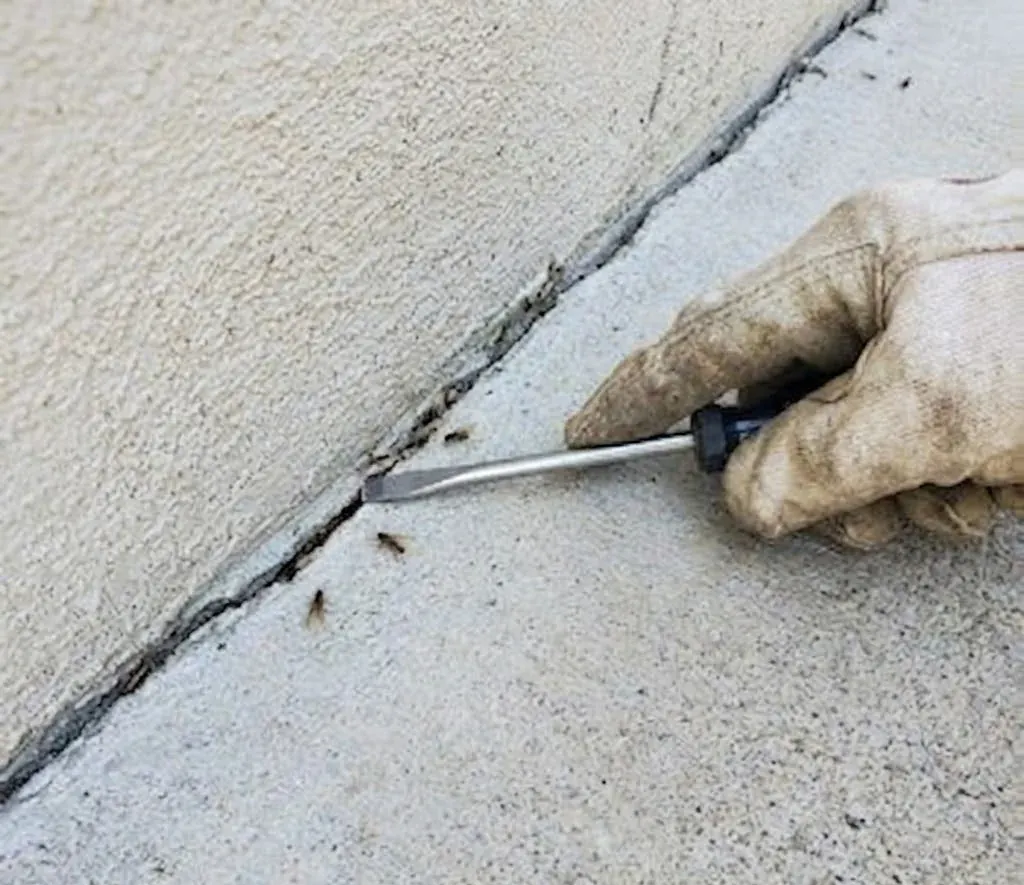
Baseboard, door casing or a window sill that sounds hollow or gives under a screwdriver near the slab edge is a classic slab-entry pattern, often above a construction joint or a plumbing penetration.
Termites work behind the surface and leave a thin skin. Rippled paint or a wavy patch on drywall over a slab is sometimes the first visible sign, and it is easily mistaken for a plumbing leak.
Damaged subfloor and joists show as spring or slope, usually near a bathroom, a laundry or an exterior door where moisture has kept the wood inviting.
Where evidence is found or a proposal is written, the technician measures and sketches the building so the application rate and the price are calculated against real dimensions rather than an estimate from the driveway.
A liquid soil barrier is trenched and rodded around foundation elements to create a treated zone. A bait system uses slow-acting material or an insect growth regulator taken back to the colony. They are not interchangeable, and the choice depends on wells, access and your tolerance for time.
On a slab that means the perimeter, the bath trap area, plumbing outlets and joints. In a crawl space it means the foundation walls, piers, chimney base and any wood contacting soil.
The written agreement records whether re-inspections happen and at what interval, plus the conditions for re-treatment. Annual inspection is the standard the state's own prevention guidance recommends.
The state's advice on finding termites is worth repeating: do not panic and do not be rushed. Termites will not cause significant structural damage in a matter of weeks, and choosing a reputable company matters more than moving quickly. What does cost people money is signing a warranty they have not read, then discovering years later that it covers another treatment and nothing else. Read the agreement before the price.
Every contract or agreement for the control or prevention of wood-destroying organisms in North Carolina must be in writing and must include at least: the license number and phase or phases of the licensee together with the company's full name; a foundation diagram showing whether the infestation is active or inactive; the location of visibly damaged timbers on that diagram; whether re-inspections will be made and the approximate interval; the conditions under which re-treatments will be made; and the total price for the treatment service. If a document in front of you is missing any of those, it is not finished.
Under 02 NCAC 34 .0501 the re-treatment obligation runs within 30 days of written notice, which is why a phone call is a poor substitute for a dated letter or email. A full proposal should also cover the initial inspection, a detailed treatment proposal, the complete treatment plan, a discussion of the agreement provisions, and the continuing agreement or warranty.
Working figures for termite control across this end of Cumberland County. Nothing is charged for the look, and you hear the number before anybody starts.
| Scope | What is in it | Figure |
|---|---|---|
| One area only | A single active patch, dealt with exactly where it sits | an estimated $360–$1420 |
| Whole house | Indoors, plus a band of treated soil along the whole footing | an estimated $425–$2025 |
| Wider footprint | A long single story, a wide slab, or sightings in several rooms at once | an estimated $640–$3240 |
| Dug in | Heavy activity, taken in stages with every route in closed off | an estimated $1020–$5400 |
Across a year a schedule works out lower per visit than three separate call-backs, and the pricing guide sets the two next to each other with every extra priced.
From late winter through September or October, especially on warm days after rain, and during daylight rather than at dusk. Any advice built around a single spring swarm does not describe North Carolina.
A liquid treatment creates a continuous treated zone and generally gives faster control. Baits do not create a barrier and generally do not give quick control, but they suit a property with a well, an area that cannot be trenched, or an owner with pesticide concerns. Maintaining a bait system agreement is normally more expensive than maintaining a conventional treatment warranty.
Re-treatment only, which provides further treatment if termites are found during the agreement period with no obligation to repair, and which is the most common practice in the industry. Re-treatment and damage repair, which obligates the company to repair, replace or correct damage up to a stated amount for damage occurring after the initial treatment. And no guarantee or warranty, where the absence must be clearly indicated in the agreement.
Correct, and this is the detail that surprises people years later. It buys another treatment, not carpentry. Damage repair coverage exists, not every company offers it, and the structure usually has to meet certain criteria to qualify. Ask which one you are being sold before you ask the price.
Most agreements run one year following the initial treatment, with renewal after that. A warranty is not a promise that termites will never come back; it provides for the corrective action written into it, and nothing else.
A conventional soil treatment is exterior and sub-structural work, so households normally stay. Interior work at a bath trap or a slab penetration is localized. Your technician will give you the re-entry guidance for whatever is applied indoors.
Whole-structure liquid treatment is quoted from measured linear footage, so the range is wide and a walkthrough is the only honest basis. For the sale-related inspection report, expect around an estimated $65 to $95. Guide figures, not quotes.
Termite control runs an estimated $425–$1350 per treatment on an ordinary Fayetteville property. A guide, not a binding price. Somebody reads the foundation and the ground against it, then writes the number down for you to approve or refuse. We set these bands a little under the going local rate on purpose.
Fuller pieces on telling one species from another, and on when in the year it matters.
Wings on a sill in March, and again in August. The North Carolina swarm window runs from late winter into fall, in…
Read article
The empty unit between tenants is the cheapest and cleanest time to deal with bed bugs, provided nobody reaches for a fogger…
Read article
One number on an inspection report tells you more about a crawl space than any photograph. Here is what sits behind it…
Read articleTermite Control cannot be priced honestly from a phone call in a market split between slab and crawl space. Have it looked at, then decide. The looking costs nothing.
Call (855) 563-1479