Homeowner Tips
Bed Bugs at Turnover: A Landlord's Playbook in Fayetteville
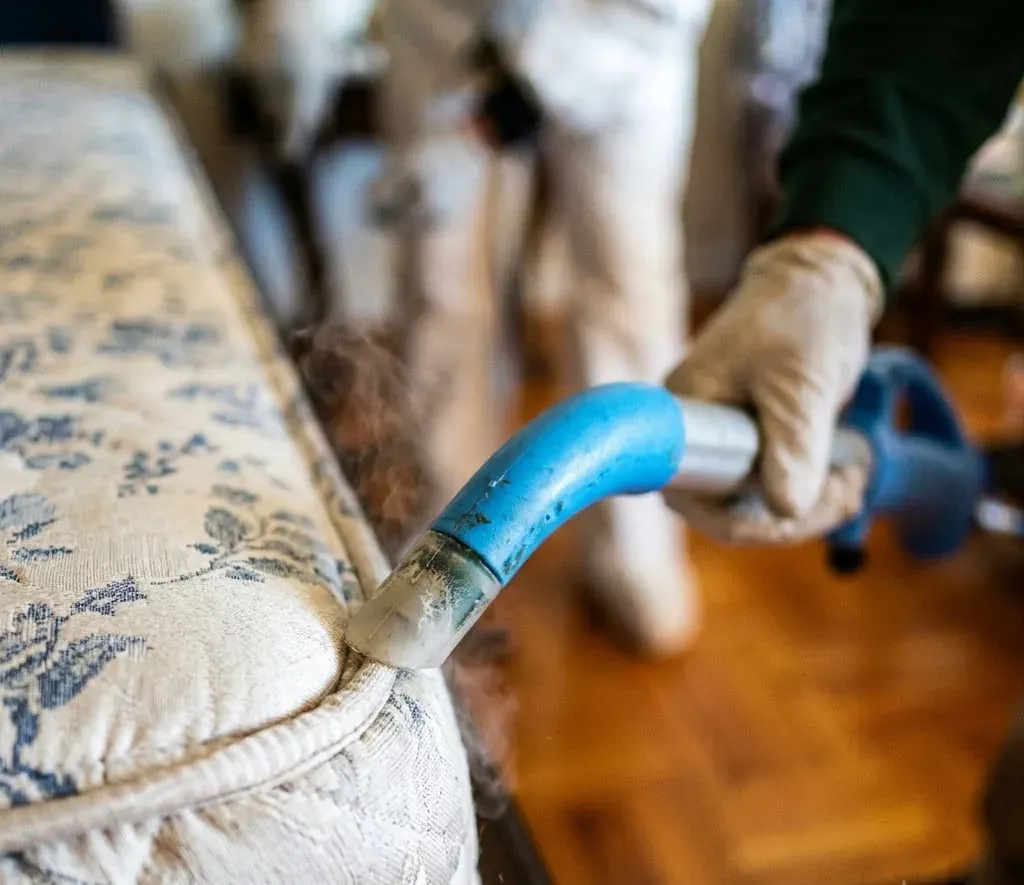
The empty unit between tenants is the cheapest and cleanest time to deal with bed bugs, provided nobody reaches for a fogger…
Read article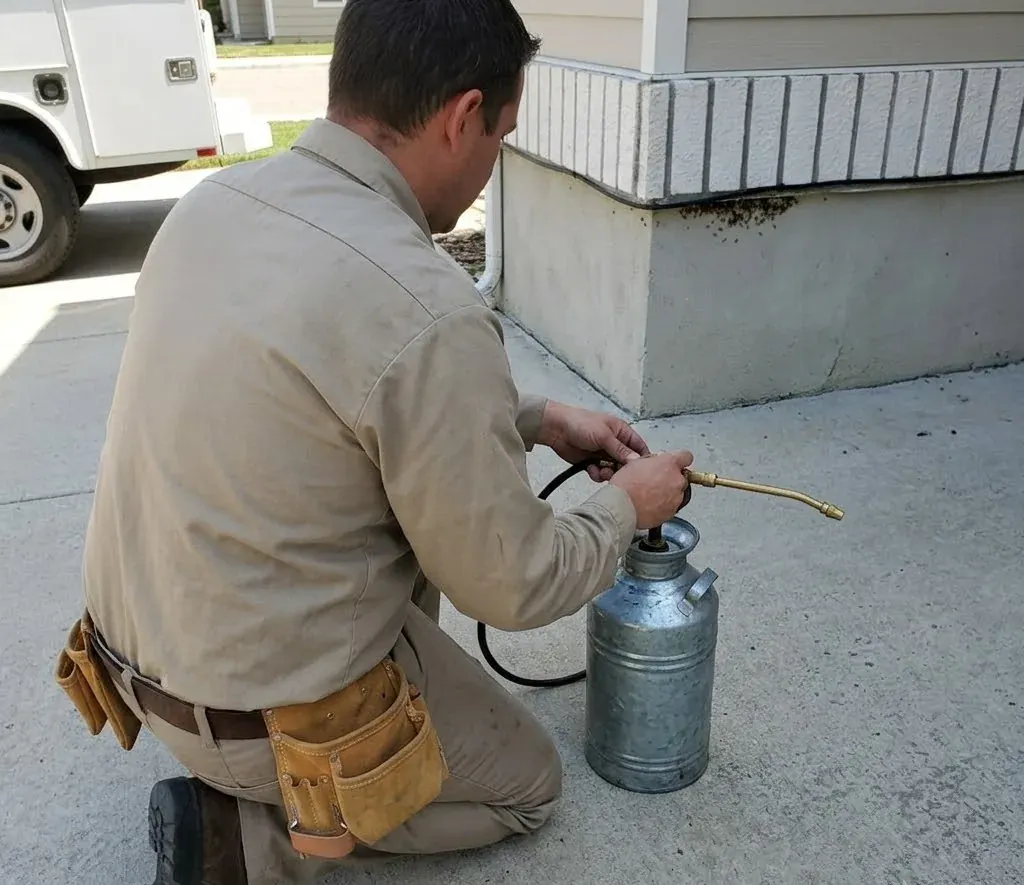
Nothing applied to the outside of a house here lasts twelve months. That is the whole argument.
Why three months, rather than once a year? Because nothing put on the outside of a house in this climate is still working in twelve. Sun breaks material down on a south wall, thunderstorms wash the splash zone, irrigation soaks the band twice a week, and the soil itself is sandy enough that water moves through it instead of sitting on top. Add a swarm and hatch cycle that runs from late winter well into fall and the honest answer is that an exterior treatment is doing its job on a scale of weeks to a couple of months. A quarterly visit lines up with that reality rather than with a billing preference.
The second half of the argument is what happens on the days nobody is at your house. A program worth paying for covers the callback between visits at no extra charge, keeps a record of what was applied where, and adjusts by season: ant and swarmer pressure in spring, roaches and wasps through the hot months, rodent and cricket movement toward the structure when nights cool off. If a company sells you four identical visits, you are buying a schedule. If the spring visit looks different from the October one, you are buying attention.
Fayetteville's own seasonal rhythm makes the case: a spring visit has to catch swarming ants and wasp nests starting under eaves, while an October stop is really about sealing the gaps rodents use once nights cool off. The pros we connect you with cover that same rhythm out toward Vander and up US 401 to Lillington, where Poorhouse Creek keeps the ground damp enough to matter, and south on NC 87 toward Elizabethtown, where Browns Creek does the same. Four visits only earn their price if each one answers a different question.
Whether you're in Raeford, Eastover, Stedman, or elsewhere around Fayetteville, quarterly pest protection has to account for sand that drains fast and then holds damp underneath anyway, plus a warm season long enough that nothing gets a proper reset. That is why this outlasts a straight interior spray.
Either kind of address works. commercial pest control fits visits around trading hours and logs every one of them, residential pest control keeps a family home straightforward.
A problem that clears in April and reappears in July was never a one-off. Repeating pressure from outside is the case for a maintained perimeter instead of a series of emergency visits.
That timing is the material thinning out, not a failed application. It is also the clearest signal that the interval, not the product, needed changing.
Paper wasps favor a spot that worked before. Knocking a nest down in June without treating the void or the eave usually buys a few weeks.
Mice move toward warm structures in fall. A quarterly program that includes an autumn exterior check catches the gaps before anything is nesting in the wall.
Regular watering keeps one strip of foundation permanently damp, and that strip behaves like a different house from the rest of the perimeter.
A longer first appointment that maps the structure, the moisture, the entry points and the current activity, so the following visits have something to compare against.
Four visits a year, each weighted to what is active: swarmers and ants in the warm months after rain, wasps in high summer, rodents and crickets as temperatures fall.
Something shows up in week six, someone comes back. Confirm before you sign that between-visit returns are included rather than billed as a new job.
Each visit records what was applied, where the pressure is, and what has changed at the property. That record is what stops the fourth visit from being a repeat of the first.
Recurring service is cheaper than repeated crisis work for a plain reason: it keeps the population outside small and the entry points closed, so you are not paying for a cleanout twice a year. It also puts a trained set of eyes on your foundation, crawl space vents and slab edge four times a year, which is how conducive moisture and early termite evidence tend to get spotted before anybody is negotiating over a repair.
North Carolina recognizes three levels of structural pest control credential: registered technicians, certified applicators and licensees. Certified applicators and licensees are certified for a five-year period, and the structural pest control year runs 1 July to 30 June. On a recurring program you are entitled to know which of those the person treating your home holds.
The Structural Pest Control Division routinely inspects structural pest control work and accepts complaints and inspection requests through its published request form. Its public number is 984-236-4625. Keep your service records, since dated notes of what was applied and where are what turn a dispute into a reviewable file.
Four bands, and quarterly pest protection on a Fayetteville property normally falls into one of them. Which one is decided by the building, and the exact figure is written down once somebody has been under it.
| Size of it | What that buys | Budget |
|---|---|---|
| Single spot | Trouble in one room, one bay of the garage, or one bed out front | an estimated $65–$135 |
| Ordinary house | An ordinary whole-house call, inside and all the way round outside | an estimated $80–$195 |
| Larger house | A larger footprint, or a population already past its first generation | an estimated $120–$310 |
| Been running a while | Sustained pressure, so staged visits plus sealing under the floor | an estimated $190–$515 |
None of this is a quote, because too much of it is decided by what is under the floor or behind the slab edge. The Fayetteville pricing guide works through what moves a figure and what comes as standard.
For most homes here, no. Monthly makes sense with a heavy roach history, a commercial kitchen next door, or a property that keeps getting re-invaded from a shared wall. For a standard single-family house, four well-timed exterior visits plus callbacks does the same job for less money.
Not usually. Most quarterly visits are exterior only, with interior work on request or when something is active indoors. That suits shift workers and anyone on the Fort Bragg schedule, since the visit does not need you home.
A properly applied exterior band is bound to the surfaces it was put on and expects weather. A washout matters when heavy rain hits within a couple of hours, and that is worth a call rather than a shrug.
Around here quarterly visits commonly land near an estimated $75 to $110 each, often with a higher initial service. Treat that as a guide figure rather than a quote, since house size, crawl space access and the pest list all move it.
Read the term and the cancellation clause before you sign anything, including whether the initial discount is recovered if you leave early. A company confident in the work does not need to trap you into year three.
Quarterly pest protection runs an estimated $79–$129 per visit on an ordinary Fayetteville property. A guide, not a binding price. Somebody reads the foundation and the ground against it, then writes the number down for you to approve or refuse. We set these bands a little under the going local rate on purpose.
Moisture, timing and prevention, given room rather than squeezed into a paragraph.
The empty unit between tenants is the cheapest and cleanest time to deal with bed bugs, provided nobody reaches for a fogger…
Read article
Drenching the mound you can see usually shifts the colony a few feet. Bait first, then mound work, is what holds a…
Read article
Search results hand you ads. These are the questions to ask before you book, the red flags, and the six items North…
Read articleQuarterly Pest Protection cannot be priced honestly from a phone call in a market split between slab and crawl space. Have it looked at, then decide. The looking costs nothing.
Call (855) 563-1479