Pepper-like specks in the pet bed
That is flea dirt, which is digested blood. Put some on a damp white paper towel and press it. If it smears rust red rather than staying black, you have confirmed fleas without needing to catch one.
Heaviest from late spring through fall, and a heated house or a sheltered crawl space keeps them going in winter.
The pet is where you notice fleas. The reservoir is the carpet, the pet bed, the upholstery and the crawl space, where eggs, larvae and pupae sit out of sight and keep hatching for weeks after the adults you saw are dead. That is why one bath and one visit fail. The animal, the floor and the growth stage have to be handled at the same time, and wildlife living under a floor keeps re-seeding all of it.
You will normally see the evidence before you see anything moving.
That is flea dirt, which is digested blood. Put some on a damp white paper towel and press it. If it smears rust red rather than staying black, you have confirmed fleas without needing to catch one.
Chewing and scratching concentrated at the tail base, the belly and the inside of the back legs is the classic pattern. Part the fur against the grain at the tail base with a flea comb and look at the skin rather than the coat.
Adults live low and jump from the floor, so people get hit from the shoe up to mid-calf. Bites higher up usually mean somebody sat on infested upholstery or slept where the pet sleeps.
Walk slowly through the suspect room in tall white socks for a couple of minutes. Fleas jump at movement and show clearly against white. It also tells you which room holds the population, which matters more than knowing you have them.
Flea larvae need humidity to develop, and a crawl space over Sandhills soil supplies it reliably. The surface sand drains and the layer underneath stays damp, so the space under the house holds the moisture larvae need in a climate that would otherwise dry them out. That makes the crawl space a nursery that survives independently of anything you do to the carpet.
Wildlife under the floor is the local engine of it. Opossums, raccoons, feral cats and squirrels using a crawl space, a shed base or the void under a deck bring adult fleas in, drop eggs in the dust and insulation, and leave behind a population that comes up through the floor and finds your pet. Fleas that keep coming back after two good indoor treatments usually mean something is still living underneath.
Rental turnover adds a twist that this market sees more than most. A house sits empty between tenants, the pupae wait in the carpet without feeding, and then somebody moves in and the vibration of footsteps triggers a mass hatch onto a family that has never owned a pet. If you walked into a rental and got bitten in week one, that is what happened, and it is nobody's fault.
Fayetteville rentals cluster in older apartment courts and duplex rows where carpet stays down for years between tenants, and the pattern repeats in the towns the licensed pros also reach: mill-house rentals near Erwin and Dunn along US 301, and the turnover units around Lumberton off I-95, all sharing that same wall-to-wall carpet nobody tore out between leases. Flea pupae do not care whose name is on the deed, only that the carpet fibers stayed put long enough to hide them until footsteps started again.
Rental turnover near Hope Mills Lake and older duplexes toward Spring Lake share the same carpet math, since neither landlord nor tenant vacuums under furniture that never moves. Homes backing onto Little Rockfish Creek hold humidity longer after a storm, and that dampness keeps larvae fed in the padding for weeks. Whether the address sits in Fayetteville proper or out past Raeford, a pet brought inside after a walk is usually just the messenger, not the source.
The same job gets done in Wade, Falcon and Godwin, and everywhere else we cover around Fayetteville.
Springtails after a wet spell. Springtails jump too, turn up in damp bathrooms, kitchens and crawl spaces after heavy rain, and get reported as fleas constantly. They are soft, often gray or purplish, and they do not bite anything. A flea is hard-shelled, reddish brown, flattened side to side, and hard to crush between two fingers. One is a moisture question, the other is a pet and floor question, and they lead to completely different work.
The animal and the building get handled on the same day or the work is wasted. Treatment for the pet comes from a veterinarian, since the products are prescription in many cases and the dosing follows species and weight, and a cat is not a small dog. Every animal in the house gets treated, not only the itchy one.
Indoors, the vacuum is a treatment rather than housekeeping. Slow passes over carpet, along baseboards, under furniture and into upholstery seams, then the bag or canister emptied outside. Vibration is also what brings pupae out of their cocoons, which is why vacuuming before and after a treatment makes the material more effective rather than less. Bedding, throws and pet blankets go through a hot wash and a hot dryer cycle.
The material applied indoors should include an insect growth regulator alongside an adulticide. The adulticide handles what is walking now, and the growth regulator stops eggs and larvae becoming adults, which is what actually breaks the cycle. A product that only kills adults leaves the majority of the population untouched and buys you about two weeks.
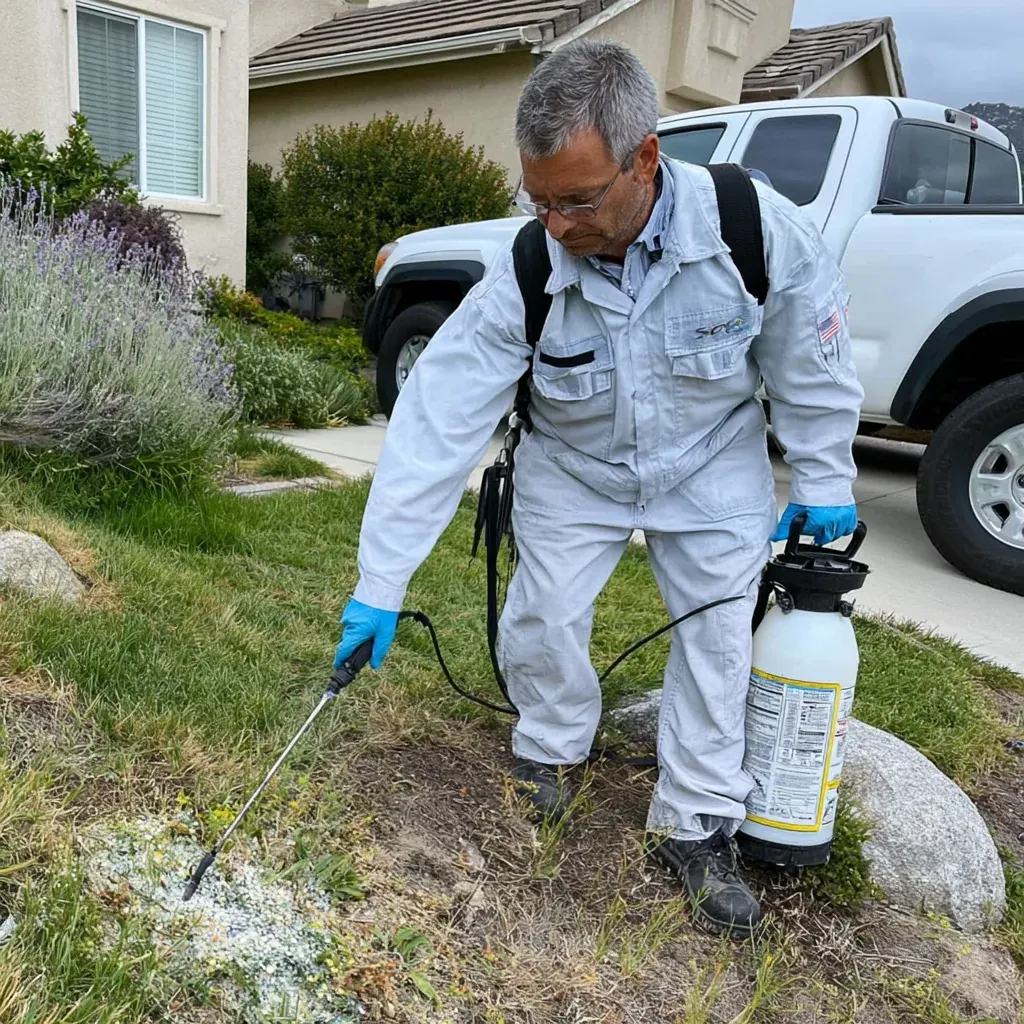
Then the outside gets its share: shaded areas where the pet rests, the crawl space if it is involved, under the deck and around the shed. If an animal is living under the floor it has to be removed and the way in closed, or the crawl space simply restocks the house. Expect a follow-up visit a couple of weeks later, because that is when the next wave of pupae has hatched into something a treatment can reach.
Plenty of flea situations are done in one call. What decides it is whether the pressure came from an event or from conditions that are still there.
| Your case | What we would advise |
|---|---|
| One place, one cause, spotted early | A single visit |
| A pattern rather than an incident | Cover through the year |
| Anything set up inside the structure itself | Both: the animal and the hole |
Vacuuming, hot laundry and a vet visit are three genuinely effective things a homeowner controls, and doing all three consistently for a few weeks will handle a light infestation on its own. Where money disappears is on total release foggers, which put a mist on the top of the carpet while the larvae are down in the fiber and under the furniture where the mist never lands, and on treating the house while skipping the animal or the animal while skipping the house. Flea collars alone do not deal with a population already living in the floor.
The everyday cost is itching and broken sleep, and scratched bites can become infected the same as any other broken skin. If a bite looks infected, if a reaction is severe, or if somebody in the house reacts badly, see a doctor. Fleas matter to pets in ways that go beyond the itching, so an animal with a heavy infestation deserves a vet visit rather than only a floor treatment. We treat the building. Your veterinarian handles the animal and your doctor handles people, and neither of those jobs belongs to a pest technician.
Budget an estimated $95 to $229 for flea locally, and treat that as a range to plan against rather than a price. Having somebody look costs nothing, and you see the number in writing first. See the pricing guide for the complete set of ranges, and this one is handled under General Pest Control.
Named on the WDIR-100 alongside termites. Powderpost beetles bore into hardwood and leave small round exit holes with a trace of fresh, flour-fine frass beneath them.
Bare wood only. Spring into late summer. A carpenter bee hole is unmistakable: a clean circle about half an inch across, drilled into bare wood, with a small cone of pale sawdust on the ground below.
An outdoor insect that visits. American cockroaches are an outdoor insect here.
Because pupae hatch in response to vibration and warmth, and the activity of a treatment triggers them. Newly hatched adults come out into a treated space and die there, which is the system working, not failing. It usually settles within two to three weeks provided the growth regulator went down and the pet is treated.
Because the product protects the dog, not the carpet. Adults still hatch out of the floor, jump on, and get killed after they have already bitten and possibly laid. If the reservoir in the house is large enough you will keep seeing fleas on a properly treated animal until the floor is dealt with.
Daily in the rooms the pet uses, for two to three weeks, then back to normal. Slow passes matter more than suction, and empty it outside each time. It is tedious and it is the cheapest part of the job.
If an animal has been living down there, yes, and it needs the animal dealt with first. If the crawl space is dry, closed up and nothing is using it, treatment usually concentrates indoors and on the shaded resting spots outside. Ask the technician what they found under the house rather than assuming either way.
Easily. Pupae can sit dormant in a carpet for weeks and hatch when people move back in, and wildlife under a floor supplies fleas whether or not anybody in the house owns an animal. A brand new tenant getting bitten in an empty house is a normal story, not a strange one.
Initial pest service is published locally from about $95, and a flea job runs above a routine visit because it covers more surfaces and includes a follow-up. Expect an estimated $135 to $265 for the house with the follow-up visit included, plus crawl space work where it is needed, and the vet bill separately. Guide figures rather than a quote.
Book an inspection at no cost. Naming it correctly is what decides whether the treatment holds, and nobody charges you for having a look.
Call (855) 563-1479