Identification
Slab or Crawl Space? How to Tell, and Why It Matters
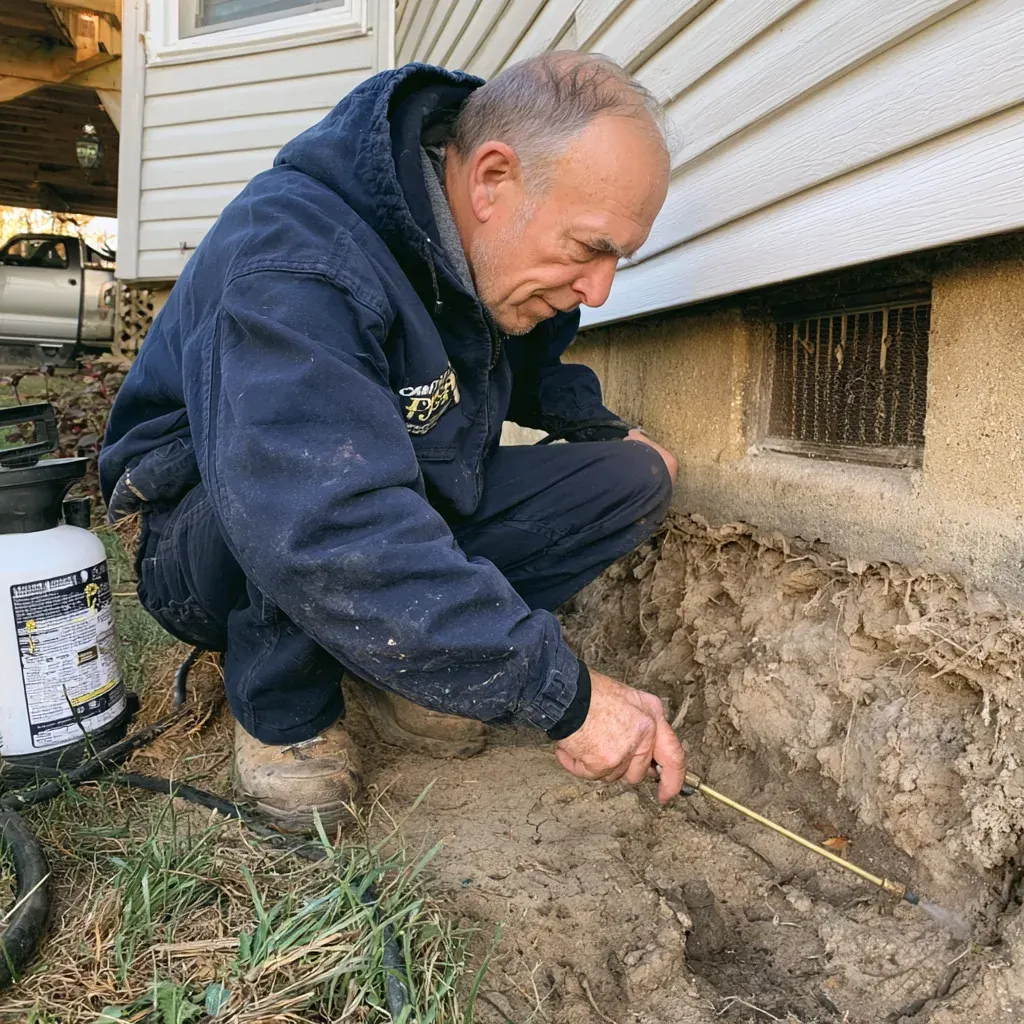
Vents and a hatch, or concrete and a bath trap. Which foundation you have decides how the house gets inspected, treated and…
Read article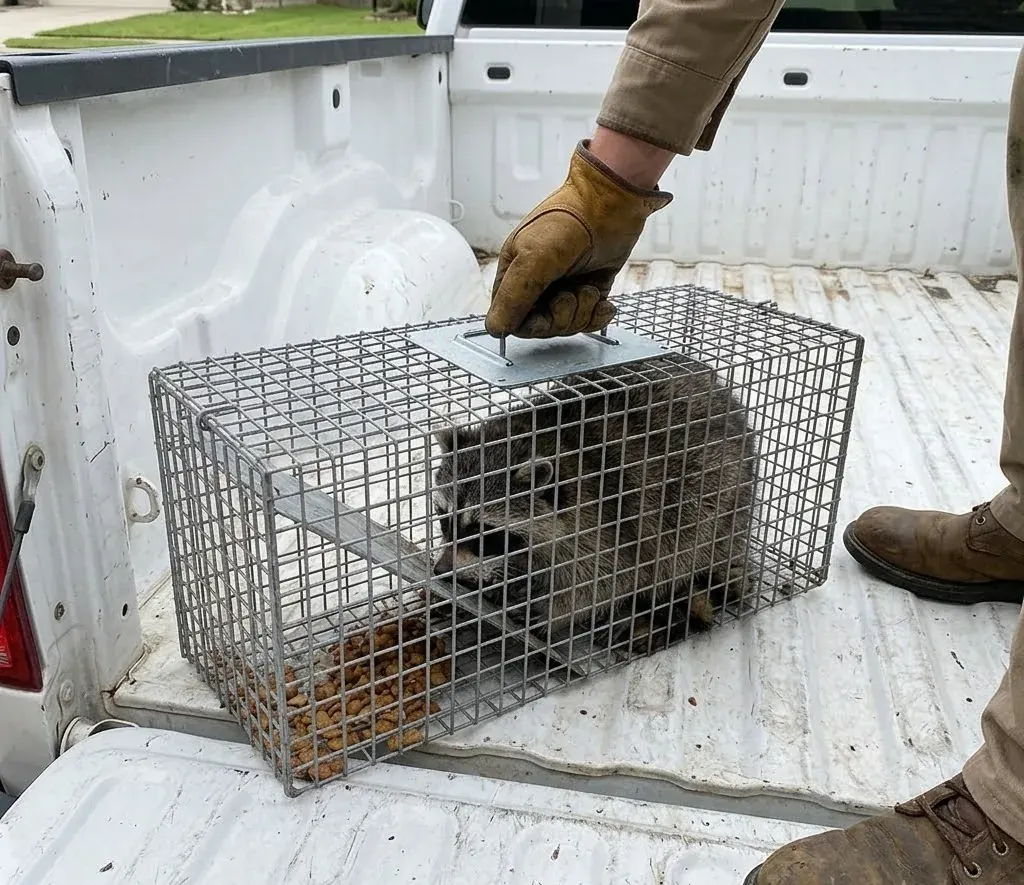
Largely carpentry with an animal in the middle of it, plus one date range in this state that nobody gets to negotiate.
Take the animal out of a wildlife job and what is left is carpentry. A squirrel in a soffit, a raccoon in an attic or a chimney, birds packed into a dryer vent: the removal is a morning's work, and the part that decides whether you call again is the repair. Fascia board, soffit return, ridge and gable vents, chimney cap, the flashing where a lower roof meets a wall. Rebuilt in galvanized mesh, hardware cloth and new lumber it holds for years. Filled with expanding foam it holds until the animal chews back through it.
Bats are the exception with a date on it. In North Carolina, bat evictions and exclusions are prohibited from 1 May through 31 July, statewide, other than under special circumstances approved by the North Carolina Wildlife Resources Commission. The reason is pup rearing: the young cannot fly and sealing a roost would wall them in. Inside that window the legitimate work is inspection, planning and protecting the interior of the house, with the exclusion itself carried out once the window closes on 1 August. Bats are a protected species here, so this is a rule rather than a preference.
Fayetteville's older homes and newer rooftops alike give bats plenty of gaps to work with, from soffit returns to ridge vents, and the same construction shortcuts show up a drive away in Lillington, Vander, and Gray's Creek. The pros we connect you with treat the roofline like a system: find every active gap during the legal window, note it, then seal the whole envelope at once come August so nothing reopens a month later a few shingles down.
Roofline age varies block by block, and that changes where gaps actually open. Older homes in Haymount, with steep pitches and original fascia near Arsenal Avenue and Cross Creek, tend to gap at the dormers, while newer construction toward Hope Mills Lake fails at the ridge vents instead. The licensed pros we connect you with check both patterns before closing anything, since a Fayetteville roof built in 1995 doesn't fail the same way one near Hope Mills Dam does.
That same age-versus-upkeep divide extends well past Fayetteville proper. Near Raeford, homes around the Raeford Historic District and the Hoke County Courthouse often keep original soffit vents that squirrels pry loose within a season, while newer builds toward Rockfish, closer to Stewarts Creek and Gully Branch, lose ground at plumbing boots instead. The licensed pros we connect you with treat entry-point sealing as separate work from the animal removal itself, since closing a gap before the occupant is out just traps the problem inside the attic.
Whether you're in Dunn, Erwin, Lumberton, or elsewhere around Fayetteville, wildlife removal has to account for sand that drains fast and then holds damp underneath anyway, plus a warm season long enough that nothing gets a proper reset. That is why this outlasts a straight interior spray.
The treatment is the same either way. The scheduling and the paperwork are not: residential pest control for a home, commercial pest control for anywhere with customers or tenants in it.
Squirrels are active early and again before dusk, so noise on that schedule usually means squirrels rather than something nocturnal. Heavy, slower movement in the small hours points at a raccoon, and the difference changes both the method and the timing.
Repeated use polishes and darkens the edge of an opening, and there is often fur caught on a splinter or a nail. That mark is the entry point, and finding it is more useful than any amount of listening from the room below.
A neat accumulation directly below a gap in a gable or a soffit, with staining above it, is a roost above. Leave that material alone rather than sweeping it up, and let somebody equipped for it handle the cleanup along with the exclusion.
Species first, then the season, because the correct next step for bats in June is not the correct next step for bats in September. The inspection covers the roof line, the vents and the whole soffit run, not just the hole you found.
Litters and pups are the reason exclusions go wrong. If young are present the work waits or is staged so the adults can carry them out, which is both the humane answer and the one that avoids an animal dying inside a wall.
A one-way door lets the animal leave on its own and not return, which beats trapping for most attic and soffit situations. Confirmation that it has gone comes before the opening is closed, never after.
The entry gets repaired in hard materials, and every other weak point along that roof line gets closed at the same visit. A single repaired hole on a roof with four soft spots buys about one season.
The failure mode in this work is sealing an animal inside, which turns a wildlife call into a demolition job and an odor problem, and with bats it also breaks a state prohibition. The second cost people underestimate is the mess: soiled insulation, staining and chewed wiring in the roof space. Doing the removal and the repair as one piece of work, at the right time of year, is what keeps both problems small.
Bat evictions and exclusions are prohibited statewide from 1 May through 31 July, with exceptions only for special circumstances approved by the North Carolina Wildlife Resources Commission. Pups cannot fly during that period and sealing the roost would trap them inside. Bats are protected here. Anybody offering to seal your gable in June is offering to break that prohibition.
In North Carolina the person doing this work is a Wildlife Control Agent, and the Wildlife Resources Commission publishes a WCA list you can check a name against. It is a different credential from the structural pest control licensing that covers insect work in a home, and the two are issued by different agencies. Ask which one the company holds for the job in front of you.
Plan with these rather than quote from them. For wildlife removal, getting at the substructure moves the number further than floor area does, and that is why an honest price does not come down a phone line.
| Which band | What happens | Estimated |
|---|---|---|
| Contained | One live spot, say a run behind a kitchen cabinet or a single mound | an estimated $150–$550 |
| Routine call | Interior placements with the vents, the weep holes and the slab edge | an estimated $175–$790 |
| Bigger job | A bigger property, or something that has had a season to bed itself in | an estimated $265–$1260 |
| Staged | Something with a history behind it, so several visits and sealing | an estimated $420–$2100 |
Closing the routes in under the floor, and clearing out an attic, are their own lines rather than folded into the figures above. The Fayetteville pricing guide lists every service and what pushes each one upward.
Not the exclusion. From 1 May through 31 July bat exclusions and evictions are prohibited across North Carolina unless the Wildlife Resources Commission has approved special circumstances. What is legitimate in the meantime is a full inspection, sealing the routes between the roost and your living space, and having the exclusion scheduled for 1 August.
For most attic and soffit work, no. A one-way exit lets it leave under its own power, which is the reason that method is preferred. Where an animal cannot use one, the options are set by state wildlife rules rather than by preference, so ask what is planned and why before work starts.
They should, and it is worth confirming before you book. Ask which materials will be used at the opening and get it in writing, because the difference between hardware cloth screwed to sound lumber and a bead of foam is the difference between a repair and a delay.
Removal work usually lands at an estimated $175 to $400 depending on the species, the height and how many visits the exit needs. Repairs are quoted by the opening, and attic cleanup after a raccoon is separate again. Bat exclusions are priced by the linear foot of roof line. These are guide figures, not quotes.
Sometimes, and only the soiled area rather than the whole roof space in most cases. The order is removal, remove and bag what is contaminated, clean and treat the surface, then replace insulation to the depth that was there. Get that scoped as its own line rather than assumed into the removal price.
By evidence, not assumption. A one-way device gets monitored, a light dust at the opening shows fresh tracks, and for bats the count is done at dusk when they emerge. Where there is any doubt the opening stays workable for another night, because reopening a sealed roof is the expensive alternative.
The North Carolina term is Wildlife Control Agent, usually shortened to WCA, and the Wildlife Resources Commission publishes a list of them. Wildlife sits with the Commission, while structural pest work sits with the Department of Agriculture, so a company can be entirely legitimate for one and not registered for the other.
Wildlife removal runs an estimated $175–$525 per treatment on an ordinary Fayetteville property. A guide, not a binding price. Somebody reads the foundation and the ground against it, then writes the number down for you to approve or refuse. We set these bands a little under the going local rate on purpose.
Worth a read if you are still not certain what you are looking at.
Vents and a hatch, or concrete and a bath trap. Which foundation you have decides how the house gets inspected, treated and…
Read article
From 1 May to 31 July nobody can lawfully seal bats out of a North Carolina attic. Here is what can be…
Read article
One number on an inspection report tells you more about a crawl space than any photograph. Here is what sits behind it…
Read articleOne call gets you a licensed local pro, an inspection at no cost, and a scope in writing before a thing is treated. Walk away afterwards if you want to.
Call (855) 563-1479