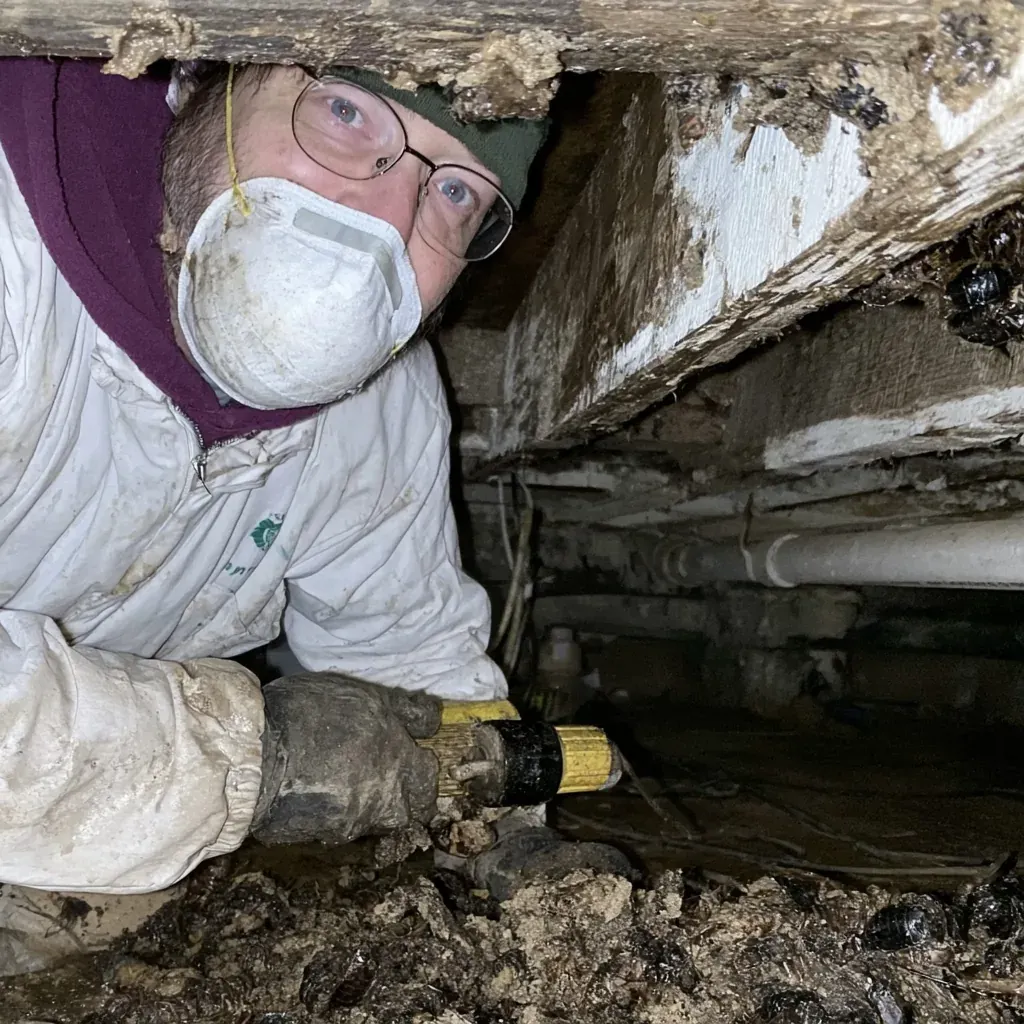
Crawl Space Encapsulation
Taped seams, wrapped piers, a curtain wall up the block, closed vents, and a dehumidifier that matches the square footage.
Learn about Crawl Space EncapsulationMill village houses sitting low over shallow crawl spaces, with later building filled in between them. The damage is done by humidity rather than by any leak: vented air arrives warm and wet and stays against the wood.
Three cotton mills built St. Pauls in the early part of the last century, came under Burlington Mills in 1943, and had nearly all closed by the 1990s. The housing they put up is still standing and still lived in. A mill house is small and framed, and it sits over a shallow crawl space with vents at grade, which in this climate usually means joists that never fully dry. North Carolina treats wood at 20 percent moisture or greater as a condition conducive to subterranean termites, and that reading is easy to hit under a vented crawl space in July. A vapor barrier, better drainage and grading water away from the block change the reading. The town began at the 16 mile post on the old Fayetteville to Lumberton stage road, and US 301 still runs through as 5th Street.
Every town has its own pattern. Here is what actually causes the problems on St. Pauls properties.
Housing in St. Pauls leans to mill village frame houses from roughly 1910 to 1950, on shallow crawl spaces, alongside later infill. Wood sitting in contact with sand is the thing we flag hardest on this construction, whether that is a step stringer, a fence post against the siding, or mulch banked up over the slab line.
Humidity here does most of the damage, since a vented crawl space takes in damp air all summer and holds it against the wood. Working ahead of it is the whole trick. Sealing before storm season, for instance, avoids the wildlife job that otherwise turns up once the water moves.
These are the ranges we quote most often in St. Pauls. Size of the property and how far the problem has spread move the number within them.
| Service | Estimated cost |
|---|---|
| Crawl Space Encapsulation | an estimated $265–$825 |
| Moisture Control | an estimated $265–$825 |
| Termite Control | an estimated $425–$1350 |
| Rodent Control and Exclusion | an estimated $135–$465 |
The old highway route brings commercial traffic and dumpsters within a short walk of houses, which keeps roach and rodent pressure steady along it.
Commercial ground near the interchange runs its own pest pressure, and it is the closest thing the town has to a busy corridor.
Taped seams, wrapped piers, a curtain wall up the block, closed vents, and a dehumidifier that matches the square footage.
Learn about Crawl Space Encapsulation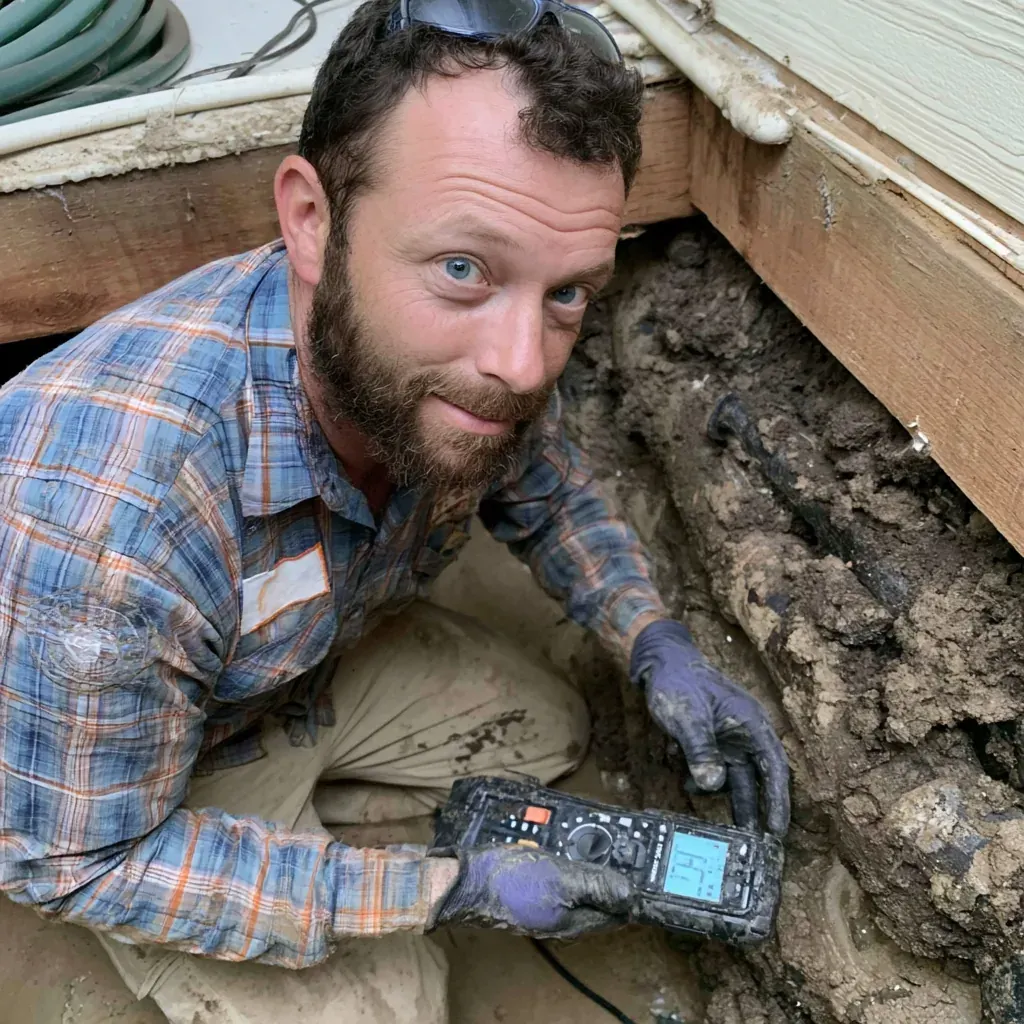
Dry wood is the cheapest termite deterrent there is, and the one nobody sells you.
Learn about Moisture Control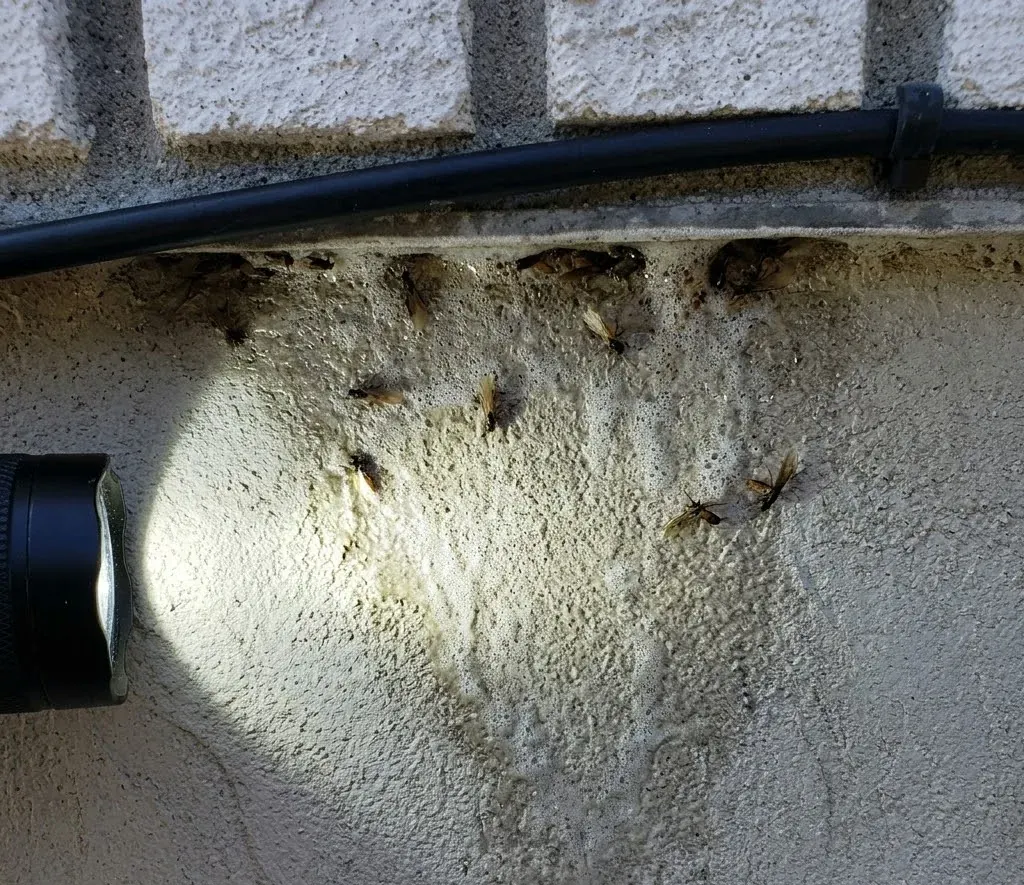
A long swarm season, two very different treatment methods, and three kinds of warranty worth reading closely.
Learn about Termite Control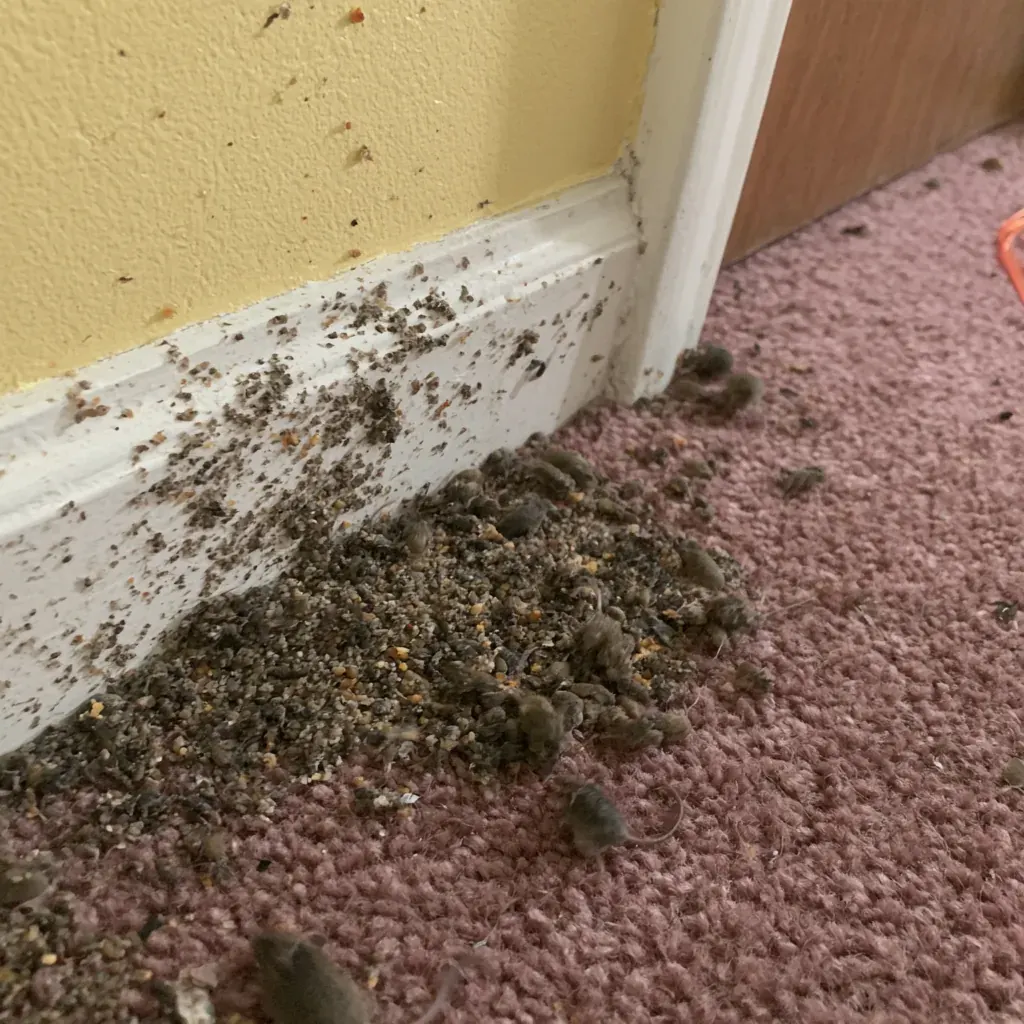
Norway rats down in the substructure and mice at the vent line. Traps clear the population, sealing decides whether it returns.
Learn about Rodent Control and ExclusionFalcon · Godwin · Linden · Parkton · Hope Mills · Spring Lake · Fort Bragg · Raeford
It is sheeting laid over the crawl space soil to stop ground moisture evaporating up into the framing. On a mill house with bare dirt underneath it is usually the single most useful thing that can be done, because it lowers the humidity the wood sits in rather than treating the symptom above it. Most of these crawl spaces have either nothing or a torn barrier from decades ago.
Twenty percent moisture content in the wood is the number that matters, because at or above that it is excessive by North Carolina's own definition and is reported as a condition conducive to subterranean termites. Wood decay fungi may be listed as a conducive condition too. A meter reading takes a minute and settles the argument.
Sometimes, and sometimes a barrier plus drainage does the job for a great deal less. Full encapsulation with a dehumidifier suits a crawl space that stays wet no matter what is done outside. If the water is coming from a downspout dumping at the foundation, fix that first and see where the readings land.
It can, which is why a closed crawl space needs a way to control humidity rather than just being sealed up. Done properly the space is lined, drained and dried. Done halfway it traps damp air, and the wood is no better off than it was with the vents open.
Usually yes. St. Pauls is about 18 miles south of Fayetteville, off I-95 at Exit 33, so a call in the morning generally lands a slot that afternoon. The overnight line takes anything unsafe or spreading, weekends and holidays included. If it is active but staying in one room, a booked daytime visit is the same treatment for less.
Say what you have seen and roughly where. The inspection is free, the findings come in writing, and St. Pauls is close enough that routine work usually goes out within a day or two.
Call (855) 563-1479