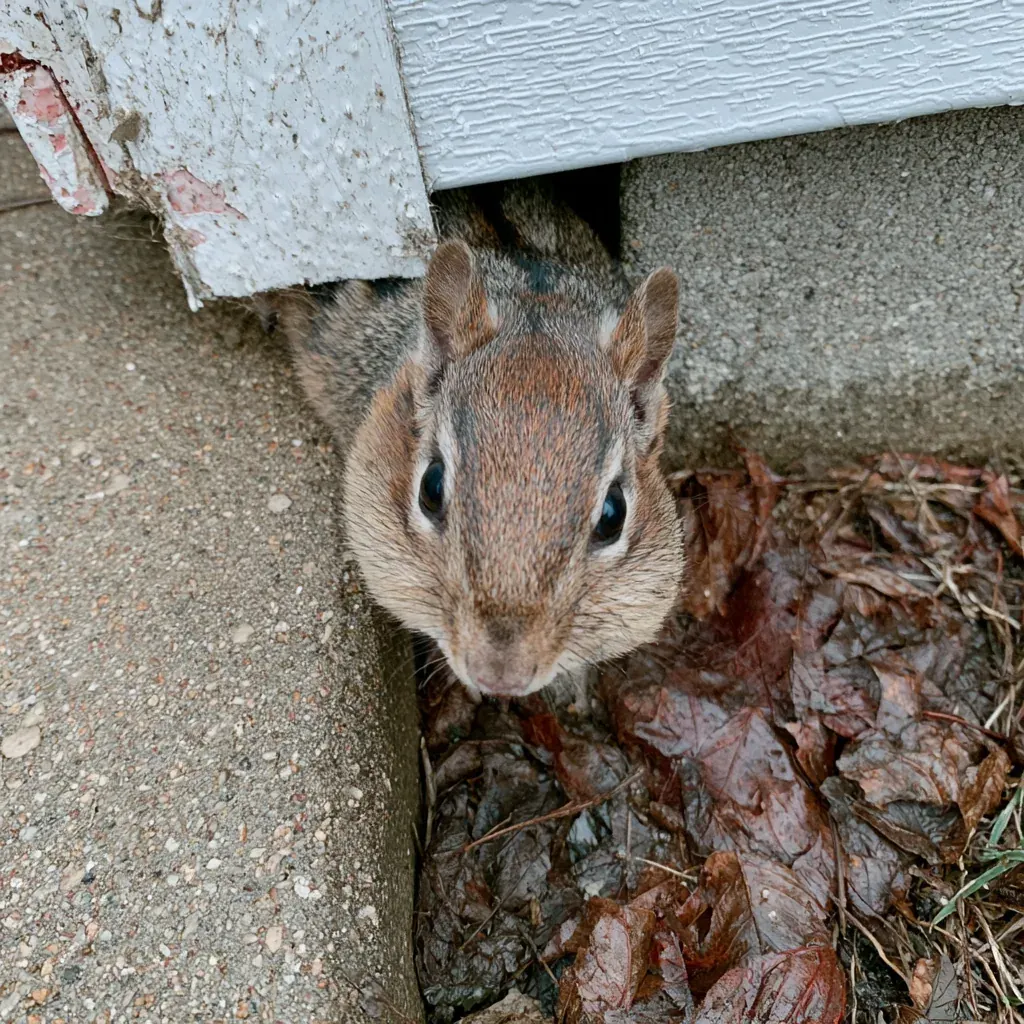
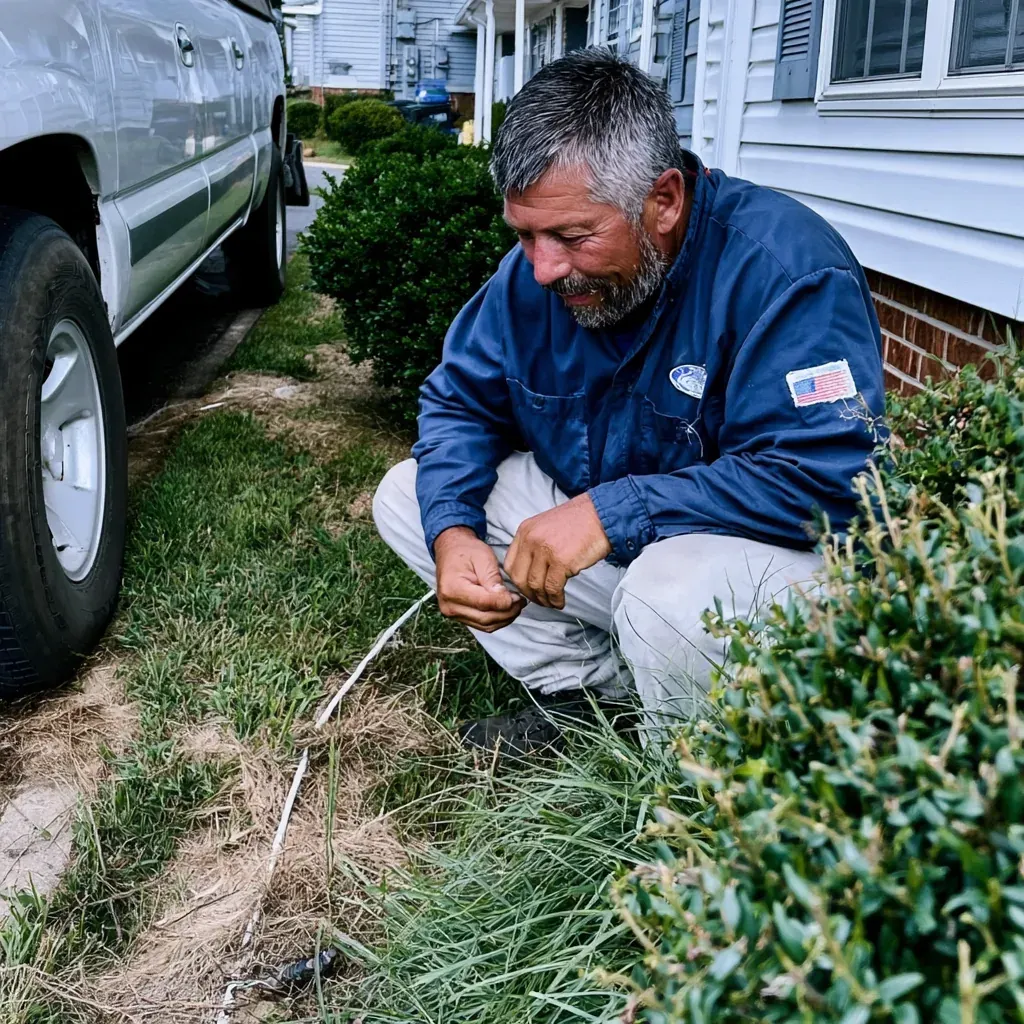
Animals, Not Insects
Wildlife in Fayetteville Homes
Scratching overhead, something heavy under the floor, ridges across the lawn, or a smell nobody can place. 7 animals, and what each one takes to end properly.
The gist
Animal work is priced unlike insect work because most of it is not treatment. Three things have to happen: the animal leaves alive and permanently, the opening is rebuilt or screened in something it cannot chew through a second time, and whatever it has left in the roof space or under the floor gets cleared. Miss out the middle one and you have paid for a pause. There is one more thing to know before you book anything, and it is a date: in North Carolina, bat exclusion is prohibited from 1 May through 31 July.
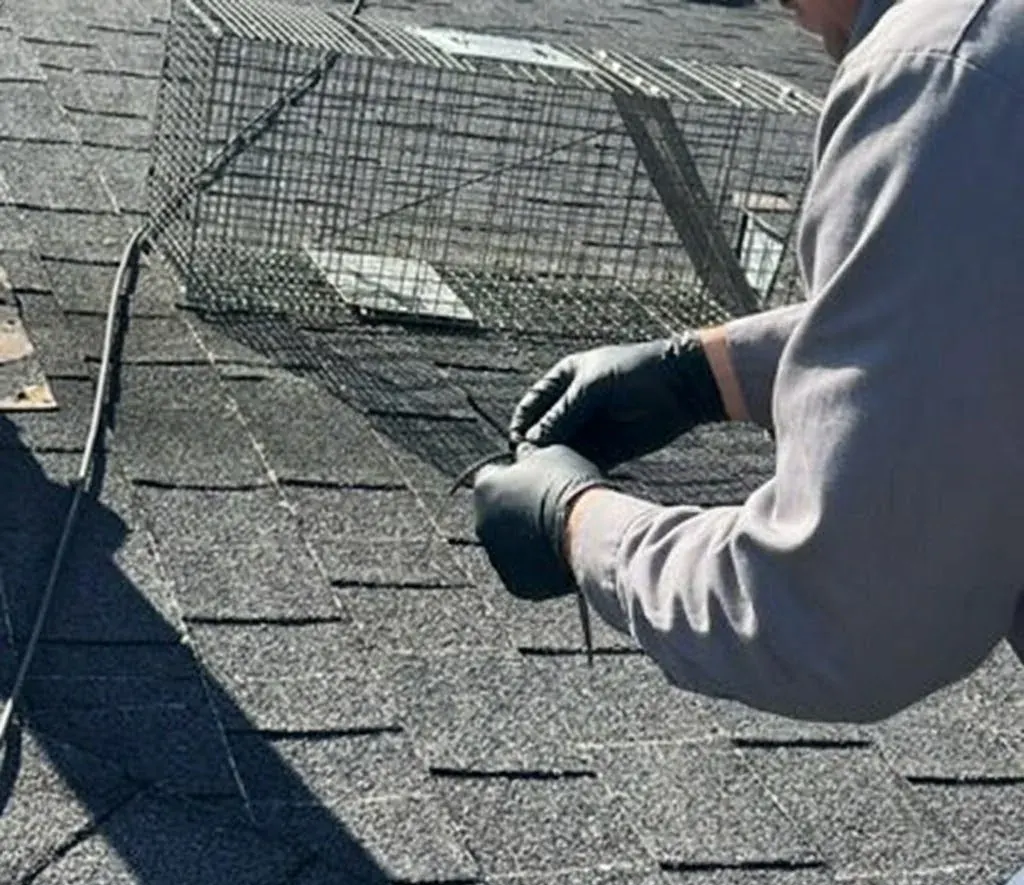
The openings themselves are rarely dramatic. On houses across Cumberland County the same short list keeps turning up: a crawl space door that no longer sits flat in its frame, foundation vent screens gone at a corner, the soffit return where a porch roof runs into the wall, ridge or gable venting lifted by a summer storm, and the gap where a dryer duct or a set of cables passes through. None of those is a building fault. No residential code asks a house to be animal proof, so none of them are, and the details involved are entirely normal.
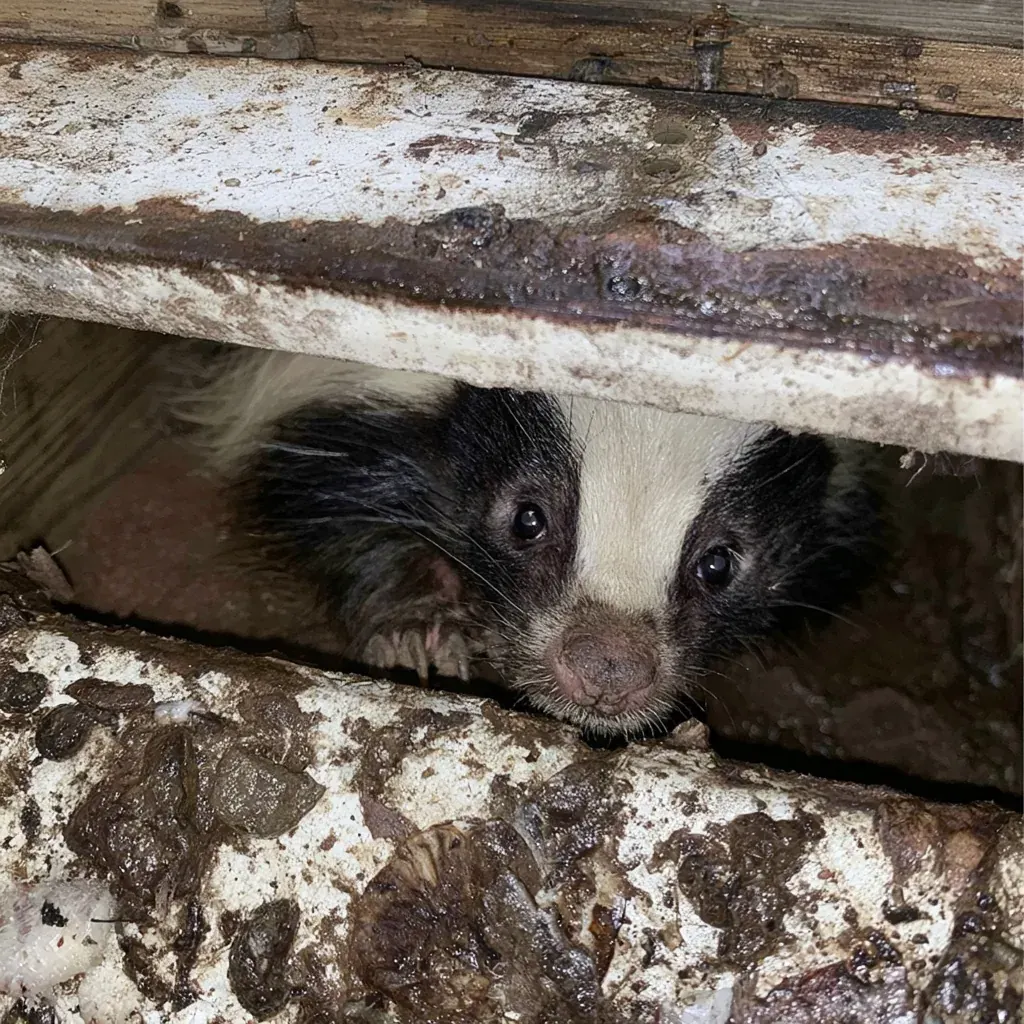
What does change the job here is what the house sits on. Over a raised floor, the crawl space is the den: skunks and opossums under the skirting, snakes in the cool, and the whole space damp enough to be attractive most of the year. On a slab there is nowhere underneath to get into, so the same animals go up instead and the calls become roof lines, soffits and attics. Both halves of that split are common in this county, which is why the first question on the phone is how your house meets the ground.
Animals we handle
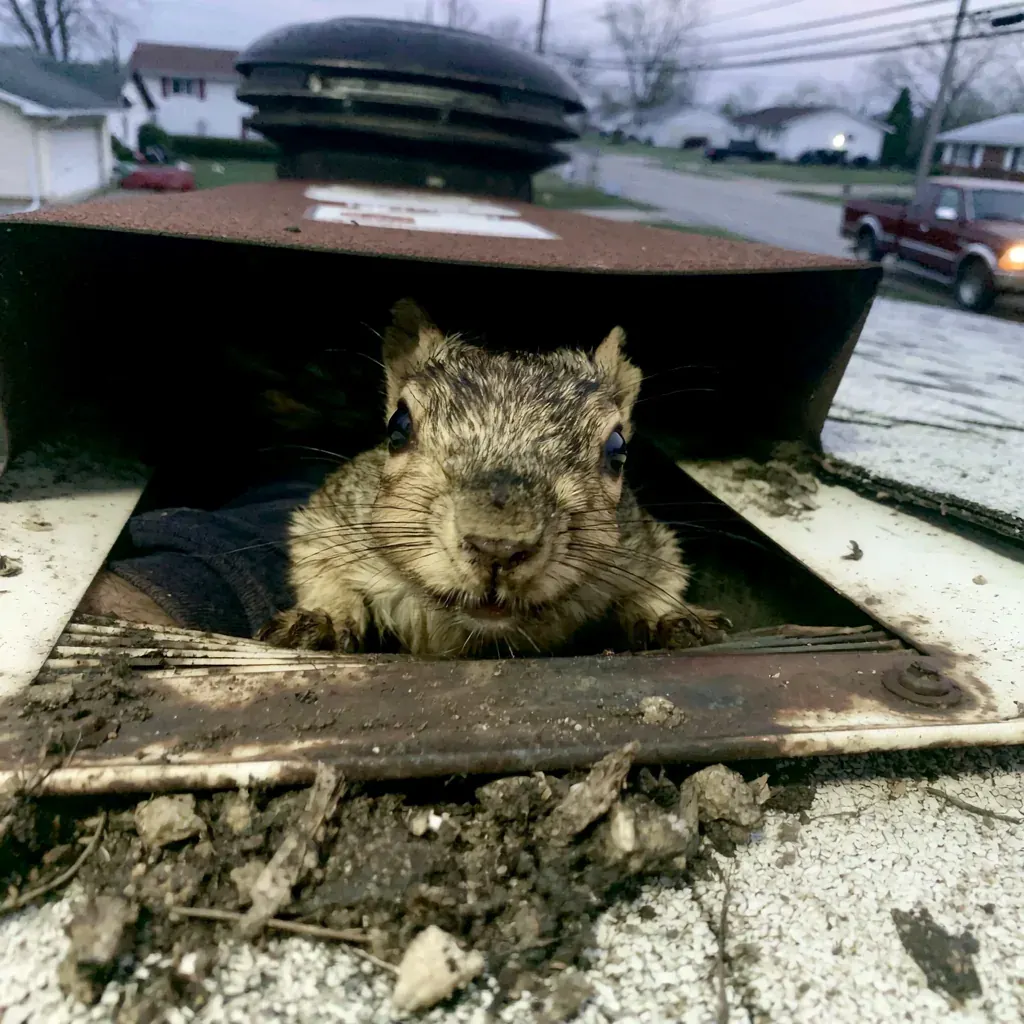
Questions & Answers
Frequently Asked Questions
Why does this get priced differently from a treatment?
Because most of the invoice is not chemistry. An insect job is product put in the right place. This is three jobs stacked: get the animal out, then rebuild or screen the way it got in with a material it cannot chew back through, then clear whatever it has left behind in a roof space or under a floor. The middle job is carpentry and the last one is cleaning, and neither belongs on a pest ticket. Skip the middle job and you have bought a delay rather than a fix.
Who is allowed to do this work in North Carolina?
The state term to ask for is Wildlife Control Agent. The North Carolina Wildlife Resources Commission licenses them and publishes a list, so it is a credential you can check rather than a claim. That is separate from the NCDA&CS structural pest license that covers insect work, and a company can hold one without the other. If somebody is quoting to take an animal out of your roof, ask which of the two they are working under.
Is there a month when you cannot touch bats?
There is, and in this state it is a date range rather than a suggestion. Bat evictions and exclusions are prohibited from 1 May through 31 July, other than under special circumstances approved by the Wildlife Resources Commission. The reason is that the pups cannot fly yet, so sealing the roost walls them in alive. Bats are also a protected species here. What that means in practice is that a bat problem found in June gets an inspection, a plan and interior protection now, with the exclusion itself booked for August. Anyone offering to seal a live roost in June has told you something useful about how they work.
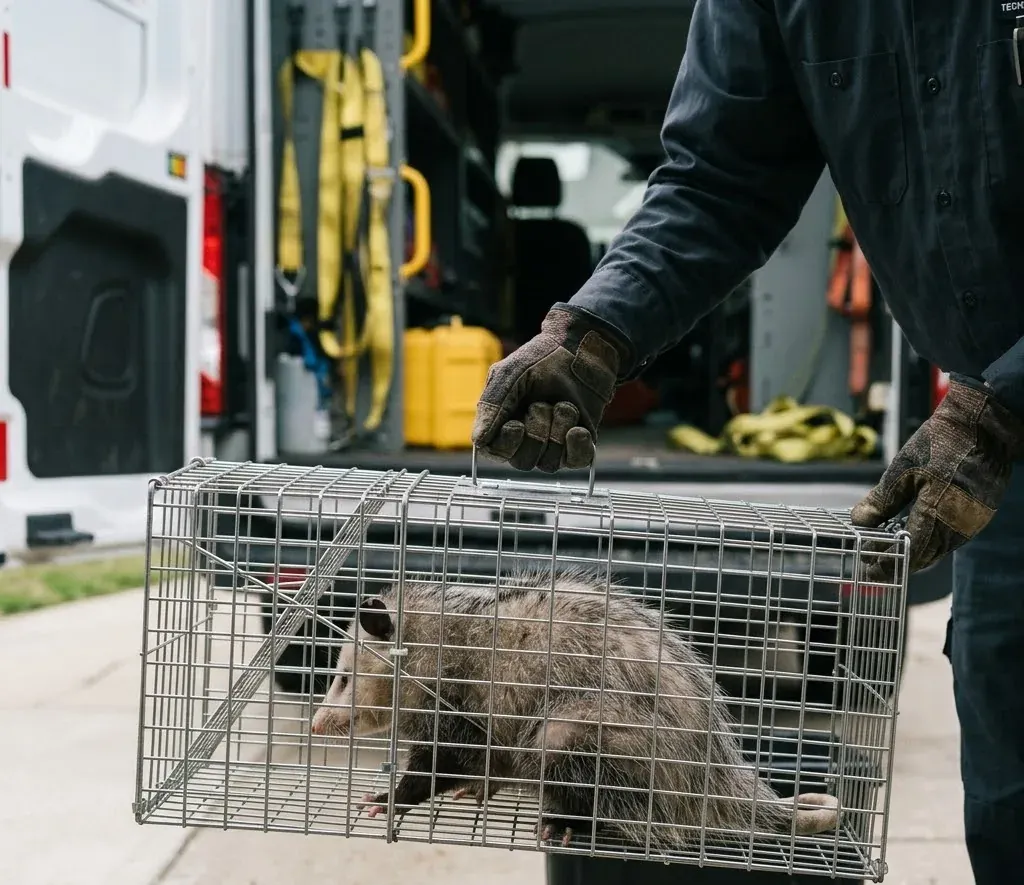
Can I trap it and drive it somewhere else?
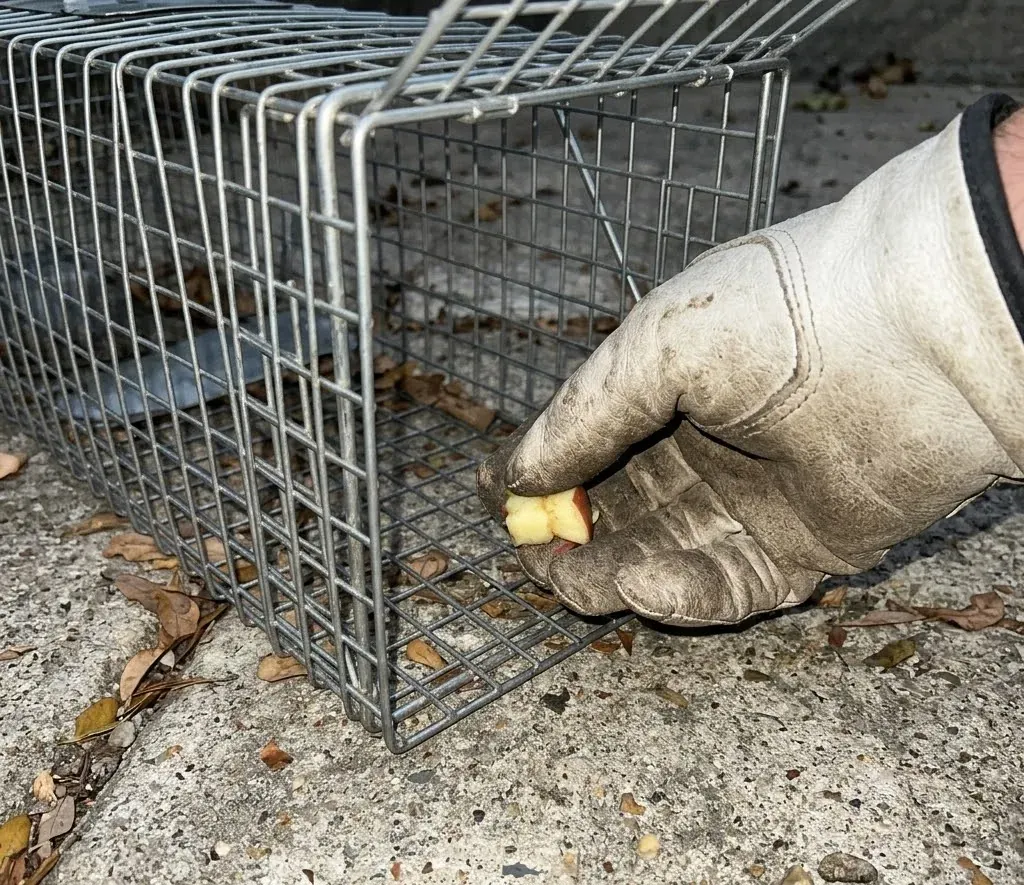
It is the instinct and it is nearly always the wrong call. An animal put down in unfamiliar ground usually does not last, and the hole it used is still open while you are driving, so something else takes the space within weeks. The money does more good spent on the opening. That is also the honest reason relocation gets offered: it is quick, it feels decisive, and it does not require anybody to get on a ladder.
Does my house being newish make any difference?
Barely any. No residential building code requires a house to be squirrel, raccoon or rodent proof, so nobody builds one that way, and the gaps involved are ordinary construction details rather than defects. A subdivision house finished two years ago has a soffit return and a gable vent like everything else. What newer builds do change is the substructure: more of them sit on slab, so the calls tilt toward attics and roof lines rather than crawl spaces.
I live in on-post housing at Fort Bragg. Can I just book?
Usually not directly, and it is worth knowing before you spend an afternoon on it. Quarters are assigned rather than owned, and requests normally go through the housing office rather than being arranged and invoiced by the resident. So the first call is to find out what your housing office handles and where its limit sits. Off post, in Spring Lake, Fayetteville or across the Hoke County line, a private lease puts the duty to keep the place fit and habitable on the landlord for the whole tenancy, which is a different conversation again.
Get Started Today
Something in the roof, or under the floor?
Have the openings found before anything is trapped. That is the half of the job that decides whether you deal with this once or every autumn, and the look costs nothing.
Call (855) 563-1479