Hope Mills, NC
Low yards that hold water for days after a summer storm, and ranch houses from the seventies sitting right in among newer subdivision build.
Pest control in Hope Mills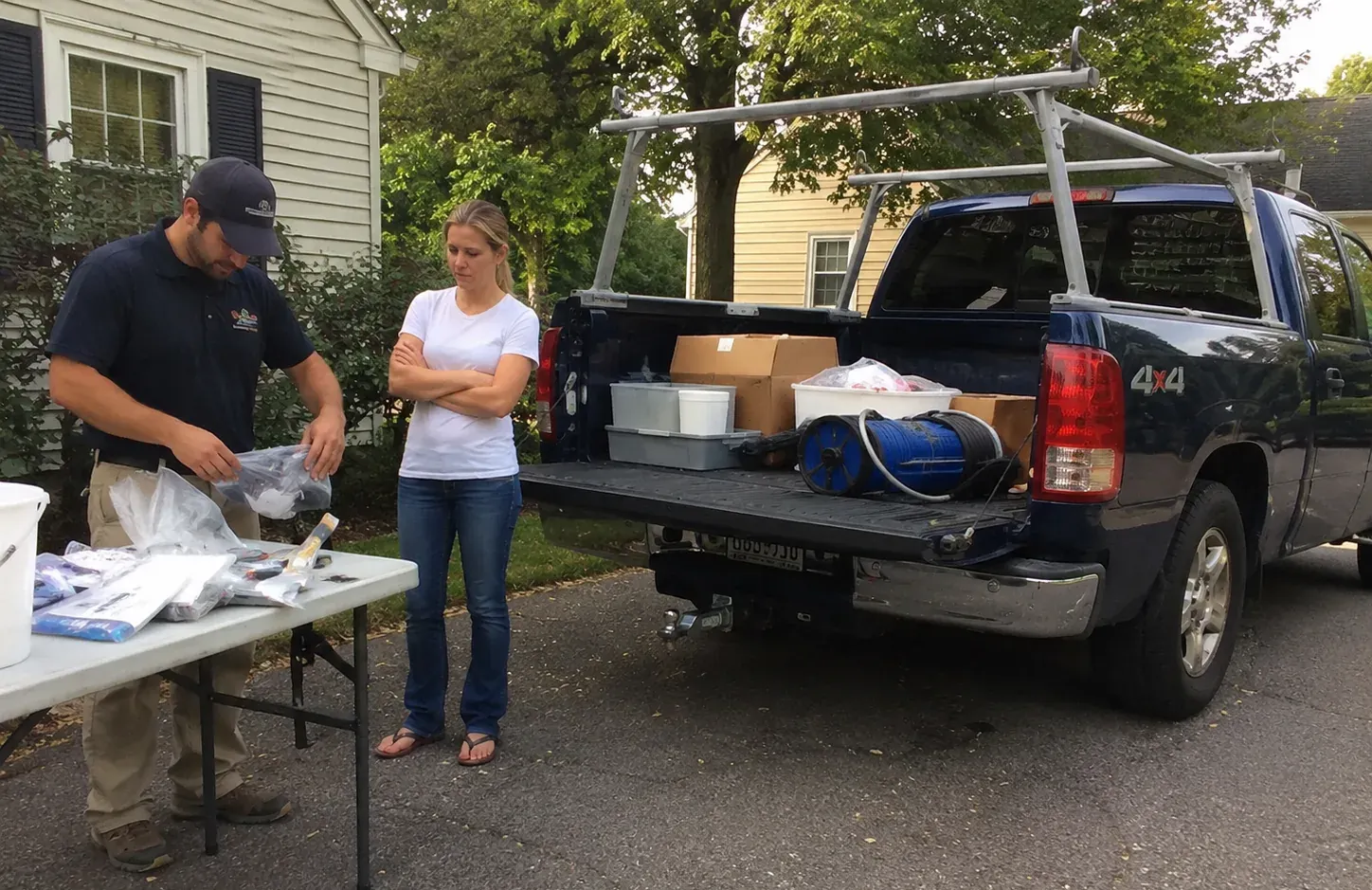
Working from Fayetteville across 17 communities in Cumberland County and just past the line, from the creek bottoms to the newer subdivisions.
Cumberland County covers roughly 661 square miles and the calls genuinely change as you move across it. Down toward the Cape Fear and the creek bottoms, water sits in low ground long enough to keep mosquito pressure up from spring into October and to hold damp under a raised floor. Around the base and the newer subdivisions the picture flips: slab on grade rather than crawl space, so the route in is the bath trap and the plumbing penetrations, and the calendar runs on tenant turnover rather than on the seasons. Out east and west into the farmland the lots get bigger, which brings fire ant mounds across open sandy yards and a lot more wildlife work in outbuildings and attics.
Which is why each community is written up separately rather than from one template. Open a town and you get how its houses sit on the ground, which water is nearest it, when its worst weeks fall, and the jobs that genuinely come up there. The rate card does not move with the address, and the pricing guide applies from Cross Creek out to the county line.
17 communities listed so far, each with its own water, its own housing stock and its own worst month.
Low yards that hold water for days after a summer storm, and ranch houses from the seventies sitting right in among newer subdivision build.
Pest control in Hope MillsA lot of rented apartments and a warm season that barely lets up, which is the combination roaches and bed bugs do best in.
Pest control in Spring LakeHousing assigned through the post office rather than owned, so the route to getting something dealt with runs differently from anywhere else in the…
Pest control in Fort BraggSandhills sand that drains in minutes at the surface and stays damp a foot down.
Pest control in RaefordRural houses over crawl spaces, most of them older than the town itself.
Pest control in EastoverA village that grew around an early-century core, with houses from this century filling the gaps between.
Pest control in StedmanBuilt mostly since the nineties, which in this area means slab on grade.
Pest control in RockfishTwo very different jobs in one town: old houses near the middle, and warehousing out by the interstate. One is a structural inspection;
Pest control in DunnA mill town whose original housing is still lived in a century on. The west side sits low enough that the air never fully dries, and old framing in that…
Pest control in ErwinPrewar and postwar houses near the river, a lot of them repaired or rebuilt since 2016.
Pest control in LumbertonA small older town center with rural properties around it, on river bottom ground that stays wet long after the surrounding fields have dried.
Pest control in WadeA small village with farms along every road out of it, and the South River near enough to matter.
Pest control in FalconFrame houses along Dunn Road, with newer places on bigger lots past the town line.
Pest control in GodwinFarm and village houses, many older than the century, standing over bare earth on heart pine.
Pest control in LindenVillage lots carrying frame houses of every age, with newer homes strung along the roads out.
Pest control in ParktonMill village houses sitting low over shallow crawl spaces, with later building filled in between them.
Pest control in St. PaulsAn early-century brick downtown with postwar slab and crawl space housing spread around it.
Pest control in ClintonRight now we cover Hope Mills, Spring Lake, Fort Bragg, Raeford, Eastover, Stedman, Rockfish, Dunn, Erwin, Lumberton, Wade, Falcon, Godwin, Linden, Parkton, St. Pauls, Clinton plus Fayetteville itself, and towns get added as demand builds. If you do not see yours, ring us. Anywhere in Cumberland County is very likely a yes, and we do cross the line for jobs just outside it.
No. There is one rate card and it does not move with the address. What moves your figure is the building itself: whether it sits on a poured slab or over a crawl space, how many linear feet of footing there are to band, how much land comes with it, and how many seasons the problem has had.
They do, enough that writing one page for all of them would be dishonest. Toward the Cape Fear and the creek bottoms, water sits in low ground and keeps the air under a raised floor damp for months. Around the base and the newer subdivisions the construction flips to slab on grade, so the way in is the bath trap and the pipe penetrations, and the calendar follows tenant turnover rather than the weather. East and west into the farmland the lots open out, which means mounds across bare sand and a lot more wildlife in barns and outbuildings. Each town page carries its own version of that.
It reorders itself. Once heavy rain has gone through, the calls shift to wildlife pushed out of low ground, roaches moving indoors and standing water under floors, so anything where water is actually inside the structure goes up the list. Planned visits still run. If yours has to move, somebody rings you rather than leaving you to wonder.
One call answers it, and the inspection afterwards is free whichever way it goes. Anything urgent, particularly in the days after a storm, we try to reach before the day is out.
Call (855) 563-1479