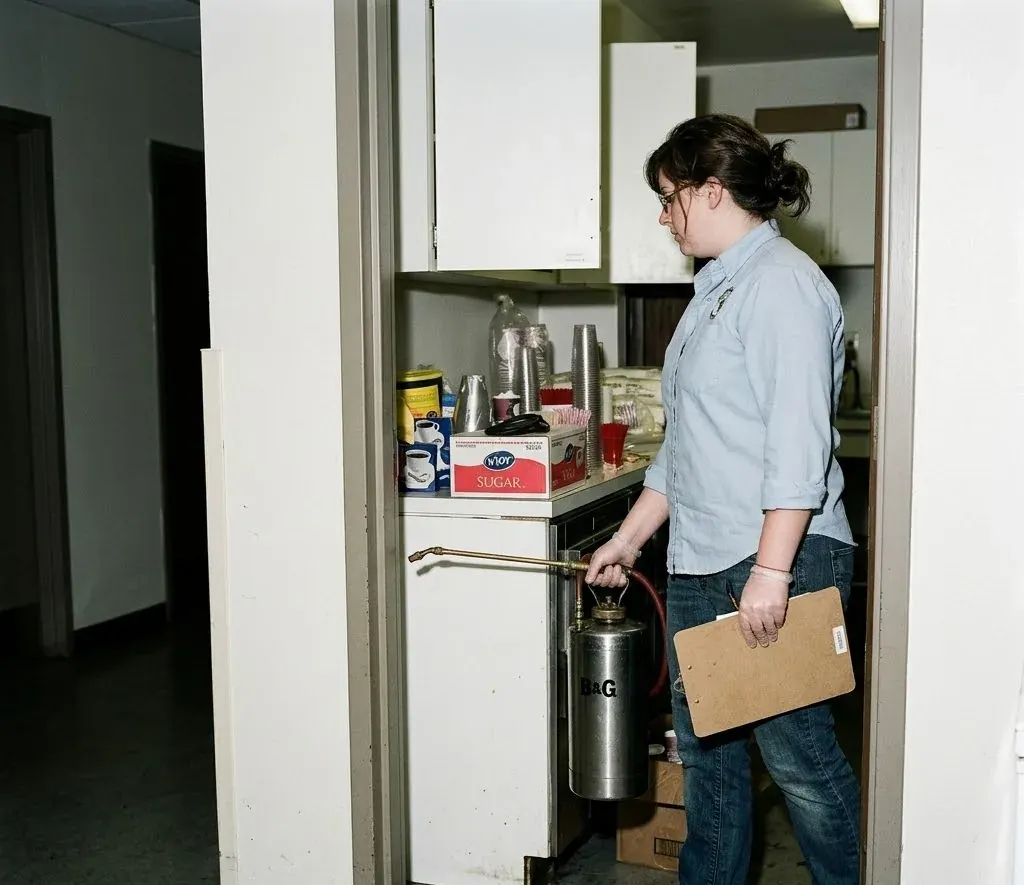
Two people read a school pesticide notice and take completely different things from it. A parent wants to know when something will be applied and whether they can be told in advance. A facilities manager wants to know what has to go out, to whom, and by when. In North Carolina both answers come from one law, and the part everybody remembers is the 72 hours.
What the Schoolchildren's Health Act requires
The Schoolchildren's Health Act of 2006 governs pesticide use in schools in this state. The principal or a designee must annually notify parents, guardians and custodians, along with school staff, of the schedule of pesticide use on school property and of their right to request notification.
Read the two halves of that separately. There is a schedule, and there is a right to be told. The annual notice is where both are handed over, which is the practical reason to actually read the one that comes home in the fall rather than filing it with the lunch menu.
Where the 72 hours sits
The annual notice must also cover the right to 72 hours advance notice of a non-exempt pesticide application that was not previously scheduled. So the 72 hour notice is not a separate program you discover by accident. It is a right the annual notice is required to tell you about.
The trigger is the combination of two things: an application that is not exempt, and one that was not already on the published schedule. Anything already on the schedule was notified when the schedule went out.
Some categories are exempt, and this page will not list them
Certain low-risk categories of pesticide are exempt from the notification requirement. We are not going to print a list of them, because the specific list has not been verified here and a wrong list on this subject is worse than no list at all. Ask the district office, or call the NCDA&CS Structural Pest Control Division on 984-236-4625 and get it from the source that has to be right.
Integrated Pest Management is how districts comply
North Carolina school districts adopt Integrated Pest Management policies to meet the law. In practice that pushes the program toward the things that need no notice at all: exclusion, sanitation, monitoring, moisture repair, and treating a cause rather than a sighting. Fewer scheduled applications means fewer notices to send, and it happens to be the approach that stops a cafeteria or a locker room becoming a recurring line item.
It also puts effort where a school building genuinely loses ground: sweeps on doors propped open all day in warm weather, a kitchen bin pad that holds water after a storm, roof drainage running against a wall, and portable classrooms with a skirted underside nobody has looked at in years.
For parents, what to do with the notice
Keep it, and treat it as the start of a conversation rather than a form letter.
- Read the schedule and keep the notice, since it names the contact you would call later
- Request notification in writing if you want it, and keep a copy of your request
- Ask what triggers the 72 hour notice and how it will reach you, by email, phone or paper
- Ask who holds the pest management records for the building and whether you can see them
- If a child has a specific health concern, take it to their doctor and to the school nurse
- Childcare and preschool programs may sit under different rules, so ask the operator directly rather than assuming
For facilities staff, what makes this easy
Build the schedule before the school year rather than during it. Keep the annual notice, its distribution list and the dates it went out together in one file, and make sure whoever answers the phone at the school knows where that file lives, because the question always arrives on the day nobody is available. Then work at making unscheduled applications rare, since every one of them starts a 72 hour clock and a round of phone calls.
The licensed local pros we connect you with work with schools, daycare and other institutional buildings across Cumberland County. The useful question to ask a contractor is how their reporting fits your notice obligation, not just what they intend to apply.
Dealing with this in your home?
We offer free inspections and honest recommendations across Fayetteville and the surrounding towns. Call (855) 563-1479 and we’ll help you sort it out.