Almost every black widow encounter happens the same way. A hand goes somewhere the eyes never went: under a deck rail, into a stack of pots, behind the lid of the meter box, along the top of a foundation wall in a crawl space. The spider is not hunting anybody and it is not quick. It is sitting in a web in a dark, undisturbed place, which is exactly where the hand went.
Five places to check first
These are the spots that come up over and over around houses here. None of them takes more than a few seconds to look at properly.
- The electric meter box and the inside of its lid, plus irrigation and pump boxes set into the ground
- The woodpile, especially the bottom two courses and the underside of anything resting on soil
- Stored plant pots stacked and nested together, and the saucers underneath them
- The underside of a deck rail, the joist faces beneath the deck, and the gap behind a step stringer
- Crawl space corners, sill plate junctions and the back faces of pier blocks
The marking is on the underside
A mature female is glossy black with a red hourglass on the underside of the abdomen, which means you usually cannot see the marking at all from above. That is worth knowing before deciding a spider is harmless based on a shape seen at arm's length. Younger spiders and males look different again, lighter and patterned, and mostly go unnoticed.
Do not go turning a spider over to check. Identification from the underside is a job for a photograph taken through a jar, or for somebody who does it for a living.
The web gives it away before the spider does
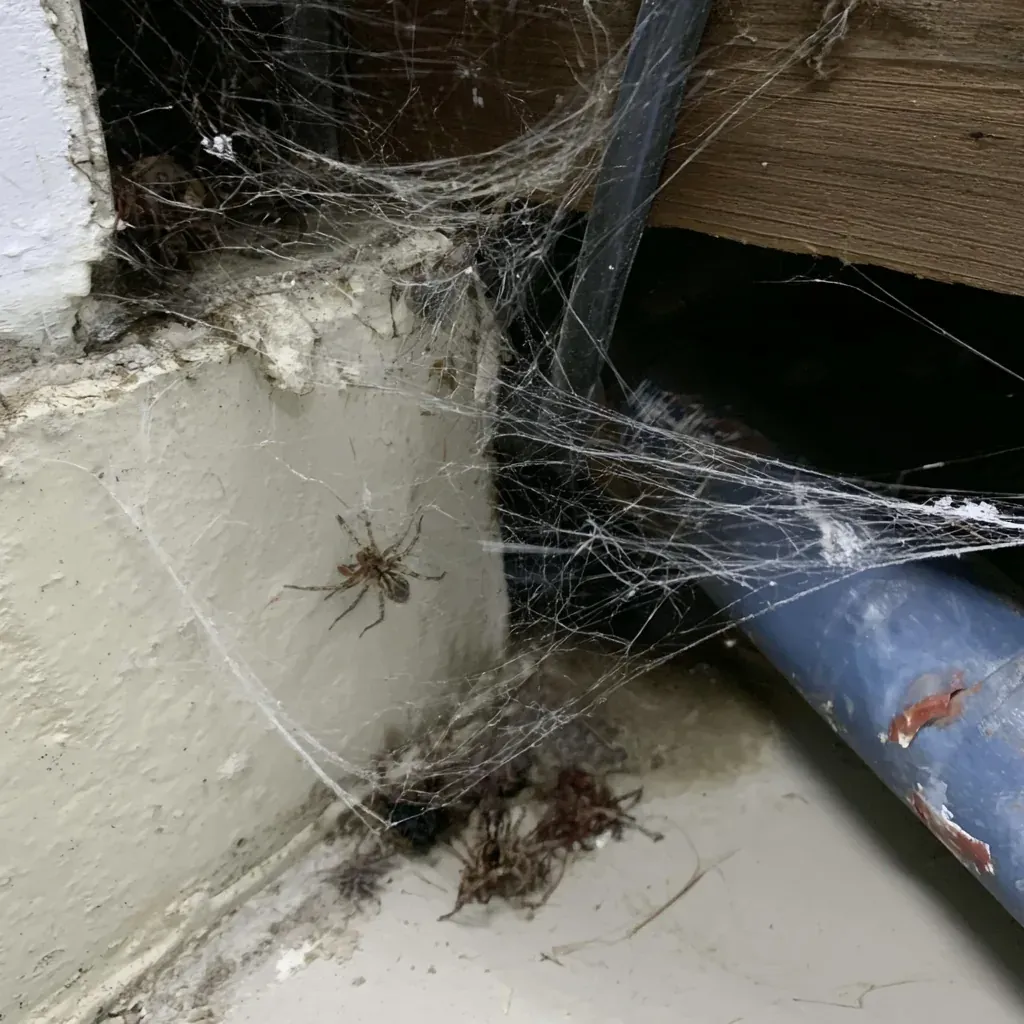
The web is the more reliable clue, and it is visible from further away. It is a strong, coarse, irregular tangle with no pattern to it, nothing like the neat wheel shaped web strung across a doorway overnight. It feels tougher than it looks if you brush against it. It is built low, in a corner or under something, usually with a retreat off to one side where the spider sits through the day.
Papery egg sacs in that tangle, round and off white, mean the location is established rather than a passing visitor, and that changes the job from housekeeping to something worth treating.
Gloves and a flashlight are the actual protection
No product beats looking before you reach. Leather gloves for wood and pots, a flashlight in the meter box and under the deck rail, and the habit of tipping a pot over and looking rather than putting a hand inside it. Move stacked wood with a rake or a hook instead of your fingers, and let anything you carry out of a shed sit in the open for a day before it comes into the house.
About brown recluse
Brown recluse gets named far more often around here than it turns up, and it is not the resident concern people assume it is in this part of North Carolina. A good deal of what gets blamed on it was never identified and in plenty of cases was never a spider at all. If you find one you cannot name, catch it in a jar rather than argue about it, because identification comes from looking at the spider and not from looking at a mark on skin.
If somebody is bitten
Keep this simple and do not improvise. Wash the area with soap and water, put a cold pack on it, and see a doctor. If symptoms are severe, call 911. Bring the spider along if it was caught, since it makes the conversation shorter. Nothing on this page is medical advice, and a doctor is the right person to make every call that follows.
Cooler weather brings them in closer
As the nights cool through fall, sheltered spots get more attractive and the ones nearest the house start getting used: the corners of a garage door track, the inside of a storm door frame, a basement window well, boxes stacked in the garage against a warm interior wall. Nothing dramatic happens on any particular night, the pressure just shifts inward. A walk through the list above in October is worth more than the same walk in June.
Clearing a woodpile without meeting one
Do it in daylight, in gloves, in long sleeves. Move the pile a piece at a time to a new spot rather than digging into the middle of it, and expect the bottom courses against the soil to be the busiest part of the whole stack. Restack off the ground on a rack or on rails, and set it away from the wall of the house rather than against it. Firewood leaning on siding is a spider decision, an ant decision and a termite decision all at once, and the fix is identical for all three.
When a treatment is worth booking
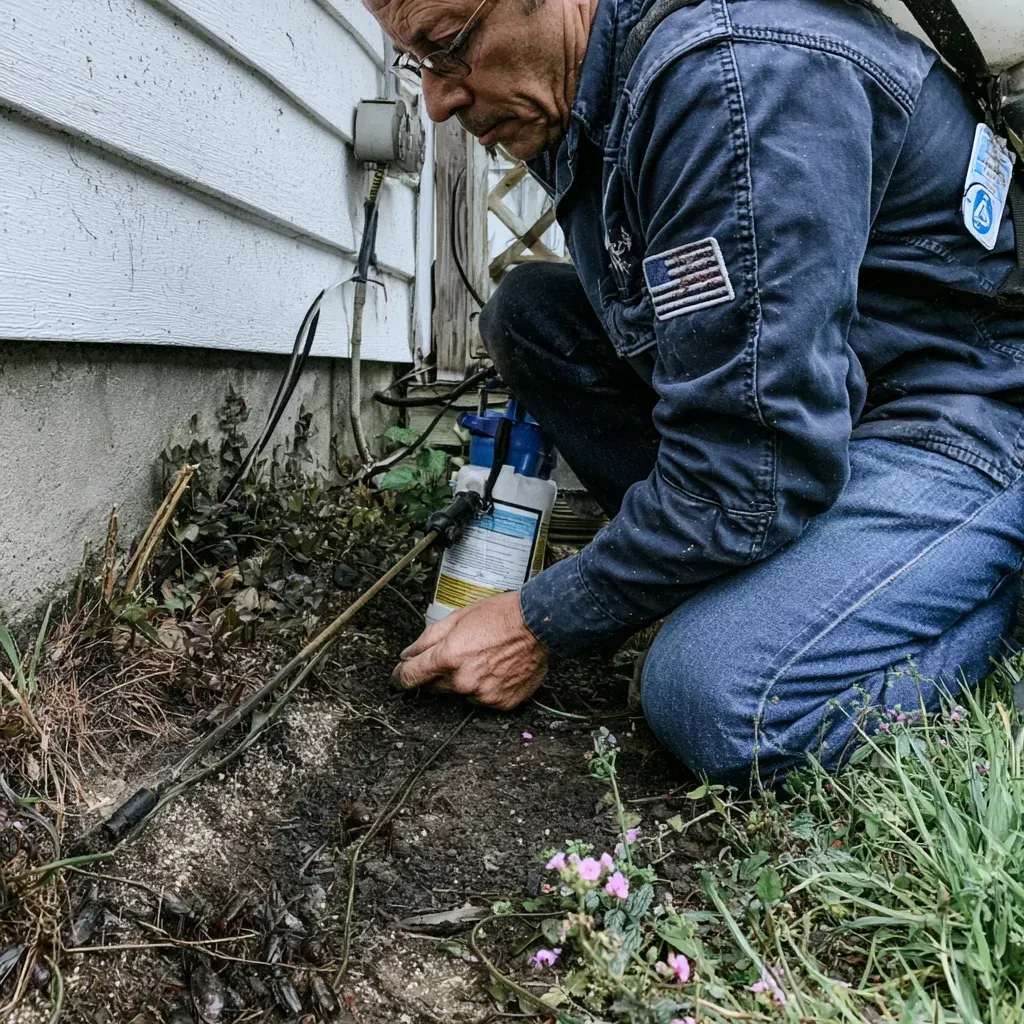
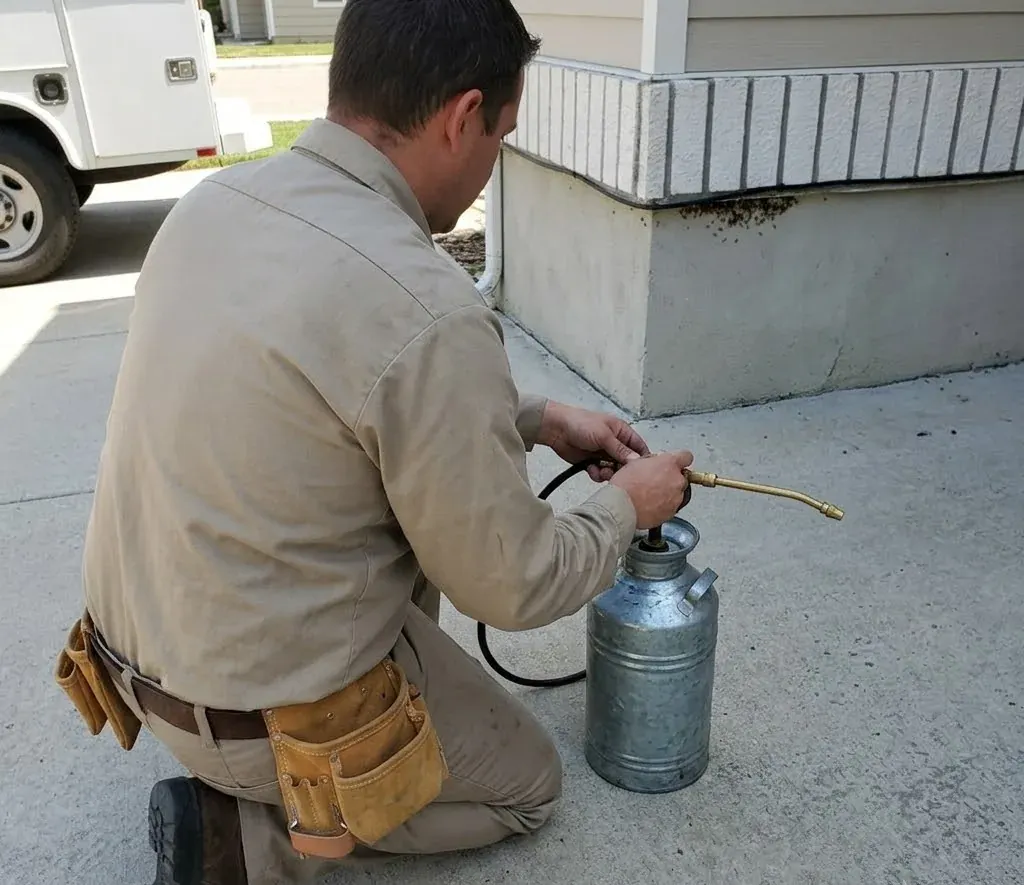
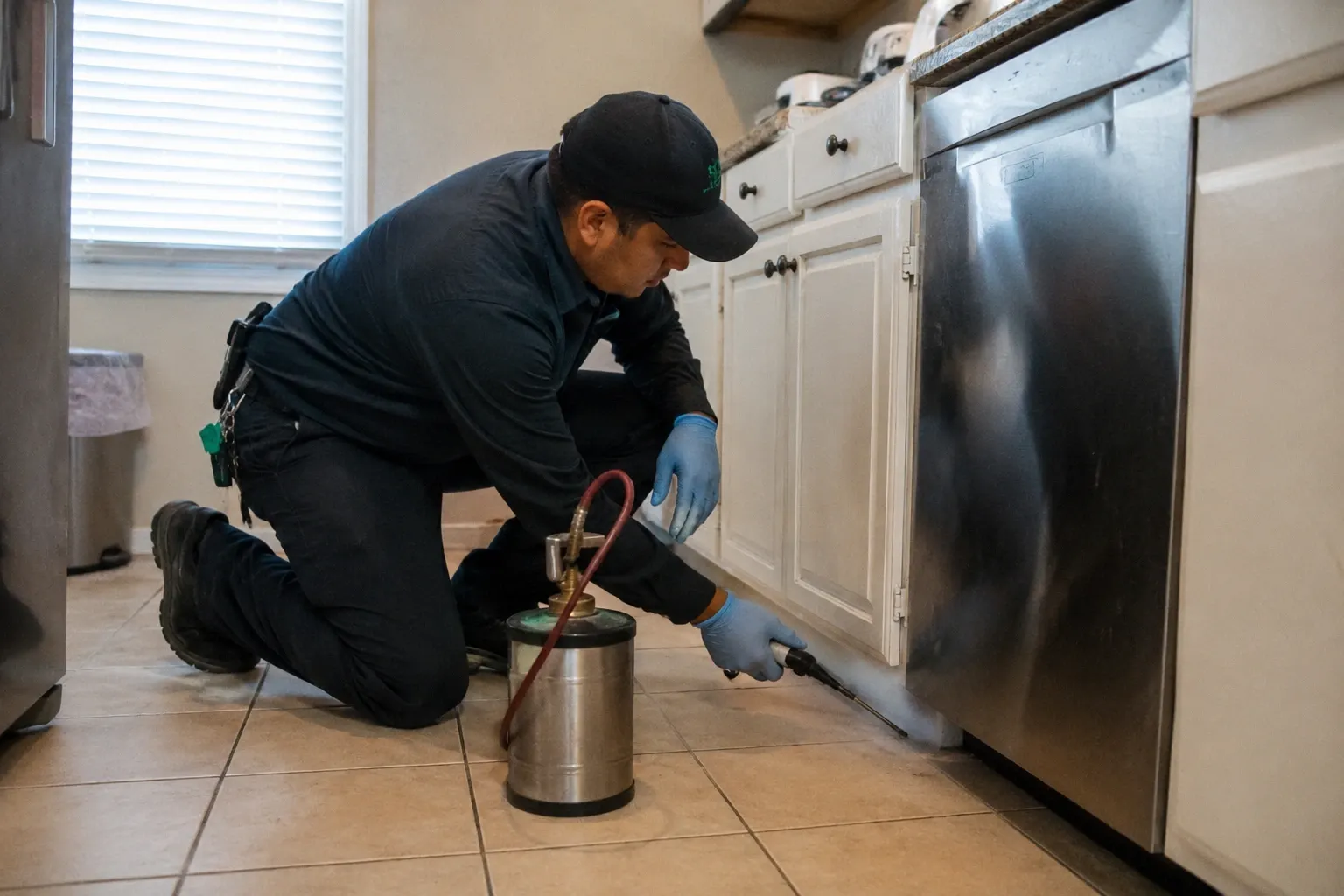
Repeated finds indoors, egg sacs in a crawl space or garage, or an established spot near where children play all move this from housekeeping to a job. Treatment is mostly targeted work in the harborage, physical removal of webs and sacs, and closing the gaps that made those places dark and undisturbed to begin with. The licensed local pros we connect you with cover spider work across Fayetteville, Spring Lake and Hope Mills, and it is reasonable to ask that the inspection include the meter box, the deck and the crawl space corners by name.
Dealing with this in your home?
We offer free inspections and honest recommendations across Fayetteville and the surrounding towns. Call (855) 563-1479 and we’ll help you sort it out.