Apartments & Multifamily
Apartments, duplexes and rental portfolios
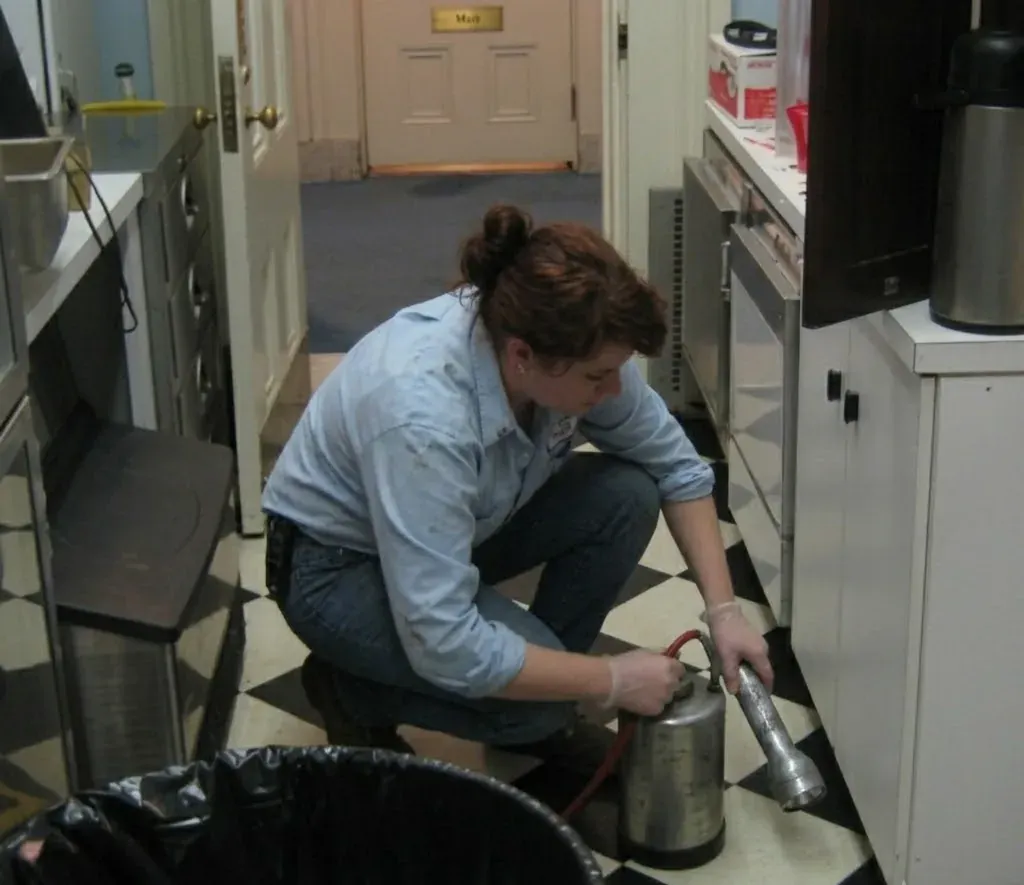
The notification duty is the part most quotes never mention.
School pest control in North Carolina comes with paperwork. Under the Schoolchildren's Health Act of 2006 the principal or designee must notify parents, guardians, custodians and staff each year of the pesticide use schedule and of the right to request notification, and give 72 hours advance notice of a non-exempt application that was not previously scheduled. Districts adopt Integrated Pest Management policies to meet that, which puts sanitation, exclusion and monitoring ahead of spraying.
The Schoolchildren's Health Act of 2006 is the piece of North Carolina law that shapes how pest work gets done on a school campus, and it is mostly about telling people. Two duties matter to whoever runs the building. There is an annual notice, and there is an advance notice for anything that was not on the schedule.
The annual notice goes to parents, guardians and custodians as well as to school staff. It has to cover the schedule of pesticide use on school property and the right to request notification. Separately, where a non-exempt application was not previously scheduled, 72 hours advance notice applies. Some low-risk categories are exempt from the notification requirement, and a serious vendor will tell you which of their products fall where rather than guessing on your behalf.
None of this is exotic and none of it is expensive. It does, however, get missed, usually because the pest work was booked as a facilities line item and nobody connected it to the notice that goes home in a folder.
A private daycare tucked off Dunn Road (US 301) near Godwin faces the same paperwork gap as a church-run preschool near Linden's Ivy Burne community, and the pros we connect you with treat both the same as any center inside Fayetteville: notice goes home before the truck arrives, not after. Distance from Interstate 95 at Exit 65 doesn't change the requirement, and a center near St. Pauls off I-95 at Exit 33 follows the identical timeline a Fayetteville center would.
Reduced to a table so it can be checked against what your campus is actually doing.
Fayetteville school and daycare administrators handle this paperwork alongside campuses well outside city limits, since the same notification rules apply whether the building sits near a base like Fort Bragg or out toward Spring Lake, or further southwest near Raeford and the Hoke County Courthouse. A center near Hope Mills Historic District files the same 48-hour notice as one downtown. The licensed pros we connect you with keep the IPM log consistent no matter which district reviews it.
| Duty | Who it reaches | Timing |
|---|---|---|
| Notice of the pesticide use schedule | Parents, guardians, custodians, staff | Annually |
| Notice of the right to request notification | Parents, guardians, custodians, staff | Annually, in the same notice |
| Advance notice of an unscheduled application | Those who requested notification | 72 hours ahead |
| Responsibility for issuing notice | Principal or designee | Ongoing |
| Exempt low-risk categories | Notice not required | Confirm status per product |
North Carolina districts adopt Integrated Pest Management policies to comply, and that word gets used loosely by vendors who mean nothing more than using less spray. On a campus it means something specific: pest pressure is measured, the physical and sanitation causes are corrected first, treatment is targeted at the harborage rather than applied broadly, and every step is written down.
In practice a campus IPM program spends most of its budget on things that are not pesticides. Monitors in the cafeteria and kitchen. Door sweeps on exterior classroom doors. A dumpster pad that gets washed. Mulch pulled back off the building. Custodial routines that get food waste out of the building daily rather than by Friday. When treatment is needed it is specific, small, and scheduled so a classroom is empty.
That order of operations is also what makes the notice manageable. A program built on exclusion and monitoring has fewer unscheduled applications to give 72 hours notice about, because the surprises get designed out.
Notice periods matter more when a district spans several buildings on different maintenance schedules, and that same coordination problem exists for private daycares outside Fayetteville proper. A center near Godwin, off the Dunn Road corridor, may share a service contract with a sister location toward Falcon, and the paperwork has to travel with the technician's schedule rather than the calendar. The pros we connect districts with build the notice into the route, not the visit, so a stop near Falcon Tabernacle and one back in town log the same day.
The younger the occupants, the more the floor matters. Toddlers spend the day at ground level, on mats, under tables and in the corners where crumbs collect, and that is the same band where crack and void treatment normally goes. So the plan shifts: heavier emphasis on cleaning routines and sealing, treatment confined to voids and inaccessible areas, and scheduling that puts any application at the end of the day with ventilation before children return.
Backpacks and nap mats are the other daycare-specific issue. Both go home and come back, which makes them a route for bed bugs to travel between households and a center. Nobody needs to be alarmed about that, but a center that knows what a cast skin looks like on a mat seam catches it while it is still one mat.
Campuses in Cumberland County share a short list of pressure points, and they are all outdoors or on the edge of the building. The cafeteria loading area and dumpster pad. Mulch beds laid up against brick under classroom windows. Portable classrooms with skirting that has come loose. Drains around the kitchen. Irrigation that runs against the foundation.
The local ground condition matters here too. Sandhills soil lets surface water go quickly and then holds damp lower down, so the band of earth along a slab or under a portable stays a habitat even when the grass looks dry and the mulch feels dusty on top. American and smokybrown cockroaches breed in exactly that band, in the drains and around the grease trap, then come in under a propped cafeteria door after a heavy afternoon storm.
Which is why a good campus program looks like groundskeeping as much as pest control. Get that band right and the number of indoor applications you have to notice people about drops on its own.
Whether the person asking is a parent, a district administrator or an inspector, one folder should answer them. Keeping it current is a five minute job per visit and an ugly afternoon to reconstruct later.
We take on premises of this kind throughout the area, Elizabethtown, Hope Mills and Spring Lake. Sitting just outside it is still worth a phone call, because routing often makes it work anyway.
Sites like this generally settle between an estimated $85 and $239 a visit. Size matters, frequency matters more, and the reporting requirement is usually what decides it. The walk round is free and the scope is on paper before you commit to anything. The pricing guide carries the full set of ranges, and the commercial overview goes through how a program is assembled.
Apartments, duplexes and rental portfolios
Multi-site accounts and owner reporting
Docks, racking and inbound freight
It has to inform parents, guardians and custodians as well as school staff of the schedule of pesticide use on school property, and of their right to request notification. The same notice is where the 72 hour advance notice arrangement for unscheduled non-exempt applications is explained. Responsibility for sending it sits with the principal or designee.
No. The 72 hour requirement applies to a non-exempt application that was not previously scheduled. Work that is on the published schedule is covered by that schedule, and some low-risk categories are exempt from the notification requirement altogether. Ask your vendor to state in writing which category each product they use falls into, so the question is settled before the situation arises.
We are not going to list them, because getting that list wrong would put your campus in a worse position than not asking. The exemption exists and it is real. The right move is to have the vendor identify the status of each specific product they intend to use on your site, in writing, and keep that with your IPM file.
Inspection, monitoring, exclusion and sanitation work can, and that is the bulk of a campus program. Applications are scheduled for evenings, weekends or breaks, with the room unoccupied and ventilated before it is used again. Summer and long breaks are when the heavier exclusion work gets done, since access is easy and nobody is displaced.
Show them the file rather than describing it. The IPM policy, the published schedule, and the service log showing that most visits involve monitoring and exclusion rather than application, answers the question better than any reassurance. Parents who ask are usually asking whether anyone is paying attention.
Occupant age changes the plan more than building size does. Children on the floor all day means treatment stays in voids and inaccessible areas, cleaning routines carry more of the load, and applications are timed for after hours. Backpacks and nap mats also make bed bug awareness worth a short staff briefing.
Call and we will connect you with licensed local pros who work to an IPM plan, put product categories in writing, and give you the records to answer a parent in one folder.
Call (855) 563-1479