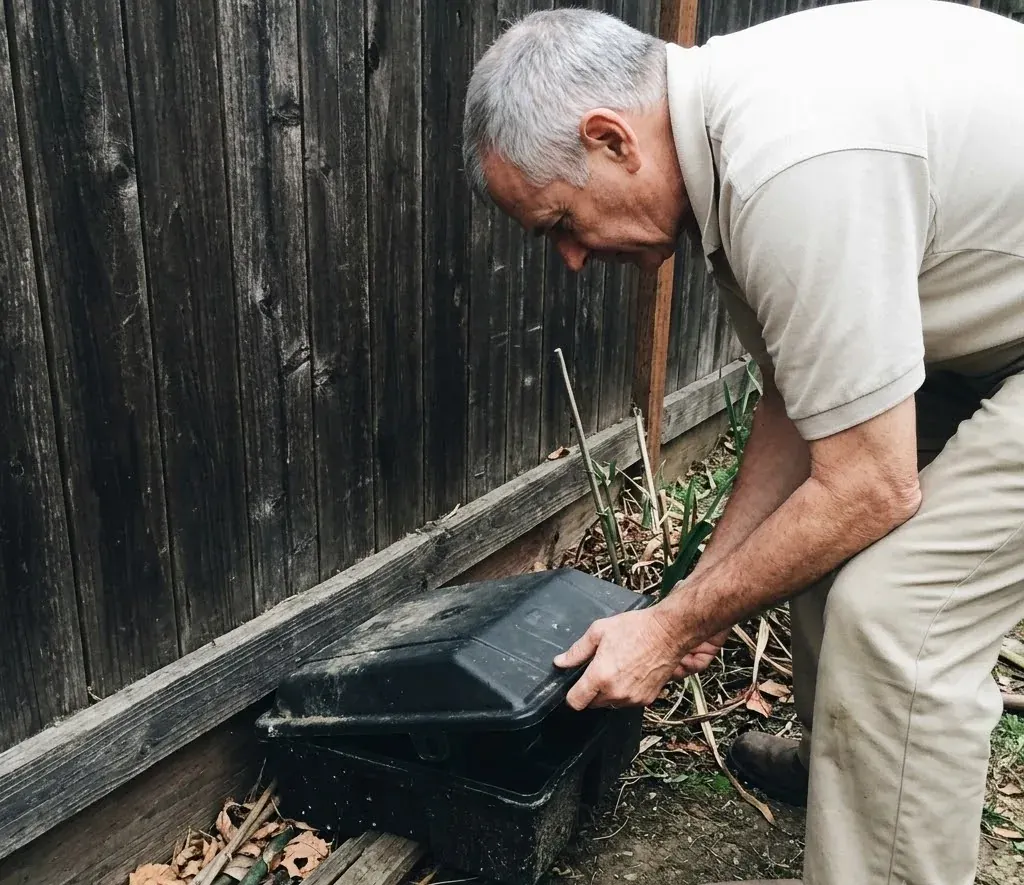
The hostas are chewed down to stubs, there are ridges running across the lawn, and the two facts get welded into a single story about moles. The story falls apart at the first step. A mole is not eating your plants, and a mole is not a rodent. Sorting that out before you buy anything saves a season of effort aimed at an animal that was never responsible.
An insect eater with the wrong reputation
Moles eat earthworms, grubs and other soil invertebrates. The teeth are built for gripping worms, not for gnawing stems, and the animal spends nearly all of its life below the surface. The tunneling that ruins the look of a lawn is foraging, not feeding on roots. Where plants are being damaged in a yard with mole runs, the damage almost always belongs to something else that is using those runs as ready made corridors.
What a mole leaves: runs and plugged mounds
Two signs, and both are distinctive. Raised surface ridges where a shallow feeding run has pushed the turf up, wandering rather than running straight. And mounds of loose soil pushed up from deeper tunnels, roughly conical, with no open hole in them, because the animal plugs the exit behind itself. A mound with a plug and no visible entrance is a mole, every time.
What a vole leaves: open holes and chewed stems
Voles are rodents and they behave like it. You get open holes about the width of a finger with no mound of soil around them, worn surface runways through the grass and under ground cover, and gnawed bark at the base of shrubs and young trees, usually below the mulch line where nobody looks until the plant starts failing.
Voles are the ones eating your plants. If you spend the spring treating the yard as a mole problem, the plant damage continues and you conclude that nothing works.
The flatten and mark test
Before anybody does anything, find out which runs are alive. Press a section of raised ridge flat with your foot, mark the spot with a golf tee or a stick, and write down the date. Check it at 24 hours and again at 48. A run that has been pushed back up is in use. A run that stays flat is abandoned, and any effort spent there is wasted effort.
Do six or eight spots at once, spread across the yard, because one animal maintains a main run plus a lot of dead ends. The main run is the one that comes back first and comes back again after you flatten it a second time. That is where control work belongs.
Sandy soil means one animal makes a lot of ridge
Sandhills soil moves easily, so the amount of visible damage here is a poor guide to how many animals you have. Loose, well drained sand sitting over damper subsoil is close to ideal working conditions: the digging is cheap and the worms are down where the moisture stays. One mole covering a lot of ground is the normal case, and a yard that looks like an invasion usually is not one. That matters, because people give up on methods that were working on a population of one.
What actually reduces the tunneling
Control work is placed in an active main run, which is why the flatten and mark test comes first rather than last. Past that, the honest levers are about the soil rather than the animal. Heavy, frequent irrigation keeps the top few inches full of worms and invites foraging, so watering deeply and less often helps. Reducing thatch and pulling mulch back off stems takes away vole cover at the same time.
Repair is straightforward. Tread the ridges down and water them in, spread the mound soil out rather than leaving it to smother grass, and reseed the bare lines in fall when the weather does the work for you.
What to skip
Every item below gets recommended in a garden center aisle or a comment thread, and none of them earns a place in a plan.
- Grub products bought as a mole plan, when the animal eats worms as readily as grubs
- Vibrating stakes and ultrasonic spikes pushed into the lawn
- Flooding a run with a hose, which mostly waters a tunnel system built to drain
- Mothballs, castor oil drenches and chewing gum dropped into holes
- Sealing a mound and calling it solved, since the animal pushes up another one
- Working every ridge in the yard instead of the runs proven to be active
When to bring somebody in
Two situations justify it. Runs that keep reappearing after weeks of effort, which usually means the main run was never found. And a mixed problem, where mole ridges and vole holes are both present and the plant damage is real, because those need two different approaches running at once. Ask whoever comes out to show you which sign is which in your own yard before they quote, since the identification decides the method. The licensed local pros we connect you with handle yard and burrowing animal work across Cumberland County.
Dealing with this in your home?
We offer free inspections and honest recommendations across Fayetteville and the surrounding towns. Call (855) 563-1479 and we’ll help you sort it out.