A tick found on a child after an afternoon in long grass produces a particular kind of panic, and panic is what leads to the folk remedies. Almost all of them make things worse.
This is the short version of what to do, what not to do, and where our part of it ends. We treat yards. We are not doctors, and the second half of this comes with a clear line drawn under it.
The removal, step by step
Use fine tipped tweezers. Grip the tick as close to the skin as you can get, taking hold of the mouthparts rather than the swollen body. Pull steadily upward with even pressure. Do not twist, rock or jerk.
It may take several seconds of firm, patient pull before it lets go. That is normal and it is better than three quick tugs. Then wash the bite and your hands with soap and water, and clean the area.
What not to do to it
Do not burn it with a match, do not smother it in petroleum jelly or nail polish, and do not paint it with anything. The theory behind those is that the tick will back out on its own. In practice they irritate it while it is still attached, which is the opposite of what you want, and they waste time.
Do not crush the body while it is attached either, which is the main argument for gripping at the mouthparts rather than the fat part.
If the head stays in
Sometimes mouthparts break off and stay behind. Try once to lift them out with clean tweezers. If they will not come easily, leave them alone and let the skin do the rest, keeping the area clean.
Digging around after fragments causes more irritation and more risk of a local infection than the fragments themselves.
The note nobody makes
Put the tick in a small sealed bag or a screw top jar rather than flushing it. Write the date on the bag, and write down where on the body it was and roughly where you had been.
That takes fifteen seconds and it is the single most useful thing you can hand a doctor weeks later if anybody feels unwell. Without it the conversation is a guess about timing.
Where our part stops
If anyone develops a fever, a rash, aches, a headache or anything else that does not feel right in the days and weeks after a bite, that is a question for a doctor and not for a pest control company. Take the bag and the date with you.
We are not going to tell you what to watch for or how likely anything is. That is genuinely not our field, and a pest control website is the wrong place to read about it.
Where they are actually picked up
Ticks are not spread evenly across a property. They wait on vegetation at roughly the height of whatever walks past, which means the tall grass at the edge of a mown lawn, the line where the yard meets a tree belt, brush piles, and the shaded strip along a fence.
That is why the middle of a mown lawn is low risk and the border is not. It also explains why the family dog often brings them in from a part of the property nobody walks through.
The yard side, which is our part
Keep the grass cut and keep a clear, mown buffer between the lawn and any woodland edge or rough ground. Take away brush and leaf piles. Move the play equipment and the dog run away from the tree line rather than tucking them into the shade at the back.
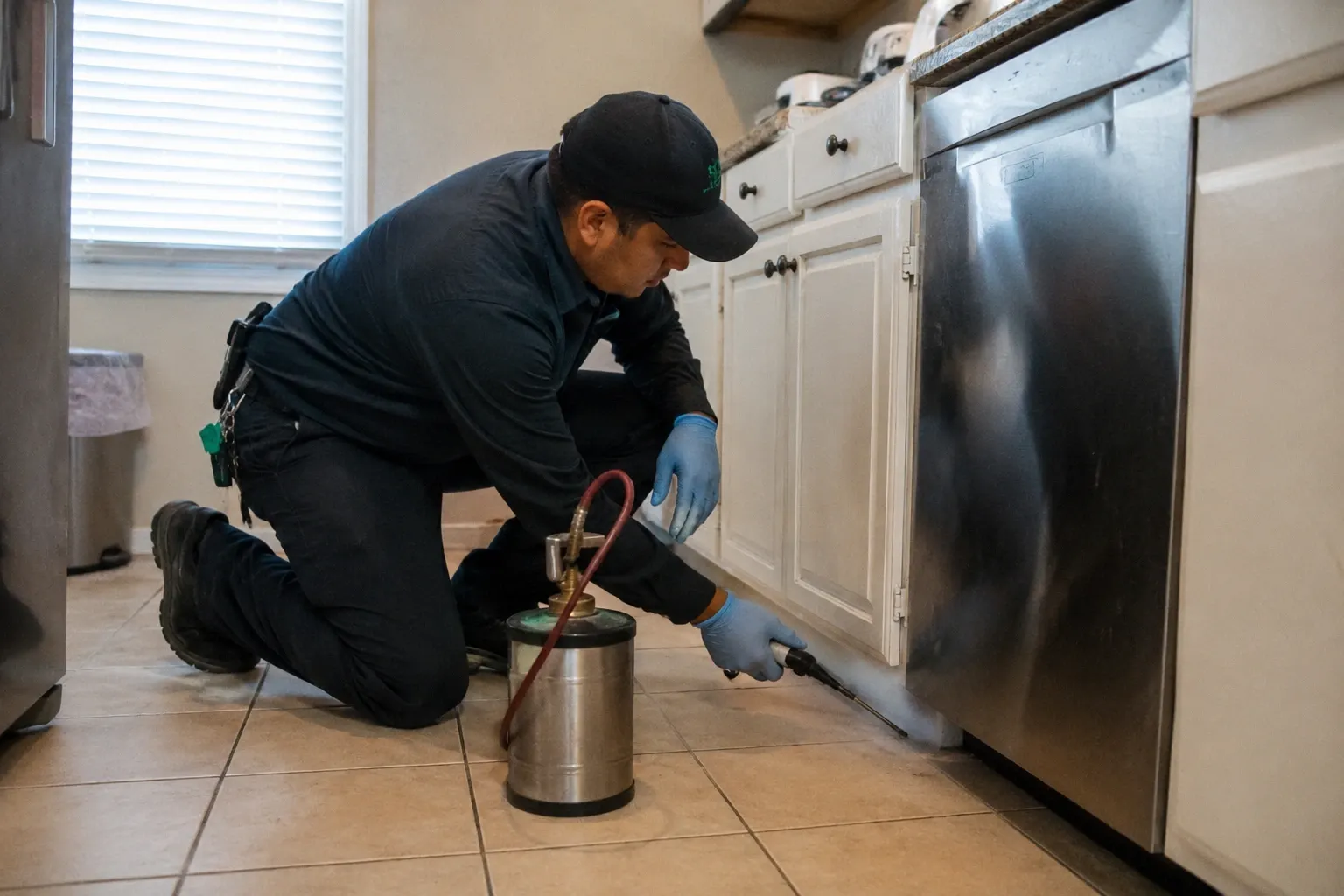
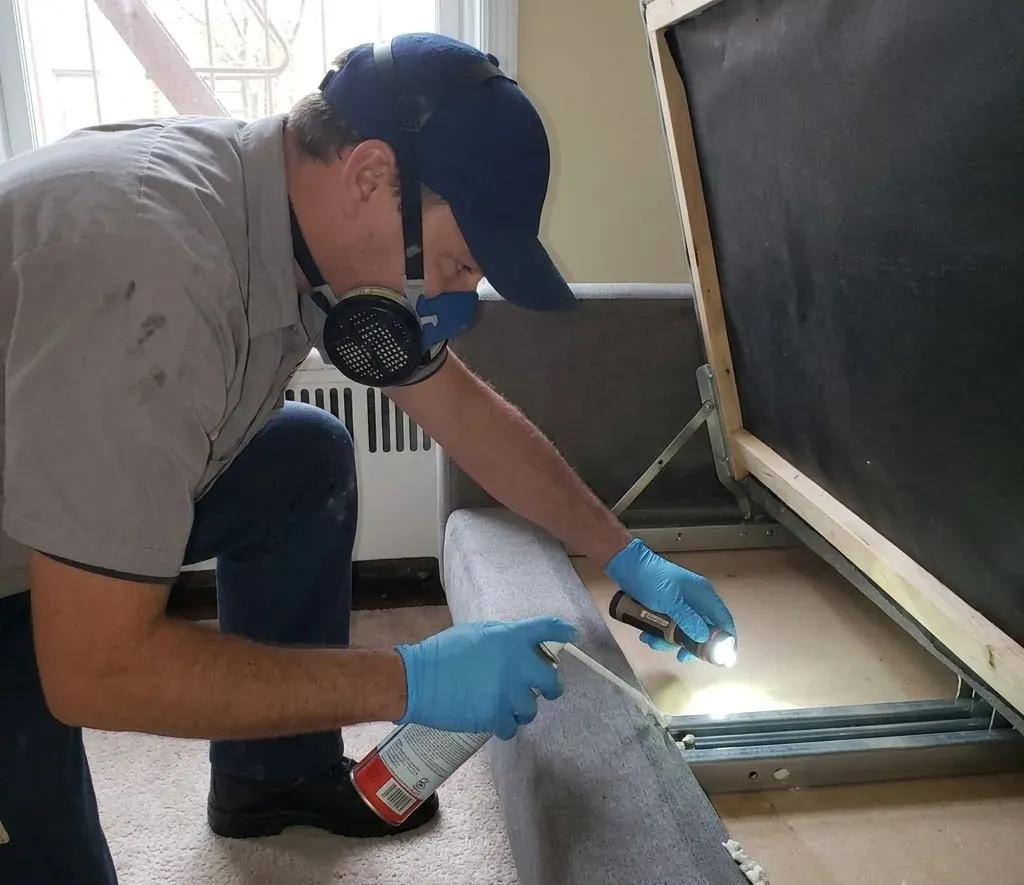
Where treatment helps, it is aimed at those edges and that shaded resting vegetation rather than sprayed across open grass. A yard visit runs an estimated $69 to $139 and gets repeated through the warm months because that is what the biology requires, not as a way of selling more visits. It buys back the parts of the property people avoid. It does not make a yard tick free, and anybody promising that is overselling.
And check people, not just the yard
Coming in from the yard or the woods, check the warm sheltered places first: behind the knees, the waistband, armpits, the hairline and behind the ears, and the same on the dog. A shower within a couple of hours makes anything not yet attached easy to find.
Prevention outdoors is a habit, and the yard work reduces how often the habit gets tested. Both halves are worth doing and neither replaces the other.
Dealing with this in your home?
We offer free inspections and honest recommendations across Fayetteville and the surrounding towns. Call (855) 563-1479 and we’ll help you sort it out.