Fresh sawdust on a windowsill, along a baseboard, on a porch board or on the concrete under a deck rail is one of those things that is easy to sweep up and easy to keep sweeping up for two years.
It is worth thirty seconds of attention instead, because the texture of the pile and the shape of the hole above it point at three different insects with three different levels of consequence.
Coarse shavings, and no hole you can find
Carpenter ants do not eat wood. They excavate it to nest in, and they push the debris out. What lands is coarse: shavings and fibers rather than powder, often mixed with fragments of insect bodies and other bits of rubbish from inside the nest.
The other tell is that the material appears from a slot or a gap rather than a tidy hole, often at a joint, behind trim, or where two boards meet. Carpenter ants prefer wood that has been damp, so a pile beneath a window that has leaked, a door casing under a bad flashing detail, or trim near a roof line that has been wet is a common place to find one.
Dust as fine as flour, with small round exit holes
Powderpost beetles produce something quite different: a fine, soft powder that feels like flour between your fingers, coming from small round exit holes, often several of them in a group.
These are wood destroying insects and North Carolina's official inspection report notes them alongside termites, so they are not a nuisance category. Flooring, stair treads, joists, subfloor and furniture are all in scope. The awkward part is that a hole in wood is not proof of anything happening now: old holes stay open for decades. Fresh powder and holes with clean, pale edges suggest current activity.
One neat round hole about the width of a pencil
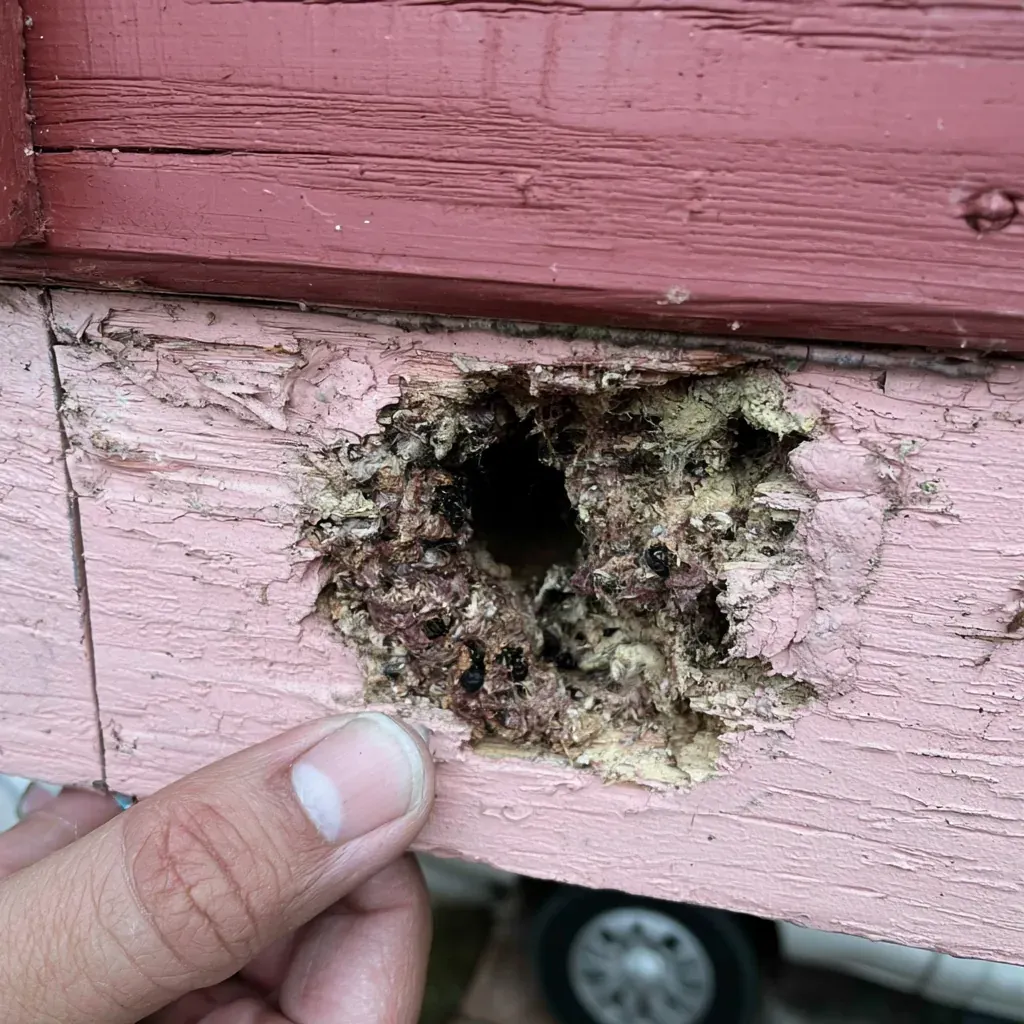
A single clean circular hole, roughly a finger's width or a bit less, drilled into unfinished or weathered exterior wood, with coarse sawdust below it, is usually a carpenter bee. Fascia boards, deck rails, porch ceilings, shed trim and the underside of eaves are the usual targets.
Carpenter bees do not eat the wood either. They tunnel to nest, and the same tunnel gets reused and extended in later years, which is how one hole becomes a run of galleries inside a board. Woodpeckers make it worse by opening the board up to get at the larvae. They matter, but a carpenter bee hole is a repair and prevention job rather than an emergency.
The fourth possibility, which produces no sawdust at all
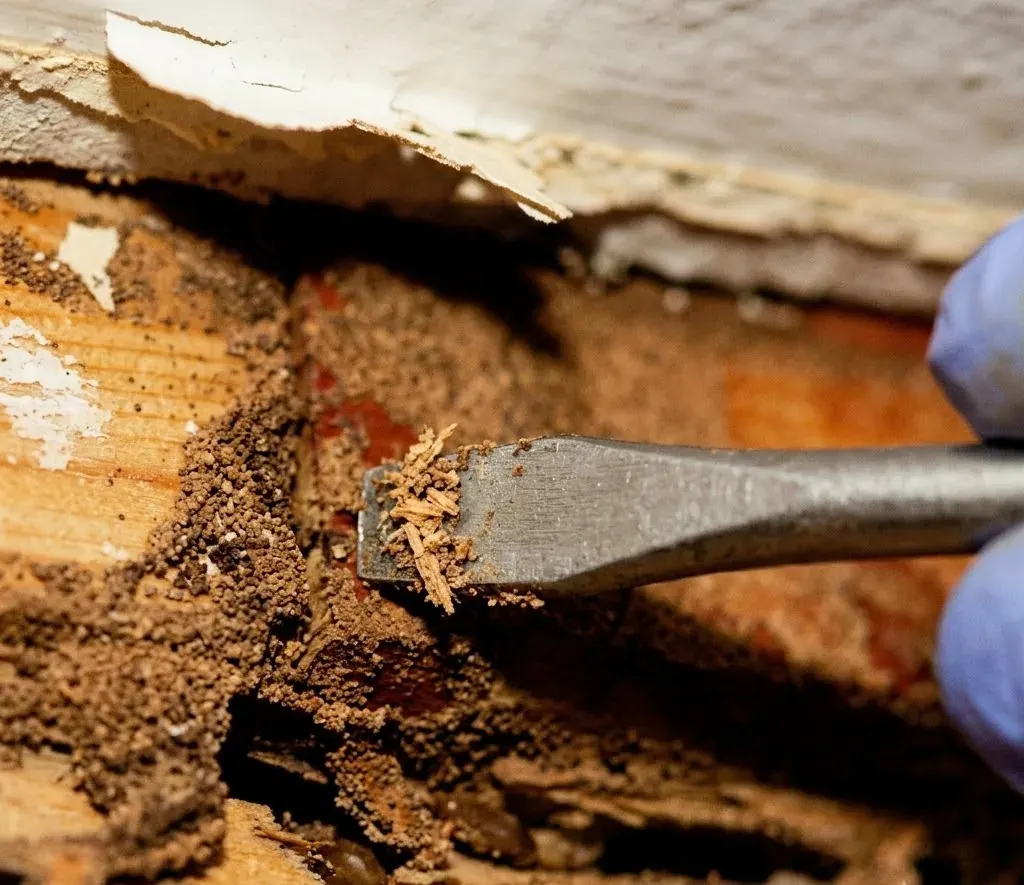
Subterranean termites do not leave sawdust. They work inside the wood and behind surfaces, pack their galleries with soil, and leave mud rather than powder. If what you have found is mud, staining, a flat tube or a blistered painted surface that gives slightly under a thumb, you are looking at a different problem and a more serious one.
So the absence of sawdust is not reassurance. It just moves the question to a different page.
How to check whether it is still happening
Clear the pile completely, note the date, and look again in a week. If it comes back, something is active. This costs nothing and settles the question that everybody actually wants answered, which is not what species it is but whether it is happening now.
While you are there, press the wood firmly with a thumb or tap along it. Wood that sounds hollow or gives when it should not is worth reporting whichever insect turns out to be responsible.
Old house borers, for completeness
Old house borers are the other name that appears on North Carolina inspection reports, and they are worth knowing about because the name misleads people. They are most often found in relatively new softwood framing rather than old timber, and the sound is sometimes the first sign: a faint rasping or ticking from inside a wall on a warm day.
Their exit holes are oval rather than round and larger than a powderpost hole, and the frass is gritty and packed rather than loose. This is one where identification genuinely wants somebody who has seen a few.
What to do with any of it
Photograph the pile, photograph the hole with something for scale beside it, keep a pinch of the dust in a bag, and note whether the wood nearby has ever been wet. Those four things turn a phone call into a useful conversation.
The inspection costs nothing, and the practical value of it is not just a name. It is finding the leak, the flashing, the grading or the damp crawl space that made the wood attractive in the first place, because none of these insects picked your house at random.
Dealing with this in your home?
We offer free inspections and honest recommendations across Fayetteville and the surrounding towns. Call (855) 563-1479 and we’ll help you sort it out.