Most of the time the cheapest quote is cheapest because something has been left out, and the missing part is rarely the chemical. It is usually the inspection, the paperwork, the follow-up, or the person. None of those show up in the number, which is exactly why the number looks good. This is not an argument that expensive is better. It is an argument for knowing which parts of the job the low figure quietly dropped.
The price that arrives before the inspection does
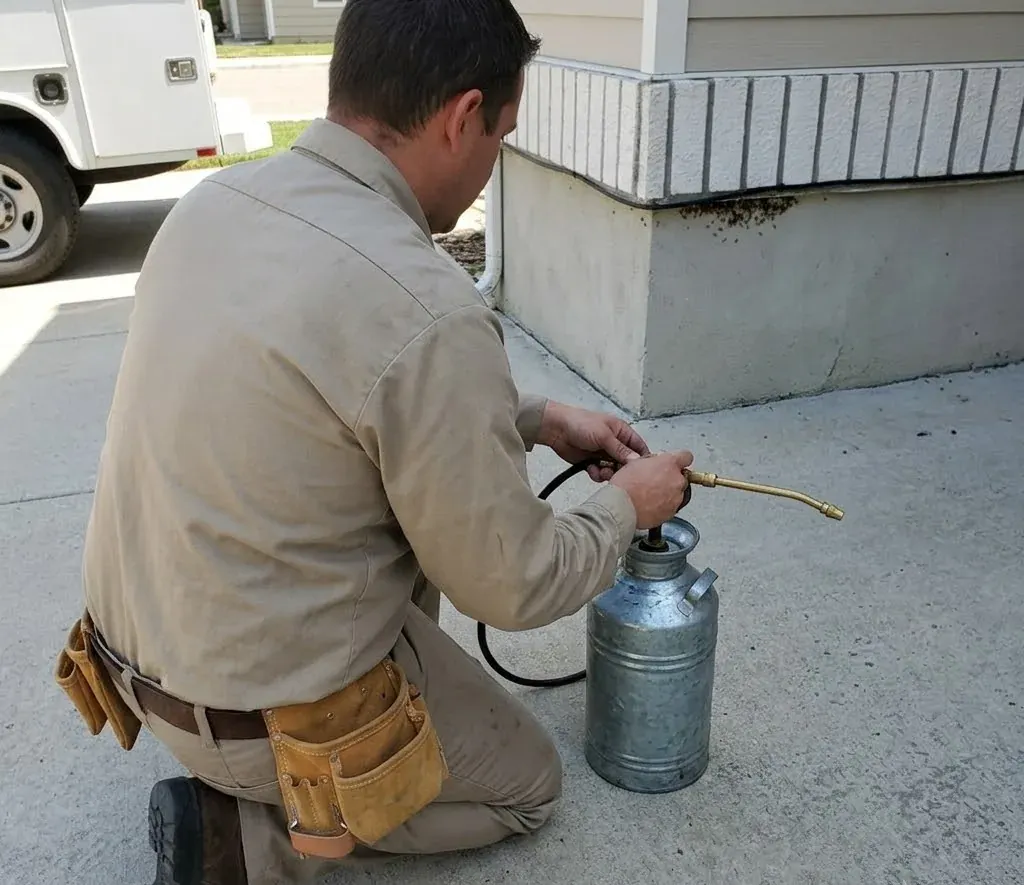
Somebody stands in the driveway, looks at the front of the house, asks how many square feet, and hands over a figure. Nobody opened the crawl space hatch. Nobody asked where the bath trap access is on a slab home. Nobody walked the back corner where the downspout empties. That figure is a guess about a house being offered as a price for treating one.
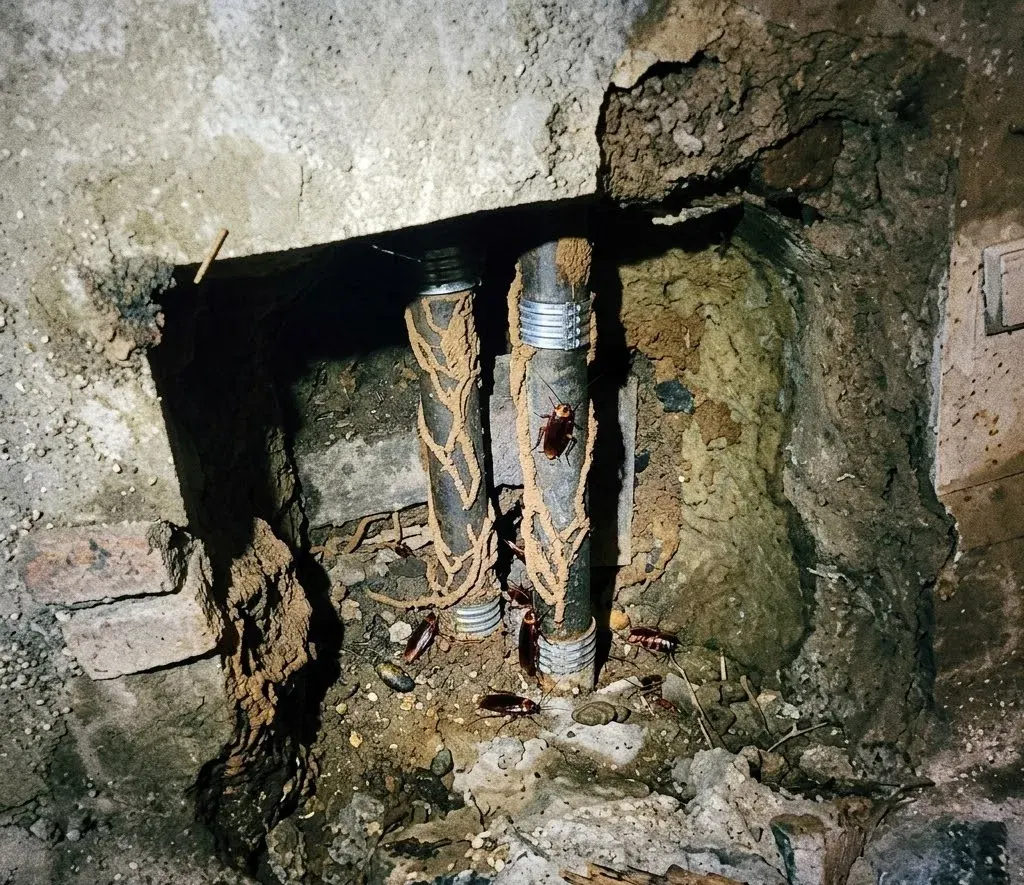
On a slab, a large share of termite entry happens at the bath trap, along with the plumbing penetrations, the construction joint, and the gap where the slab has shrunk back off the foundation wall. A quote that has looked at none of them cannot know what the job is. When evidence is found or a proposal is issued in this state, the technician is expected to measure and graph or sketch the structure, because the application rate and the price both follow from real dimensions. A number produced without that either gets revised upward later or was never going to cover the whole structure.
Termite work with nothing in writing
Every contract or agreement for the control or prevention of wood-destroying organisms in North Carolina has to be in writing, carrying the license number and phase, the full company name, a foundation diagram marked active or inactive, the location of visibly damaged timbers, whether re-inspections happen and roughly how often, the conditions for re-treatment, and the total price.
A cash figure and a handshake is cheaper than all of that, and it buys nothing you can hold. If termites turn up again in eight months there is no agreement to trigger, no diagram showing what was found the first time, and no re-treatment obligation running within 30 days of written notice, because there is no written anything. The saving was real. It was the value of the guarantee.
One visit sold into a long season
A single treatment is the right answer to some problems and gets oversold for others. The clearest local example is termites, because the swarm window in North Carolina runs from late winter into September or October rather than for one weekend in April. A cheap one-time treatment in March, with nothing scheduled afterward and no reset when a second flight happens in August, is a partial answer sold as a complete one.
The same shape shows up with German cockroaches, where the egg cases outlast a single application, and with rodents, where the local going rate for mice and rats includes follow-up visits precisely because the first visit is never the end of it. If one quote is cheaper and the difference is that the follow-up is missing, you have been quoted for a different job.
A credential nobody offered to show
Structural pest control licenses in North Carolina are issued by phase, and there are three grades of credential: registered technician, certified applicator, and licensee. Certified applicators and licensees are certified in five-year periods, and the structural pest control year runs 1 July to 30 June, so credentials expire and get renewed. All of that is checkable, and the NCDA&CS Structural Pest Control Division takes calls on 984-236-4625.
So the question is not whether somebody says they are licensed. It is whether the number is offered without being asked for, and whether the phase covers the work being sold. A company that treats the question as an insult has already answered it.
What a fair written quote contains
You do not need to be an expert to tell a real quote from a number. You need to see these things on it.
- The pest, named in words, and what the plan is for that pest specifically.
- What was inspected, and what could not be reached.
- What gets applied or installed, and where.
- How many visits, at what interval, and what happens if the problem returns between them.
- The total price, plus any renewal figure for a second year.
- The company's full name and license details.
- For termite work, the foundation diagram and the six items the rules require.
Value, not price
None of this is a complaint about competitors. Plenty of good small operations around Fayetteville, Hope Mills and Stedman quote below the large regional companies and do better work, because their overhead is a truck and a phone rather than a call center. A low quote is not the warning sign. The missing inspection, the missing paperwork, the missing follow-up and the unoffered license are the warning signs, and they can turn up at any price.
Our own ranges sit slightly under what gets published locally: a wood-destroying insect report at an estimated $75 to $120, a general initial service at an estimated $89 to $150. Ask three companies, hold each quote against the list above, and take the one that answered the most of it. The licensed local pros we connect you with will put it in writing before anything is treated, which is the only version of a quote that means much.
Dealing with this in your home?
We offer free inspections and honest recommendations across Fayetteville and the surrounding towns. Call (855) 563-1479 and we’ll help you sort it out.