You closed on a house that was a stand of pine eighteen months ago, and the builder handed over a folder with a termite treatment certificate in it. That certificate is worth reading properly, because pre-construction termite work in North Carolina happens in stages, and what you actually own depends on which stages were carried out, which were skipped, and what somebody signed.
Four stages, usually three trips
The state's minimum standards describe treatment at four points in a build: after footing approval and before the footings are poured, after backfill of foundations in the crawl space, after leveling of all slab areas, and after or during backfill and final grading to the exterior. With careful scheduling that is usually achievable in three visits.
The order matters because each stage protects something the next one covers up. Miss the slab stage and no amount of exterior work later puts treated soil back underneath the concrete.
What the soil treatment involves
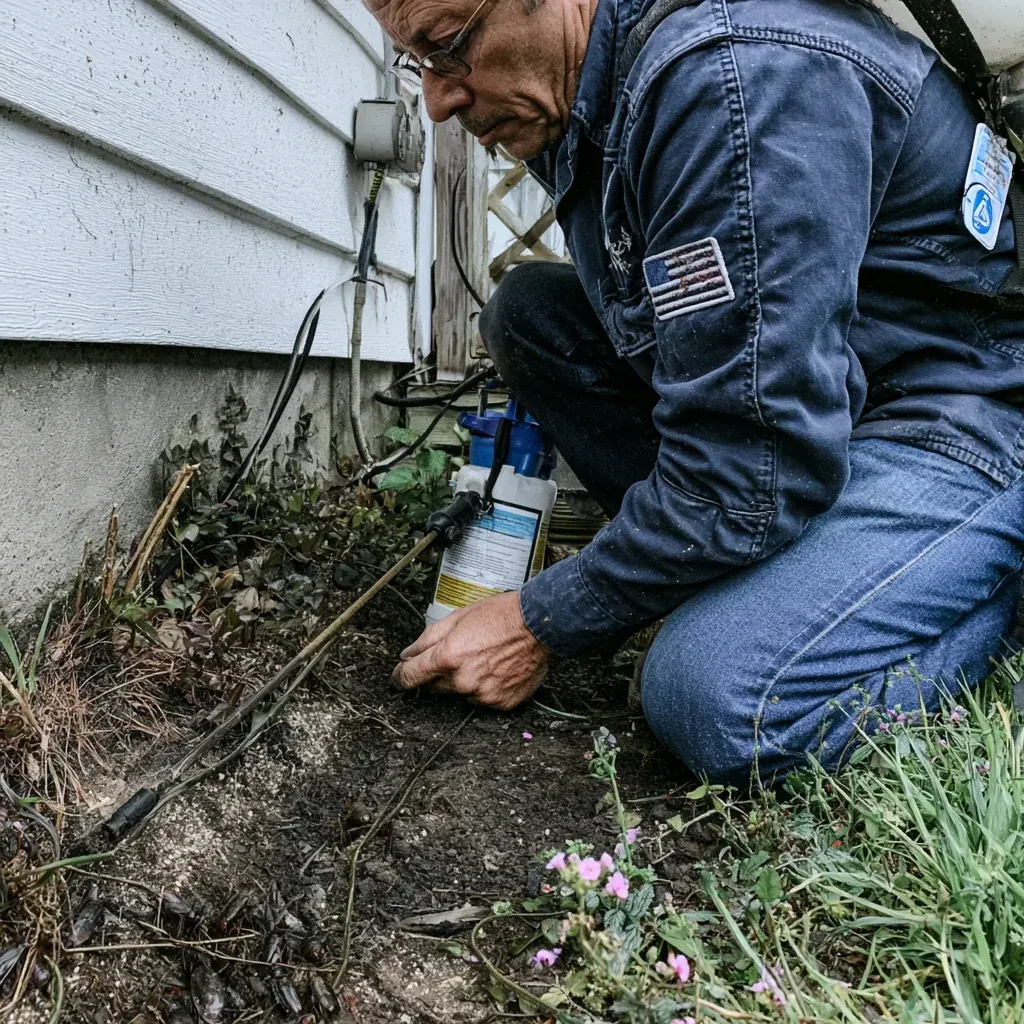
Adjacent to foundation elements, soil is treated by trenching, or trenching and rodding, to a minimum depth of four feet at four gallons per ten linear feet, per foot of depth, on all sides of all foundation elements including chimney bases, foundation walls, pilasters and pillars. Where footings are exposed, treatment goes beside the footing but not below the bottom of it. Under a slab, the fill is treated before the concrete is poured, at one gallon per ten square feet, or a gallon and a half per ten square feet where the final fill is washed stone.
The form only the owner should sign
This is the question almost nobody asks. Where a slab was poured without the soil treatment the minimum pre-treatment standards require, a Sub-Slab Treatment Release Form is used. It tells the property owner which areas were not treated, and it should only be signed by the property owner. An Official Waiver of Minimum Termite Requirements form also exists.
So if you bought new, ask the builder and the pest control company whether either form exists for your address, and ask for a copy. If one was signed you want to know which parts of the house were never pre-treated, because that is where a post-construction plan should concentrate. A release signed by anyone other than the owner is worth some hard questions.
Where drainage changes the plan
Where drain tile or french drains create a contamination hazard, treatment must not introduce insecticide into the drainage system. That is a legitimate reason for the plan to look different on one elevation of the house, and it is a fair thing to ask about on a lot with heavy drainage work, which is common enough on the flatter ground east of the river.
Baits are a different animal
Baits for pre-construction go in after final grade and landscaping, and they do not create a barrier. They rely on insect growth regulators or slow-acting materials, so they generally do not give quick control. They earn their place where a well is present, where an area cannot be reached, or where the owner has concerns about pesticides.
One practical point that rarely comes up at the sales stage: maintaining a bait system agreement is normally more expensive than maintaining a conventional treatment warranty. Across ten years that gap is not trivial, so ask what renewal costs before you choose.
SWPU, and the year after you move in
Soil Warranty Pick-Up is local vocabulary worth knowing. It covers a home that sat under the builder's contract for the first year after purchase, where the same company did the initial treatment and the owner wants to carry the coverage on, and a four-year contract is commonly offered from there. If your builder's year is running out, ask whether the original treating company offers it, because picking up existing coverage is usually simpler than starting fresh with somebody who did not do the original work.
Prevention details to check on a new build
Walk the outside before the landscapers finish. Exterior woodwork should be a minimum of six inches above the ground. In a crawl space, beams should sit at least eighteen inches above the soil so the space can be inspected later. Form boards and grade stakes should be gone, stumps and roots removed from the site, and no wood should touch soil anywhere. Grading should send water away from the structure, and foundation ventilation should be laid out without dead air pockets.
Three things to ask this week
Ask which of the four stages were carried out and on what dates. Ask whether a sub-slab release or a waiver was signed, and by whom. Ask what the agreement says about re-inspections and re-treatment, since annual inspections are part of the state's own prevention advice and a new build in a Cumberland County subdivision is not exempt from termites for being new. Whoever you use, the agreement has to be in writing.
Dealing with this in your home?
We offer free inspections and honest recommendations across Fayetteville and the surrounding towns. Call (855) 563-1479 and we’ll help you sort it out.