Most termite prevention advice is either vague or trying to sell you something. North Carolina's own prevention guidance is neither, and it contains two numbers that a homeowner can go and check with a tape measure in about ten minutes.
They are six inches and eighteen inches. Neither is a rule you will be fined over. Both are the difference between a house that is straightforward to protect and one that is quietly working against you.
Six inches: exterior woodwork above the ground
The guidance asks for a minimum of six inches between exterior woodwork and the ground. That covers siding, trim, door casings, porch posts, steps, lattice, deck skirting and anything else made of wood that runs down toward soil.
Six inches sounds generous until you walk the outside of a house and start looking. Flower beds get topped up a little every spring. Mulch gets added rather than replaced. A new path goes in an inch higher than the old one. Nobody makes a decision to bury the siding, and yet after fifteen years the gap is gone.
Why that gap does so much work
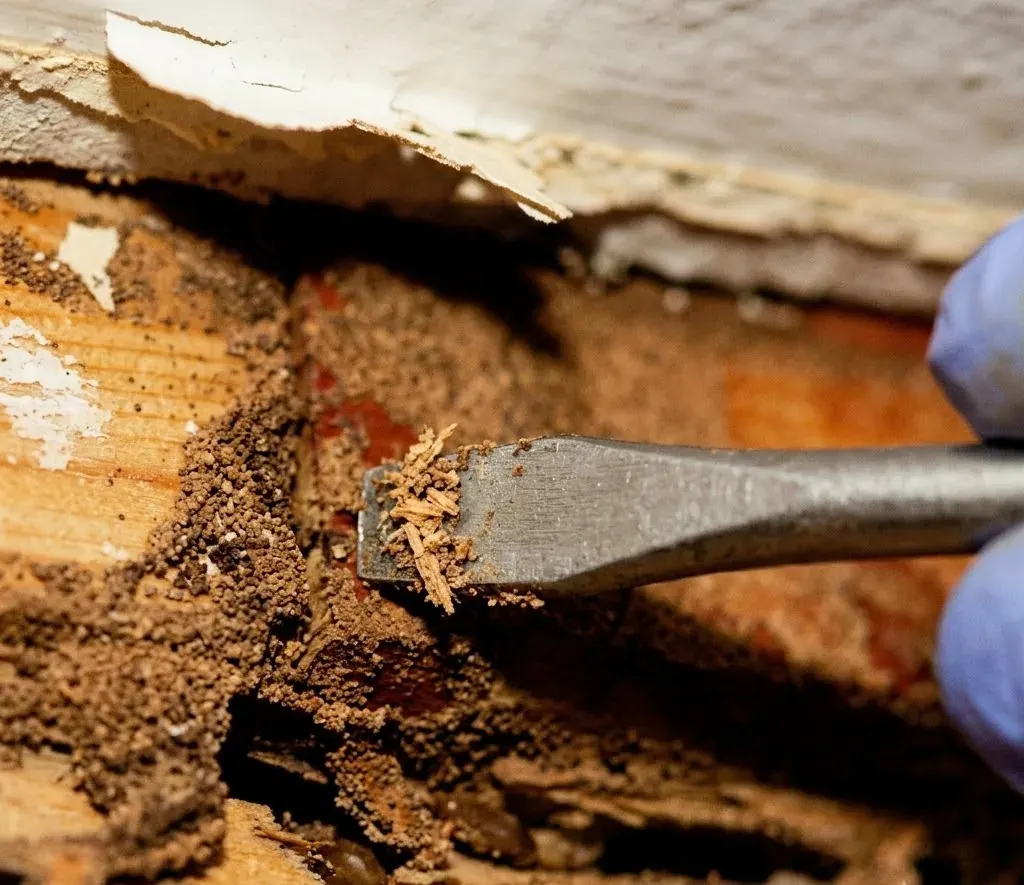
Subterranean termites live in soil and will not cross open air if they can help it. Wood touching soil hands them a covered route they do not have to build. It also keeps that wood damp, and damp wood is easier to eat and more attractive to carpenter ants and decay fungi at the same time.
Wood in direct contact with soil is one of the conditions conducive to termites that has to be written on North Carolina's official inspection report. So this is not just a preventative nicety. It is a line item on the document a buyer's lender will read.
Eighteen inches: crawl space beams above the ground
The second number is about access rather than biology. The guidance asks that beams under a raised floor sit at least eighteen inches above the ground so that future inspection is possible.
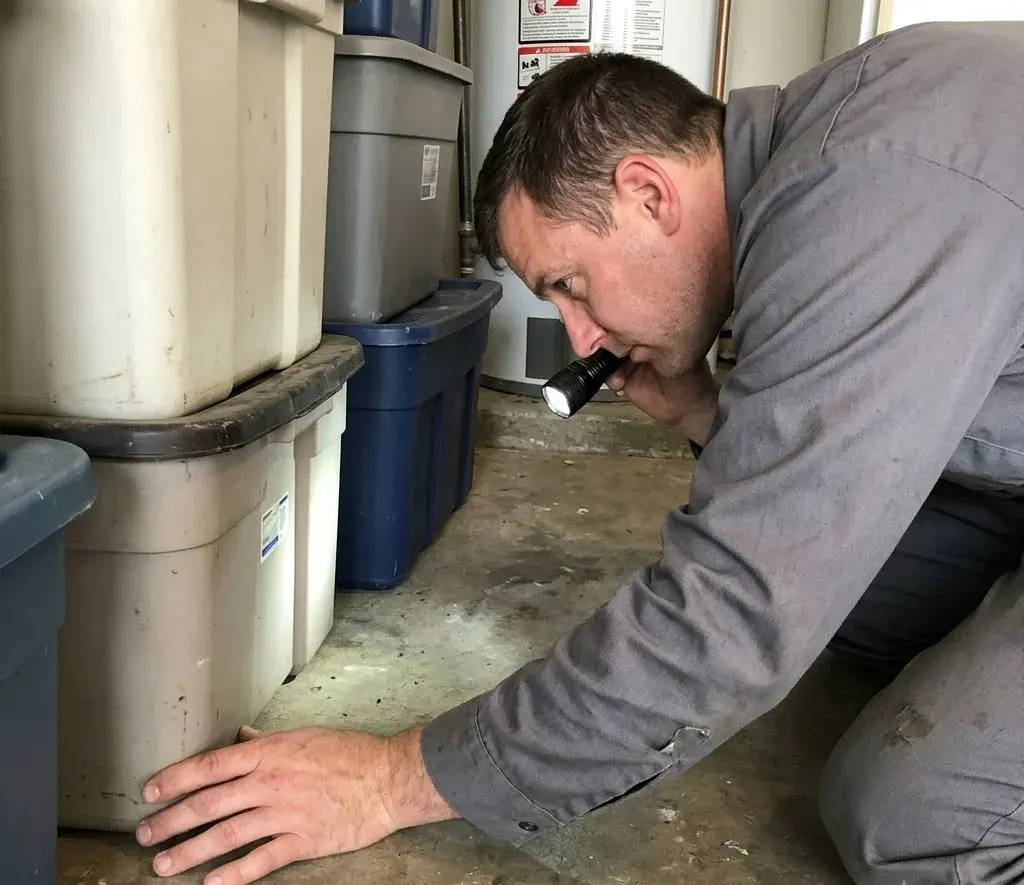
That is the part people miss. Clearance is not only about keeping wood away from soil, it is about whether anybody can physically get under there with a light and look. A crawl space with fourteen inches over uneven damp sand can be inspected, slowly and badly. One with eight inches cannot be inspected at all, and an inaccessible area stays inaccessible on the report, which means nobody is telling you it is fine. They are telling you they could not see.
What to do if you are already short
On the six inch measurement, the answer is usually to take material away rather than to rebuild anything: pull the bed back, rake the mulch down, cut the pine straw line back off the siding, and re-grade so water leaves the wall rather than sits at it. That is a Saturday, and it is the single highest value unpaid job on this list.
On the eighteen inch measurement you are more limited, because the floor is where the floor is. What you can usually do is remove what has accumulated underneath: stored timber, builders' offcuts, cardboard, old ductwork and general rubbish. Cellulose debris under the structure is another reportable conducive condition, and clearing it also buys back the working room that lets somebody read the piers properly.
The rest of the state's list, briefly
The same guidance asks for stumps, roots and wood removed from the site before building, form boards and grade stakes taken away afterward, no wood to soil contact anywhere, foundation ventilation designed so there are no dead air pockets, pressure treated wood wherever wood meets soil, foundation areas kept accessible, grading that directs water away from the structure, and annual inspections.
Read that list and notice how much of it is drainage and tidiness rather than chemistry. That is not an accident.
How this shows up when you sell
A conducive condition on an inspection report is not a disaster, and it is not the same as evidence of insects. It is a note saying the house currently makes a termite's life easier than it needs to be.
The useful thing about that is timing. A condition you corrected in September is not on a report written in May. Correcting it costs a weekend. Negotiating around it during a sale costs whatever the other side decides it costs.
Where a professional actually adds something
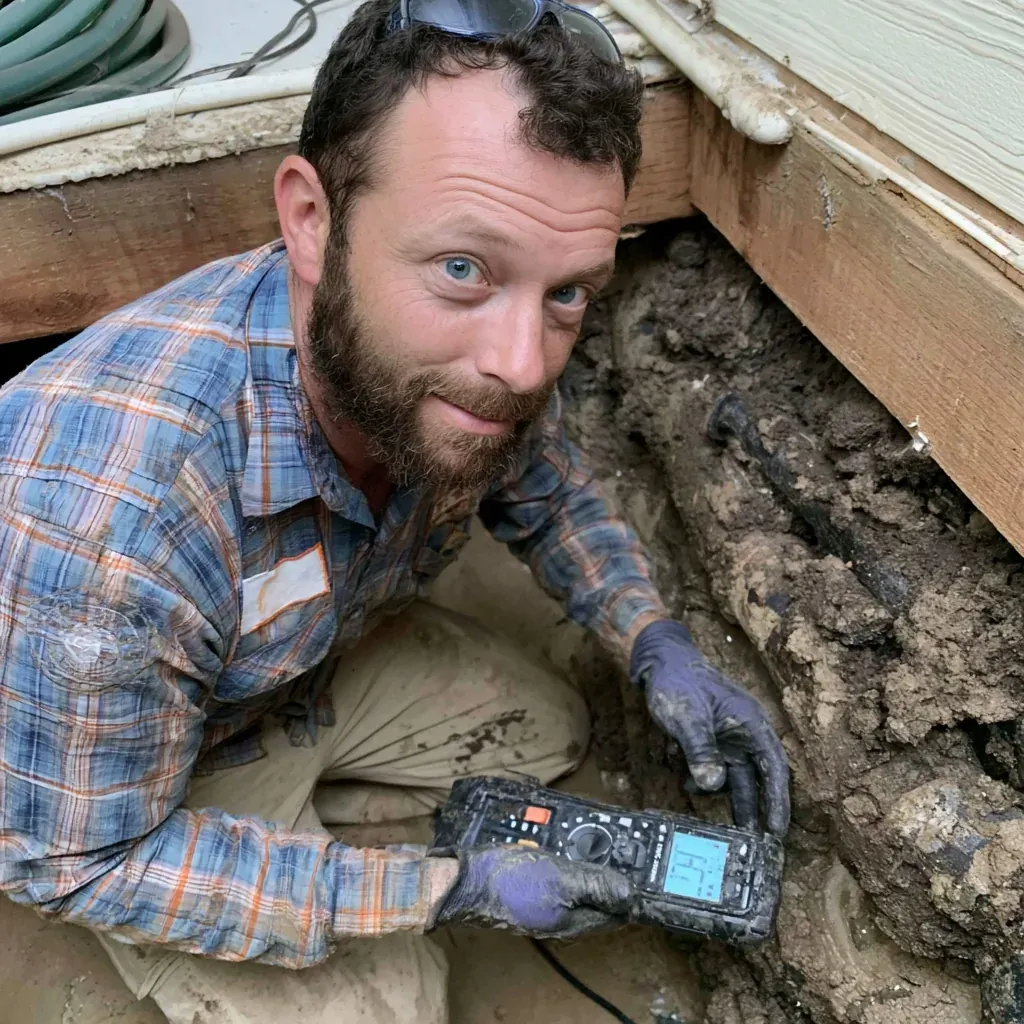
Measuring clearance is a homeowner job. Reading whether a pier has been worked, whether staining is old or current, and whether framing is at 20 percent moisture or above needs a meter and somebody who has seen a few hundred crawl spaces.
So do the free half yourself, and get the inspection for the half you cannot do. It costs nothing, and the written findings give you a list in priority order rather than a vague sense that you should probably do something.
Dealing with this in your home?
We offer free inspections and honest recommendations across Fayetteville and the surrounding towns. Call (855) 563-1479 and we’ll help you sort it out.