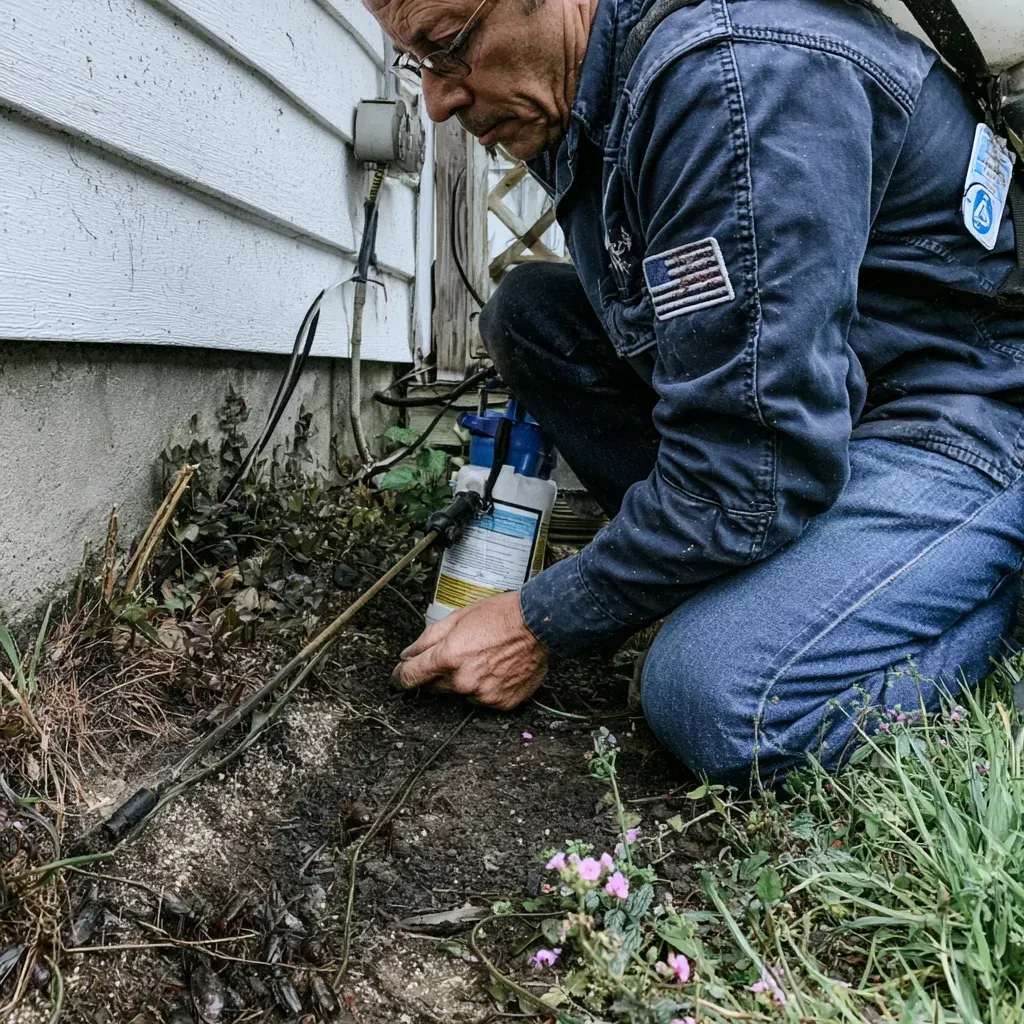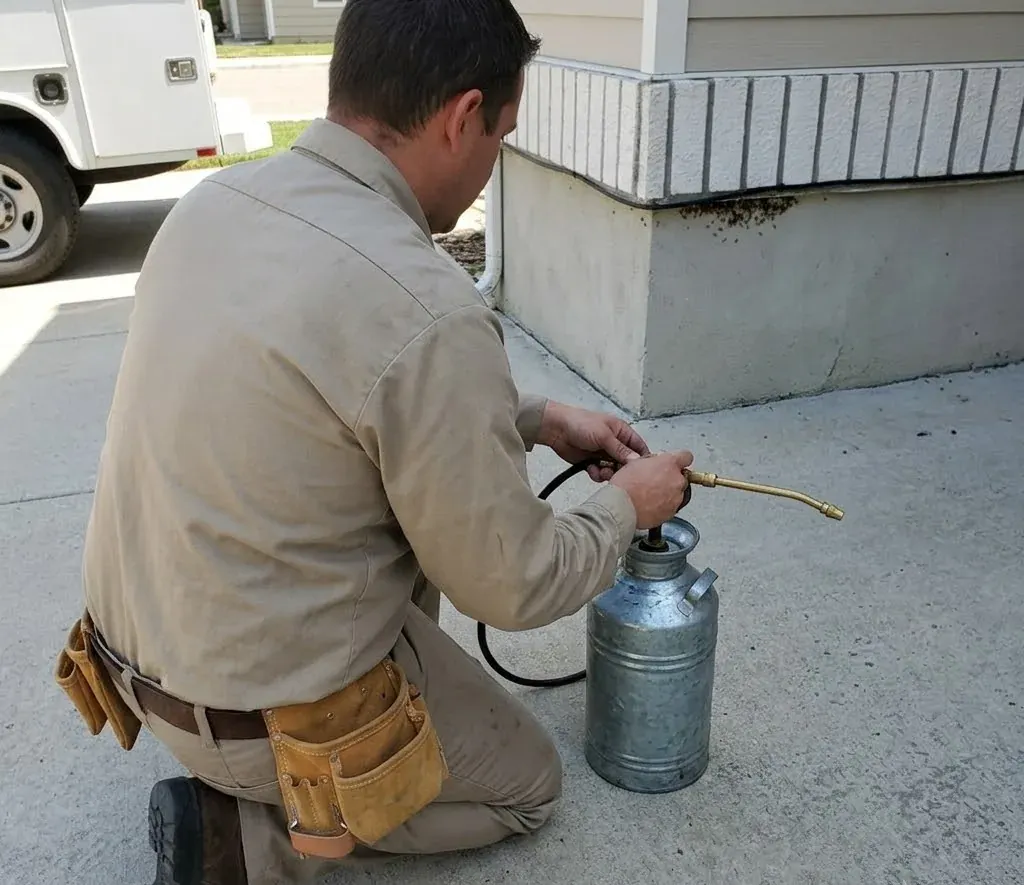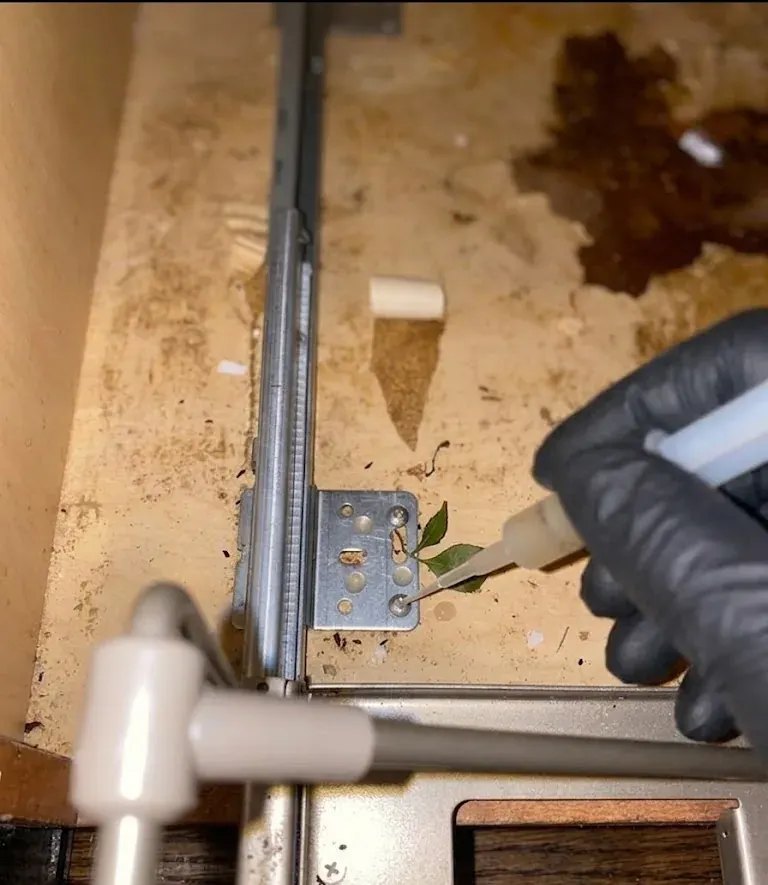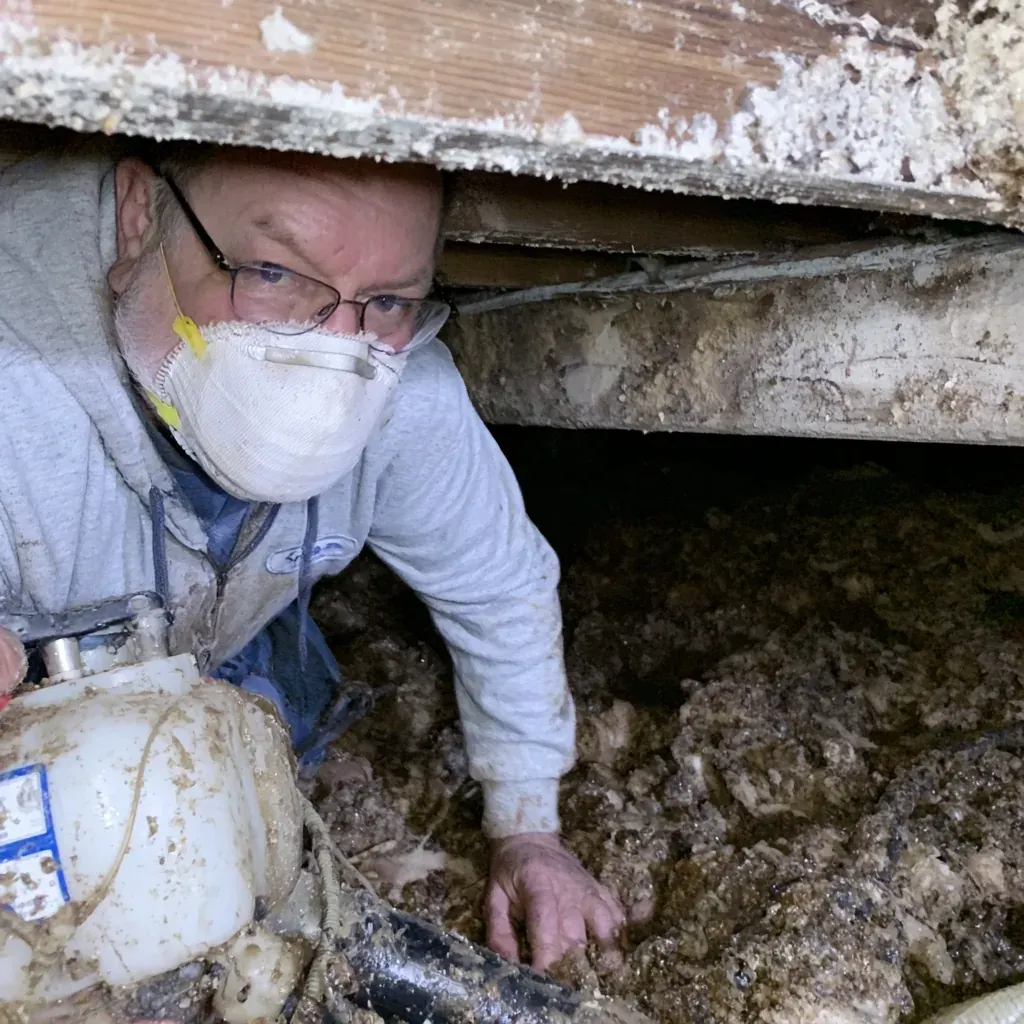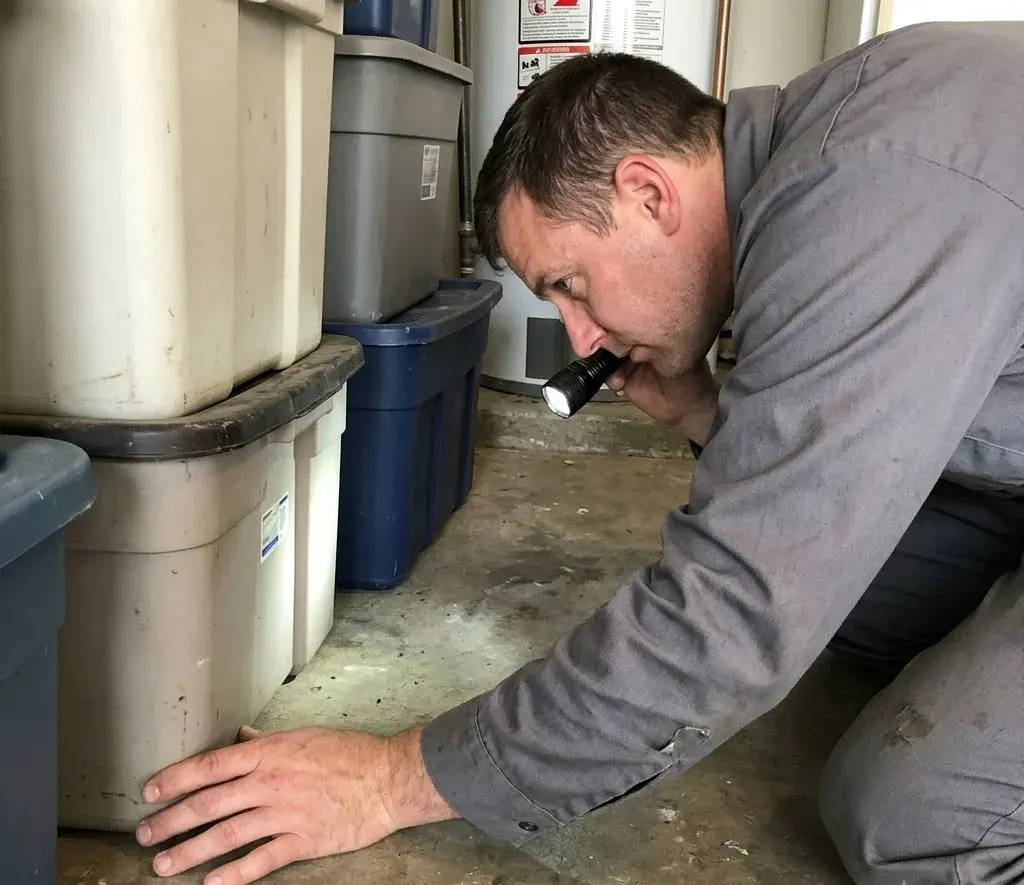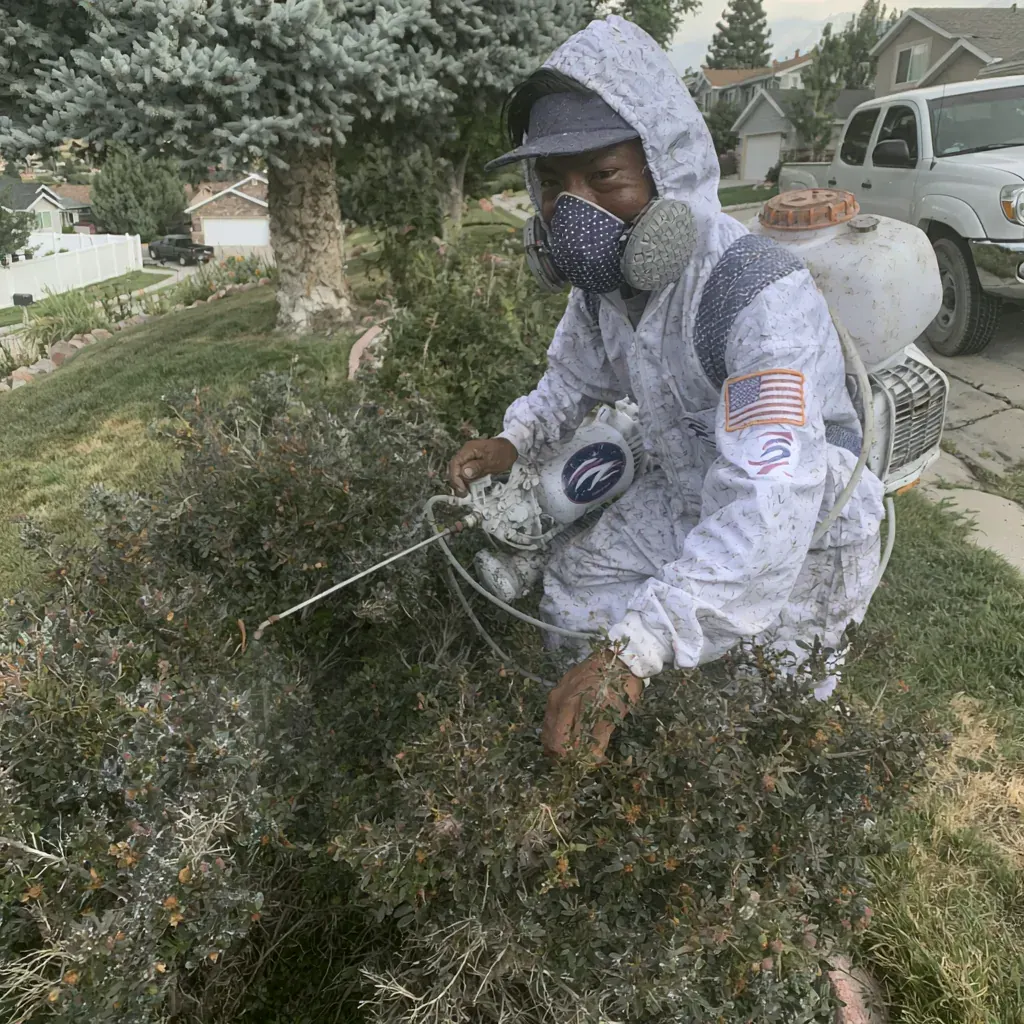
Ask somebody where their pest problem comes from and they will usually point indoors, at a cupboard or a corner of a room. Almost none of it starts there. It starts in a strip of ground about a foot wide running all the way round the outside of the house, where the wall meets the soil.
In this part of North Carolina that strip is normally covered in pine straw or hardwood mulch, and that changes it from a strip of dirt into somewhere insects can live comfortably within reach of your foundation.
Why pine straw in particular
Pine straw is cheap here, it looks good, it does not wash away the way bark does on a slope, and it is what half the county uses. It is also a mat that holds moisture underneath while looking dry on top, and Sandhills sand does something similar on its own: it drains fast at the surface and stays damp a spade's depth down.
Put those together against a warm wall and you have a permanently humid layer with a food source in it. Camel crickets take up residence in it. Odorous house ants nest in it. American and smokybrown roaches shelter in it and move indoors when heavy rain floods it out. It is also the layer that hides wood to soil contact from view.
What good looks like
Pull the mulch or straw back so it stops short of the siding rather than banking against it, and keep the depth modest. You want to be able to see the bottom course of brick, the weep holes and the point where any wood starts, without moving anything with your foot.
Aim for six inches of clear space between soil or mulch and any exterior woodwork, which is what the state prevention guidance asks for. If a bed has crept up over the years, taking material away is the whole job.
Weep holes are supposed to be open
On a brick veneer wall the small gaps in the bottom mortar course are there on purpose, to let moisture out of the cavity. People bury them with mulch, block them with soil, or fill them with expanding foam to keep insects out, and all three cause a slow damp problem inside the wall.
Leave them open and keep the mulch line below them. If insects are using them, the correct answer is a treated band of soil and screening designed for the job, not sealing the wall's drainage.
Irrigation is the other half
A sprinkler head that soaks the foundation line twice a week is doing more for the local roach population than the mulch is. So is a downspout that discharges next to the wall instead of away from it, and a flat corner of a bed where water stands for a day after a storm.
Walk the outside of the house during a heavy shower once. Ten minutes in the rain tells you more about where your problems come from than an hour of reading, and every fix it suggests is free.
What to keep out of that strip entirely
Firewood, timber offcuts, bags of soil, old fence panels, cardboard and plastic sheeting. All of it holds damp, all of it is either food or shelter, and all of it hides the part of the wall you most need to be able to see.
Shrubs matter too. Anything planted so it touches the siding gives insects a bridge over whatever treatment is in the soil and keeps that section of wall shaded and slow to dry. Cut back to a hand's width of daylight between planting and wall.
How this interacts with a treated band
When a technician treats the soil around a foundation, the aim is a continuous treated band that insects have to cross. Deep loose mulch, a bed raised above the treated line, or planting bridging the wall all give something a way over or around it.
So the tidying is not an alternative to treatment. It is what makes the treatment behave the way it is supposed to, and it is why a good visit starts with somebody walking the perimeter rather than reaching for a sprayer.
One pass a year is enough
This is not a maintenance burden. Once a year, ideally before the wet months rather than during them, walk the perimeter and pull everything back off the wall. Note anywhere water stands, anywhere wood touches ground, and anywhere planting is in contact.
If you would rather somebody else read it, the inspection is free and the findings come in writing. Either way the strip gets looked at, which is more than it usually gets.
Dealing with this in your home?
We offer free inspections and honest recommendations across Fayetteville and the surrounding towns. Call (855) 563-1479 and we’ll help you sort it out.