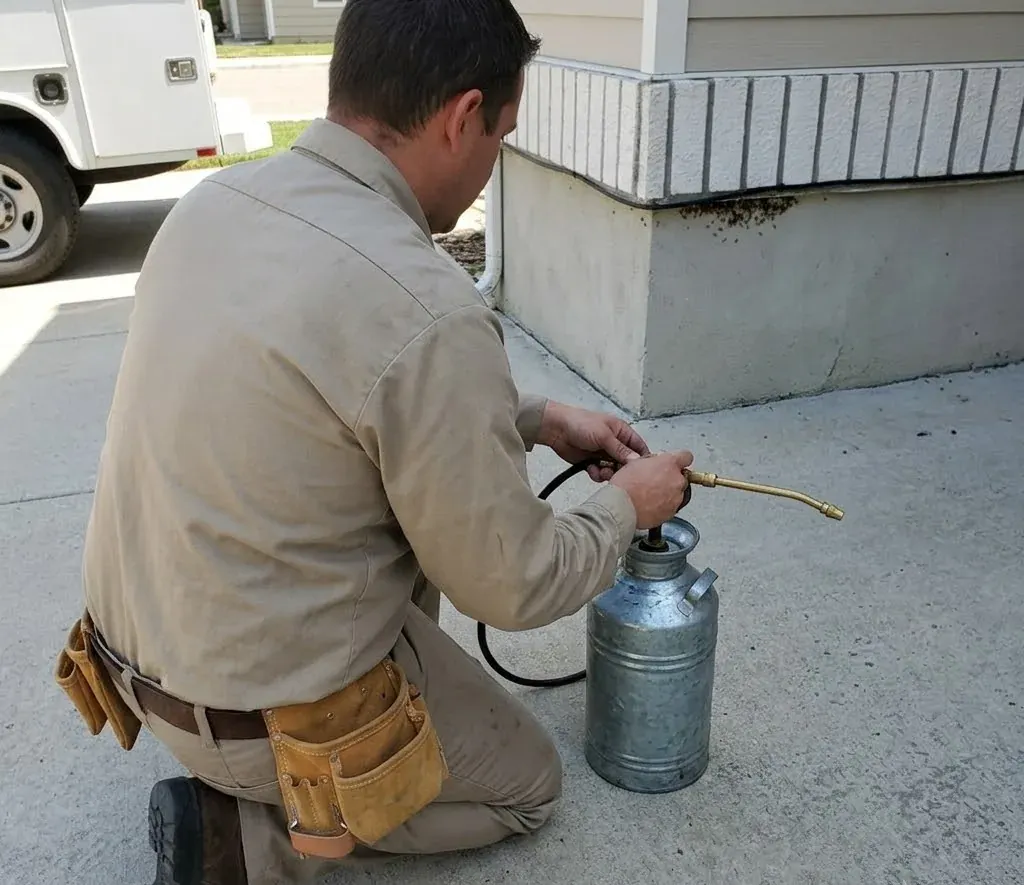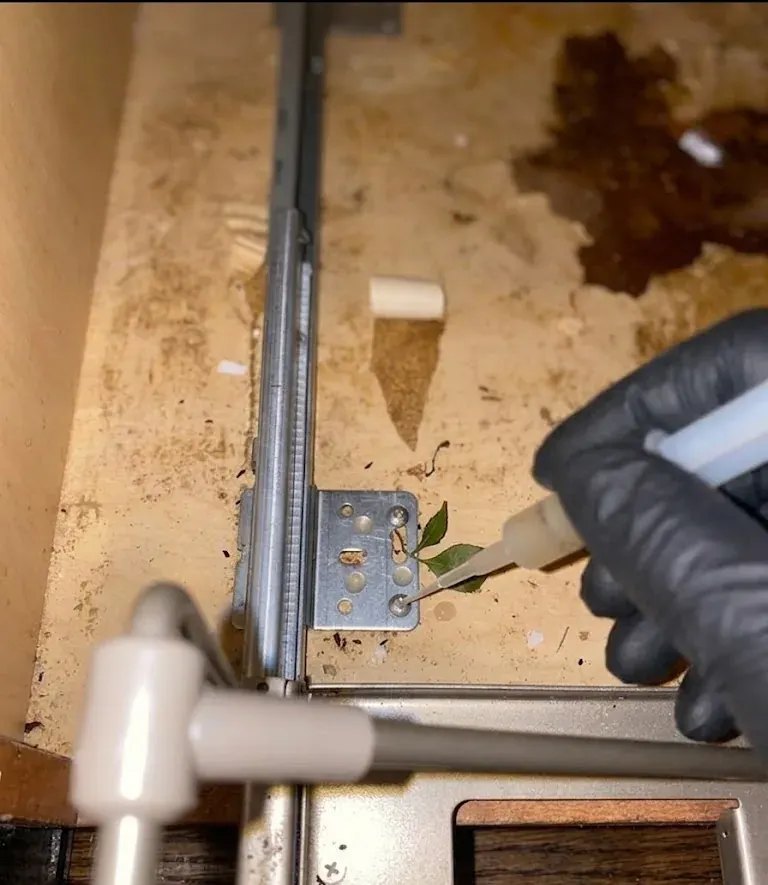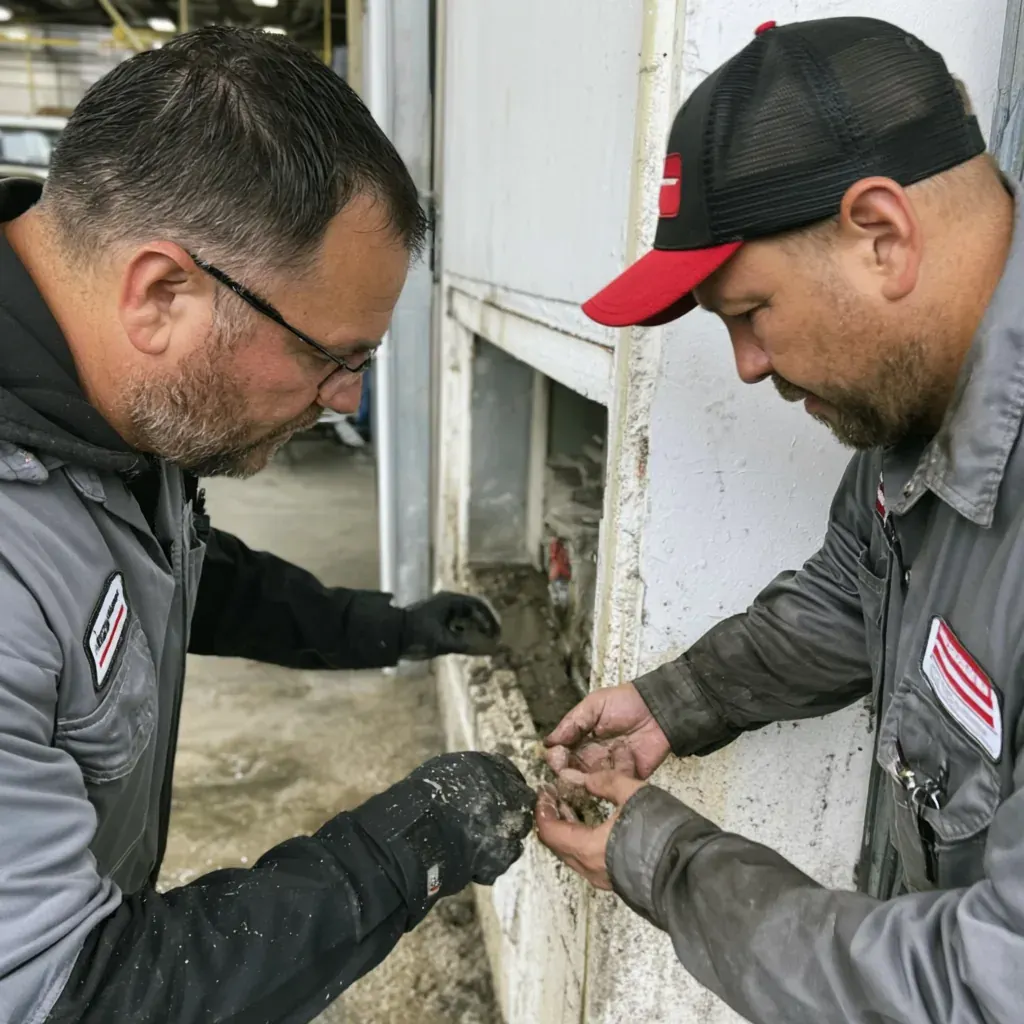
There is one afternoon of work on a Fayetteville house that deals with four separate pest problems at the same time, and it involves no pesticide at all. Clean the gutters. A gutter packed with pine needles is not a maintenance annoyance. It is habitat, a breeding site, a moisture source, and eventually the reason a carpenter bee finds your fascia soft enough to drill.
Pine straw is the local variable
In most of the country the gutter problem is deciduous leaves, which arrive over a few weeks in fall and can be dealt with once. Here the material is longleaf and loblolly needles, they shed through much of the year, and half the yards in the county have pine straw spread as mulch as well. It is cheap, it looks right, it holds a bed together on sandy soil, and it is the mulch of choice around here for good reasons.
The trouble is what a needle mat does inside a trough. Needles knit together instead of lying flat, so they form a sponge that holds water rather than a plug that stops it. Water sits in the mat, the mat stays damp between rains, and organic material breaks down inside it. That is a different object from a gutter with a few leaves in the corner.
Smokybrown cockroaches treat a gutter as an address
Smokybrown cockroaches are an outdoor species. They live in leaf litter, mulch, tree holes, woodpiles and, given the chance, gutters. A wet needle mat offers shelter, moisture and decaying material to feed on, three feet from the roofline and inches from a soffit vent. They fly well and they are drawn to lights, which is why the ones people find indoors turn up near a porch door on a summer evening rather than in a pantry.
This matters because the treatment people reach for is the wrong one. Spraying inside a kitchen does nothing about a population living in a gutter and a mulch bed. Clearing the gutter, pulling pine straw back off the foundation, and closing the gaps at the soffit and around the porch light does. If you are seeing a large reddish brown roach indoors in July and nothing suggests it is breeding in the house, look up before you look under the sink.
Mosquitoes need less water than people think
A blocked section of gutter holds standing water for days after a thunderstorm, and it does not take much water at all. A container the size of a bottle cap can produce mosquitoes, so a twenty foot run with a low spot is a nursery. Because it sits above head height nobody inspects it, which is how a yard that gets treated keeps producing mosquitoes anyway.
When somebody spends money on yard treatment and gets an indifferent result, the source is usually something nobody drained. Gutters, a tarp over a trailer, a plant saucer, a corrugated downspout extension lying flat, an upturned wheelbarrow. Draining is free and it beats spraying on every measure except effort.
Fascia that never dries is a carpenter ant problem waiting
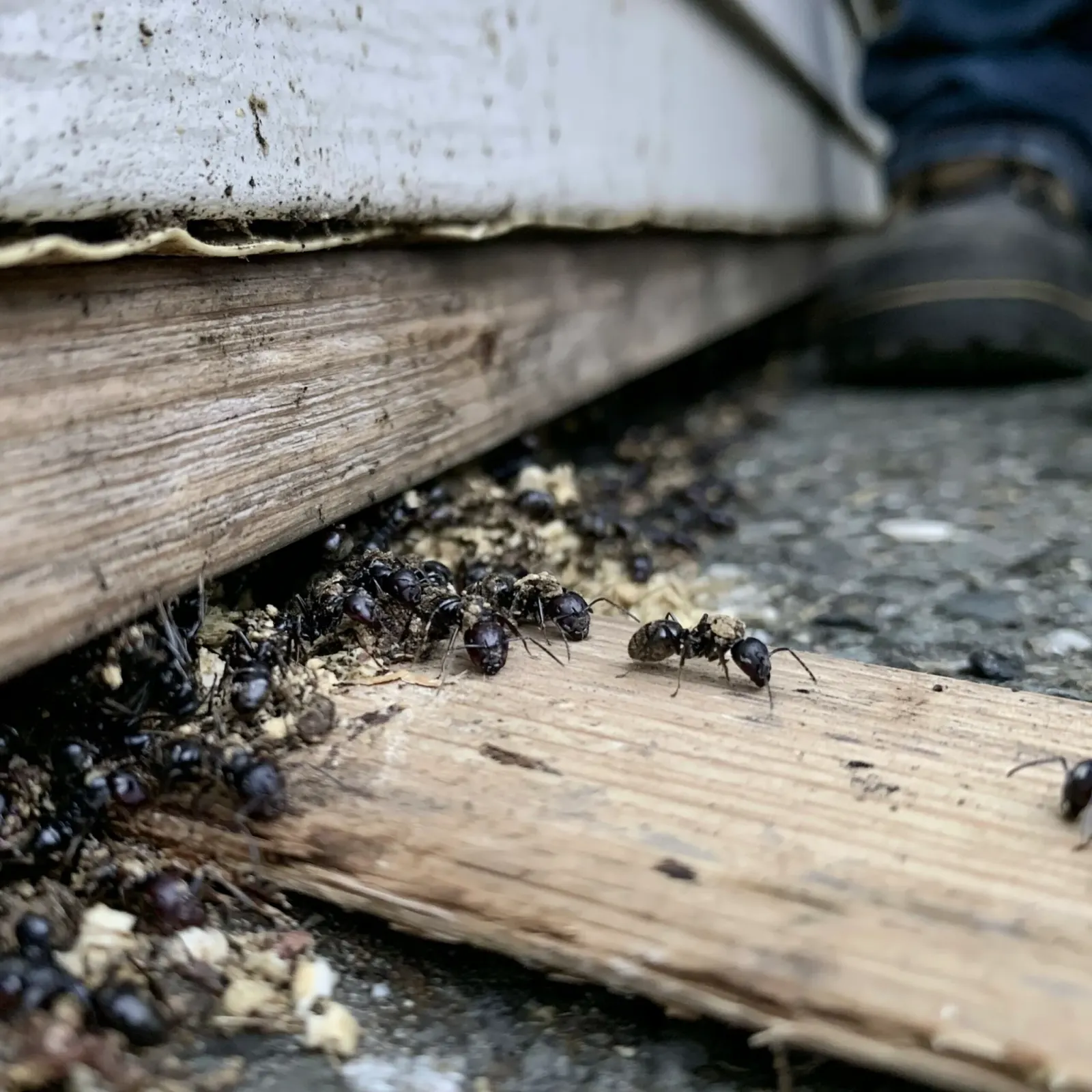
Water overflowing a blocked gutter runs behind it, down the fascia board and into the soffit. Those boards then stay damp for long stretches, which is precisely the condition carpenter ants look for. They do not eat wood for food, they excavate it to nest, and they strongly prefer wood already softened by moisture or decay.
Which is why a carpenter ant trail along a roofline is best read as a leak report. Large black ants coming out of a soffit corner in June are telling you where the water is going. Fix the water and the nest site stops being attractive. Treat the ants alone and you will meet their replacements next year, in the same corner.
Carpenter bees finish the job
Carpenter bees drill into bare, unpainted or weathered softwood, and fascia, rake boards, porch ceilings, deck rails and the underside of eaves are their preferred locations. A board that has been wet from a failed gutter for two seasons has lost its paint film and softened, which is exactly what they are looking for. The holes are round, about the diameter of a pencil, usually with a stain running down the wood below them.
Carpenter bees are among the insects that can be noted on a North Carolina wood-destroying insect report, so this is not purely cosmetic. The secondary damage is worse than the drilling: woodpeckers open the galleries out looking for larvae, turning a neat hole into a torn strip of fascia. Paint rather than stain, on sound dry wood, is the deterrent that actually works, and it only holds if the gutter above it is doing its job.
The afternoon, in order
One person, one ladder, most of an afternoon.
- Clear the gutters by hand into a bucket, needles included, and check the low spots for standing water afterward.
- Flush each run with a hose and watch where the water actually goes.
- Extend every downspout so it discharges several feet from the foundation instead of at the corner of the wall.
- Look at the fascia and soffit while you are up there: soft spots, missing paint, a stain line, round holes.
- Pull pine straw and mulch back so none of it is banked against siding or wood trim.
- Walk the yard and empty everything holding water, saucers and tarps and the wheelbarrow included.
- Paint any bare softwood you found, once it has dried out.
What it will not fix
Gutter work will not solve German cockroaches in a kitchen, bed bugs, fire ants in the yard or termites under a slab, and it is no substitute for an annual termite inspection. What it does is remove four separate reasons pests are pressing against the outside of the house, which is where nearly all of them start.
Have somebody hold the ladder, and if the roof is steep or the house is two stories, pay a person to do it rather than finding out the hard way. If you clear the gutters and still have roaches indoors, or a carpenter ant trail with no leak you can find, that is worth an inspection. The licensed local pros we connect you with cover Fayetteville, Hope Mills, Spring Lake and Vander, and a technician who looks at your roofline before your kitchen is the one worth keeping.
Dealing with this in your home?
We offer free inspections and honest recommendations across Fayetteville and the surrounding towns. Call (855) 563-1479 and we’ll help you sort it out.