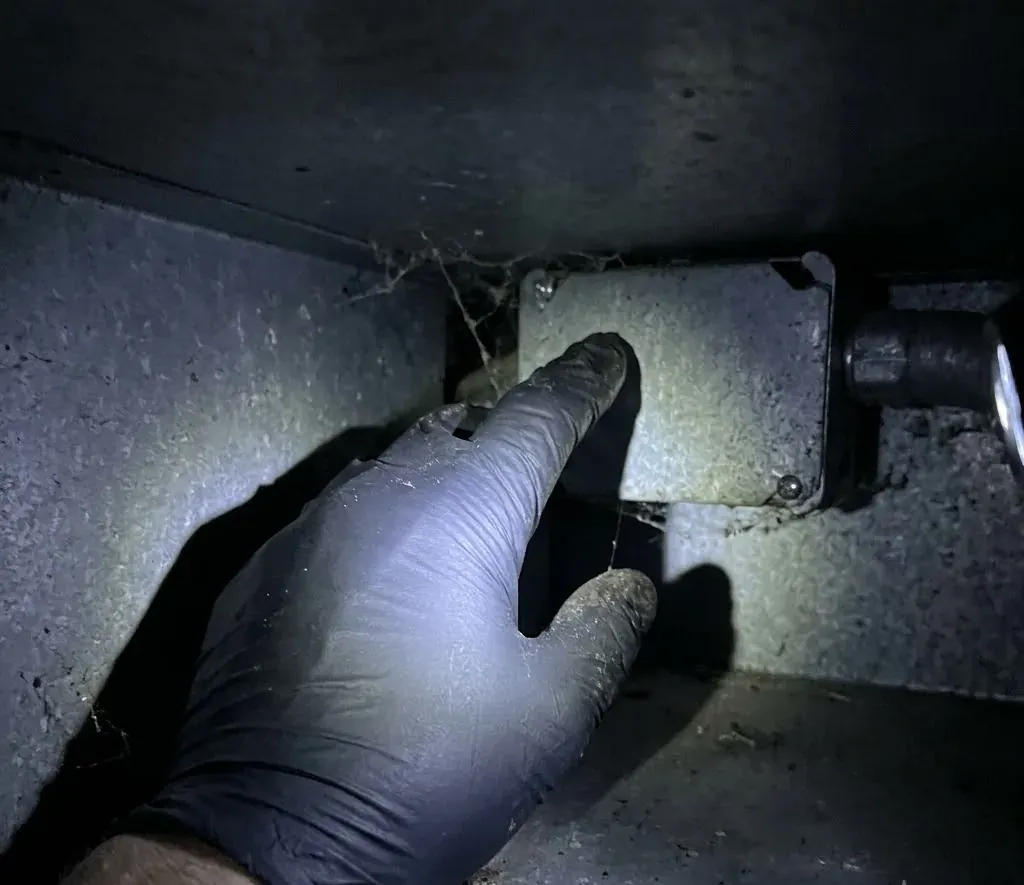
Dry wood is the cheapest termite deterrent available to a homeowner in Cumberland County, and nobody is going to knock on your door and sell it to you. There is no product line in it, no annual renewal and no yard sign. It is a ground cover, a downspout extension, a flower bed graded away from the wall, and a piece of trim that no longer touches soil. It is also the part of the job that decides whether a treatment holds for years or gets tested again next spring.
Twenty percent is where damp becomes a finding
North Carolina puts a number on it. Excessively wet wood, meaning a moisture content of 20 percent or greater, has to be reported as a condition conducive to subterranean termites on the Official Wood-Destroying Insect Information Report. That is not an opinion a technician forms about how a crawl space smells. It is a meter reading held against a threshold.
That matters twice over. Once because damp framing is genuinely attractive to termites and to wood-decay fungi. And once because the reading turns up in writing on the form a buyer reads, so an owner who ignores a wet crawl space for three years meets the number again at the worst possible moment.
Why this is a Sandhills problem specifically
The soil here drains fast at the surface and then holds damp underneath. A yard can look bone dry two hours after a thunderstorm while the ground under the floor is still giving up water into a closed space with poor air movement. That single combination explains more pest pressure in this area than any other physical fact about it, and it is why advice written for heavy clay does not transfer. What the surface tells you has almost nothing to do with what the joists are sitting over.
The conducive conditions list is really a repair list
The conditions that have to be reported are worth reading as a set of jobs rather than as criticism. At minimum they include wood in direct soil contact, cellulose debris under the structure, and wood at or above 20 percent moisture. Others that get listed:
- Insufficient clearance between wood and soil.
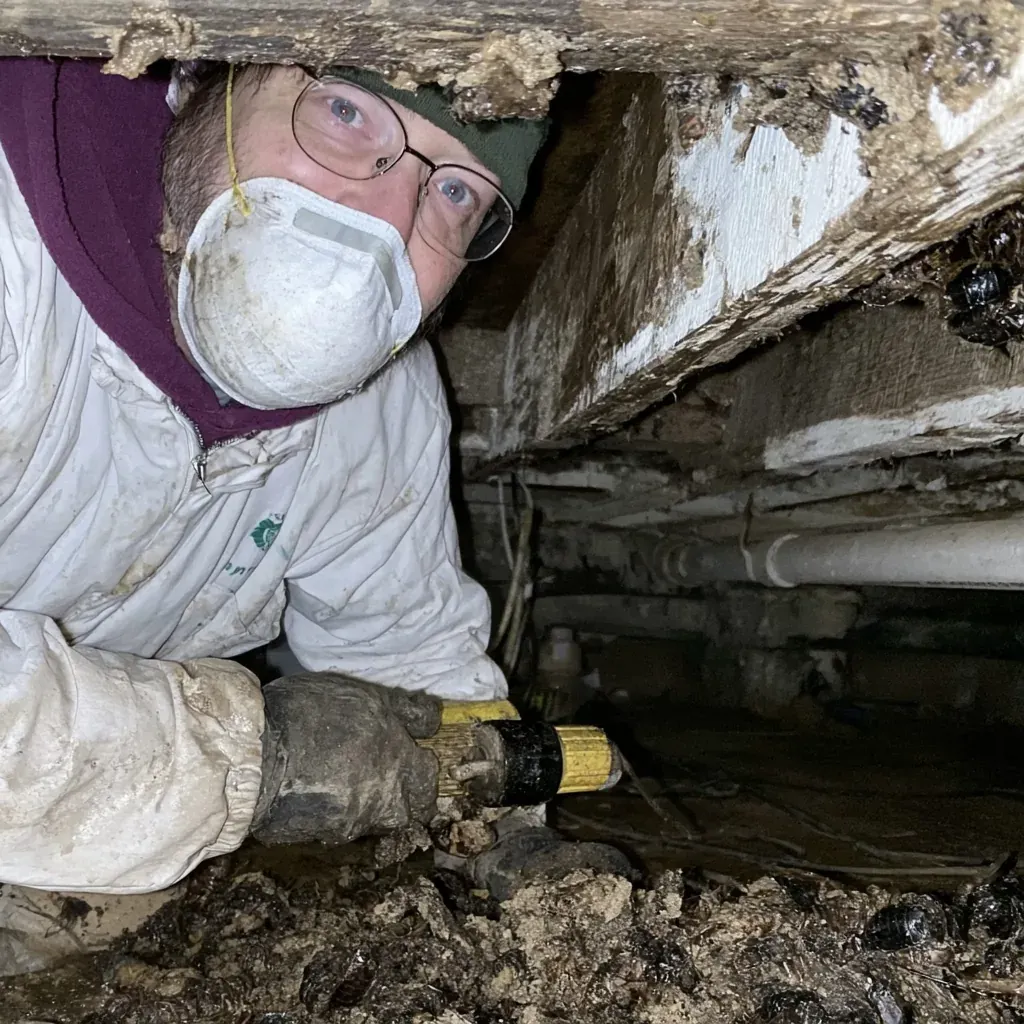
- Excessive crawl space moisture.
- Construction flaws, which often means something framed tight to the ground or a vent that got built over.
- Improper grading, where the yard sends water toward the house instead of away from it.
- Wood-decay fungi, which may be listed as a conducive condition in its own right.
Six inches, and eighteen inches
Two numbers from the state prevention guidance are worth memorizing, because a tape measure checks both. Exterior woodwork should sit a minimum of six inches clear of the ground. Crawl space beams should sit at least eighteen inches above the ground, so the space stays inspectable in future.
That second one is usually handed out as vague advice about clearance. It has a hard consequence. If nobody can get a shoulder and a flashlight under a girder, that area is not accessible, and an inspection of an inaccessible area is not an inspection. A crawl space a person can move through is worth real money at resale, because the report on the house will say accessible rather than restricted.
What moisture control involves in this market
Locally moisture control is a named service line rather than a footnote, and the work has a recognizable shape. A sealed poly ground cover over the soil, so the earth stops evaporating into the framing. Vents that work, sometimes temperature-controlled ones that open and close on their own rather than being opened in April and forgotten. And the water sources found and stopped, which is usually a supply leak, a condensate line dumping under the floor, or a drain that never quite drained.
Encapsulation is the fuller version: a heavier liner carried up the walls, foam board over the vents, and a dehumidifier sized to the space. It costs more and it does more, and it is not automatically right for a small crawl space whose only real problem is a downspout emptying at the corner of the foundation. Ask what is causing the reading before agreeing to seal the space around it.
Grading and gutters do the unglamorous half
Water arriving at the foundation is behind most crawl space readings, and it usually arrives from above. Downspouts that end at the wall, a flower bed built up against the siding, mulch piled against wood trim, and a yard that slopes gently back toward the house all do the same thing. Extending a downspout six feet costs a few dollars and moves hundreds of gallons a year away from the framing. Grade to direct water away from the structure sits on the state prevention list for a reason.
What a reading actually tells you
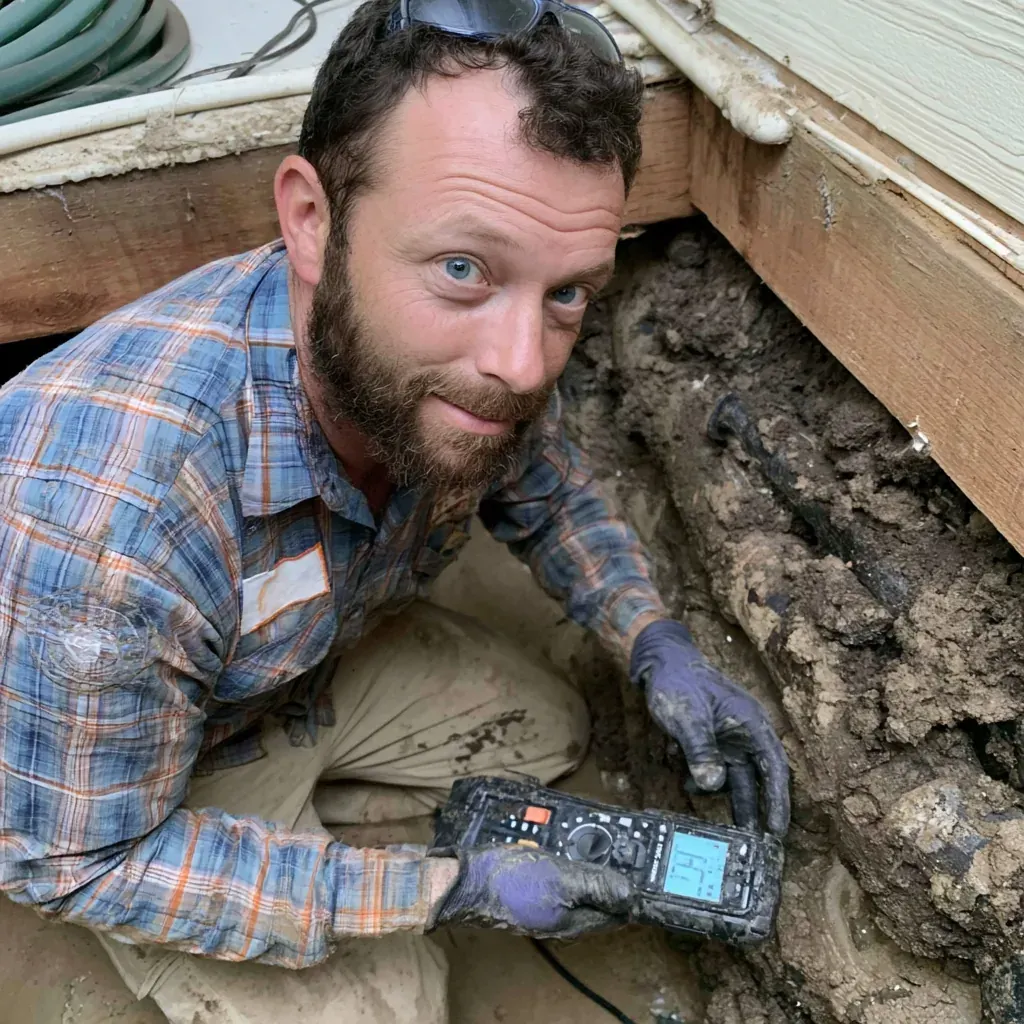
A pin meter costs less than a service call and it turns an argument into a number. Take readings at the band joist, at the ends of joists near an exterior wall, under bathrooms, and at any beam sitting near a pier, because those are the places that read wet first.
| Reading | What it usually means |
|---|---|
| Under 12 percent | Dry framing. Nothing to do beyond keeping it that way. |
| 12 to 15 percent | Normal seasonal movement in a vented crawl space. Re-check in a wet month. |
| 15 to 19 percent | Trending wet. Find the source now, while it is still cheap to fix. |
| 20 percent or above | Excessively wet wood. Reportable as a condition conducive to subterranean termites, and the range where wood-decay fungi get comfortable. |
Do it in this order
Stop the water, then dry the space, then treat what is left. Reversing that order is how a house gets treated twice. Cut the sources outside, clear the cellulose debris and any wood in soil contact underneath, get the ground covered, and then have somebody read the framing with a meter and tell you what the numbers say.
If you want the reading before you spend anything, the licensed local pros we connect you with inspect crawl spaces across Fayetteville, Hope Mills, Grays Creek and Eastover. Crawl space work runs from an estimated $55 as an add-on to a service already scheduled, up to considerably more for a full encapsulation, and getting the number first is what tells you which end of that range you are actually in.
Dealing with this in your home?
We offer free inspections and honest recommendations across Fayetteville and the surrounding towns. Call (855) 563-1479 and we’ll help you sort it out.