Retail & Grocery
Storefronts, groceries and convenience stores
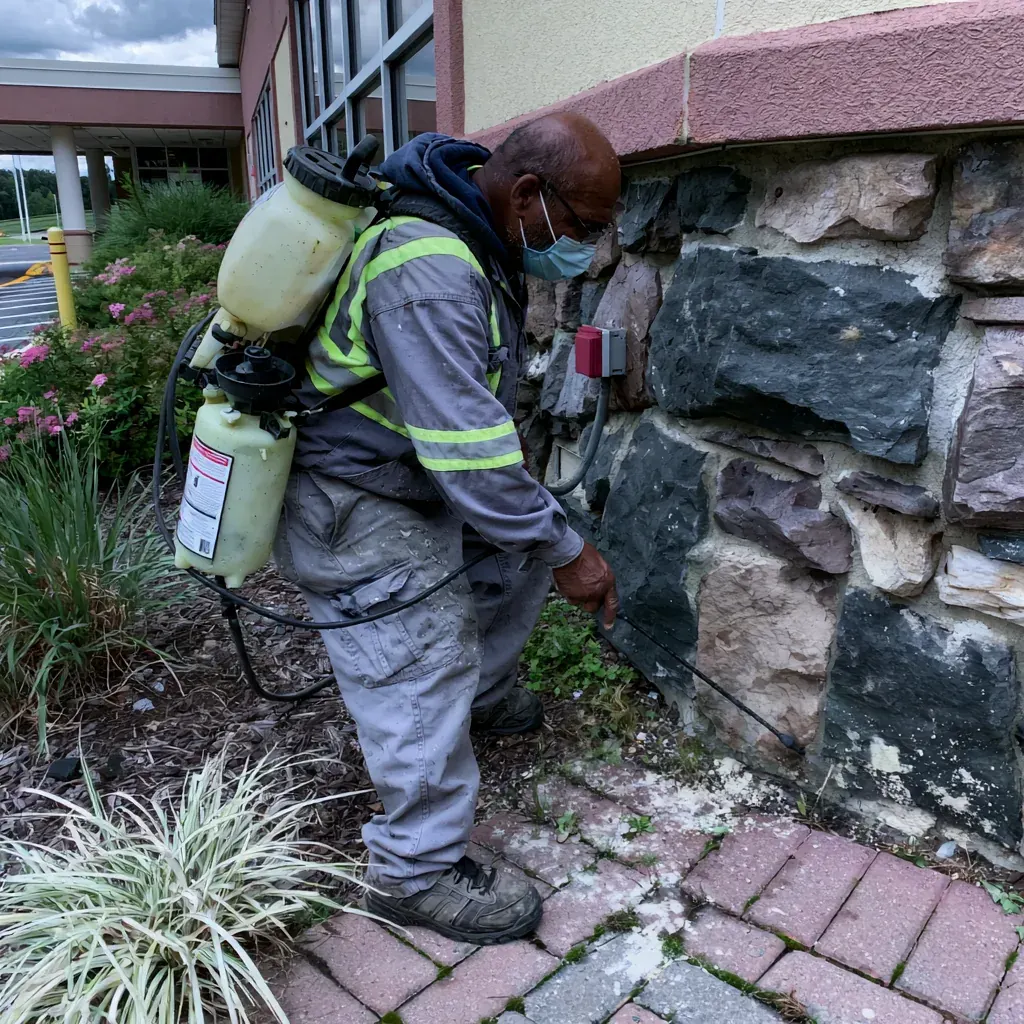
Freight is the front door, and I-95 runs right past it.
Warehouse pest control here starts at the dock, not the office. Distribution buildings sit along I-95, which runs down the east side of the county with exits serving Eastover and Dunn, so most of what gets found inside arrived on a truck. German cockroaches ride in cartons, ants and spiders ride in wooden pallets, and rodents follow a dock door that stands open all shift. Monitoring, mapped and trended, finds it before a customer does.
Fayetteville sits beside I-95, and the corridor runs down the east side of Cumberland County with exits serving Eastover and Dunn. That is why warehousing and distribution clusters where it does, and it is also why a building's pest history has less to do with its own housekeeping than with what its suppliers ship. A clean building taking dirty freight has a pest problem. A dated building taking clean freight often does not.
Which changes where the attention goes. Instead of a route that walks the office and the break room, the useful inspection follows the flow of goods: trailer, dock plate, staging area, first rack position, then wherever slow-moving stock ends up. Anything found deep in the racking arrived weeks earlier and has been breeding since.
The freight lane runs both directions from Fayetteville, and that's the part shippers overlook. A trailer loaded near Lillington or staged through the Elizabethtown Airport Industrial Park carries whatever boarded it before it ever reaches a dock plate here, which means the source isn't always local. The licensed pros we connect you with treat every inbound lane as a fresh vector, not just the building itself, because a clean warehouse can still inherit a problem from Vander or points beyond on the next delivery.
Stand inside a dark warehouse at midday and look along the dock line. Every strip of daylight is an entry. Worn dock seals, curled bottom rubber, a leveler pit that never closes flush and a personnel door with a broken sweep account for most of what walks in on its own legs. Add a door that stands open through a whole shift for airflow and you have removed the wall entirely.
This is also the cheapest fix in the building. Rubber and sweeps cost a fraction of a year of reactive service, and unlike product they keep working at three in the morning when the shift is short-handed and the door is propped.
Distribution centers off I-95 near Fayetteville draw the same inspection everywhere the licensed pros we connect you with cover ground, from the warehouse corridors around Spring Lake and Pope Army Airfield to the loading yards near Raeford and out toward Dunn. A dock door propped for a pallet run at 3 a.m. looks identical whether the building sits inside the city or out past Stedman, and the fix is the same too: rubber down, sweeps tight, light gone from under the door.
It is worth knowing which pest arrives with which kind of freight, because it tells you where to look first when something turns up. The pattern below is what technicians here find often enough to check every time.
Freight bound for the distribution center off I-95 often starts its trip well outside Fayetteville, and the route matters as much as the load. A pallet staged near Godwin or routed up Dunn Road through Exit 65 picks up different stowaways than one that sat overnight near Parkton or came off I-95 at St. Pauls, which is exactly why the pros we connect you with check origin before contents.
| Inbound item | What travels with it | Where it shows up first |
|---|---|---|
| Corrugated cartons | German cockroaches and their egg cases | Staging area, then break room |
| Wooden pallets | Ants, spiders, occasional wood borers | First rack position, floor level |
| Food and pet food stock | Stored product beetles and moths | Damaged bags, sweep piles, dead ends |
| Returns and mixed pallets | Bed bugs in soft goods | Returns bench and staff areas |
| Trailers parked overnight | Rodents and their droppings | Dock plate and leveler pit |
| Landscape and bulk material | Ants, roaches from mulch and soil | Exterior wall, then dock apron |
In a building measured in hundreds of thousands of square feet, a sighting is nearly useless as data. One roach in a break room tells you nothing about whether the population is growing or collapsing. A numbered grid of monitors does, because the same devices get read on the same route every visit and the counts either climb or they do not.
So the deliverable is a map and a trend line. Devices numbered and located on a floor plan, exterior rodent stations along the wall and around the trailer yard, interior monitors weighted to the dock, staging and any food or pet food storage, and a reading log that shows movement over months. When counts rise in one quadrant you know where to look and roughly when it started.
A note on the exterior: Sandhills ground drains fast on the surface and then holds damp lower down, so the strip of soil against a slab stays a habitat even when the yard looks bone dry. That band, plus the mulch, the retention edge and any pallet stack stored outside, is where the pressure builds before it reaches the dock.
Warehouse pricing is driven by square footage, device count and how many dock positions need attention, so it spreads much wider than other commercial work. A small distribution or light industrial building often sits around an estimated $150 to $340 a visit, while a large facility with a full monitoring grid and a trailer yard is quoted on the device count and the route time rather than by the foot.
One thing worth pushing for in any proposal: ask whether the price includes reading and logging every device, or only servicing the ones with activity. Those are different jobs, and only the first one gives you a trend you can act on.
Premises like these are served across Fayetteville and out to Lumberton, Wade and Falcon. The first walkthrough happens at whichever location is giving you trouble.
Sites like this generally settle between an estimated $85 and $239 a visit. Size matters, frequency matters more, and the reporting requirement is usually what decides it. The walk round is free and the scope is on paper before you commit to anything. The pricing guide carries the full set of ranges, and the commercial overview goes through how a program is assembled.
Storefronts, groceries and convenience stores
K-12 campuses, daycare and after-school rooms
Clinics, care homes and senior living
Enough to cover the dock line, staging, any food or pet food storage and the perimeter walls at regular spacing, plus exterior rodent stations around the building and the trailer yard. The number follows the floor plan rather than a formula. What matters more is that every device is numbered, mapped and read on every visit so the counts mean something.
Inspect at receiving and keep the evidence. A quick look at pallet bases and carton corners at the dock catches a share of it, and photographing what you find gives you something to take back to the supplier. Inside the building, keeping inbound in a staging area rather than putting it straight into racking limits how far a problem travels before you notice.
Yes. The work is exterior, dock, floor level and device reading, none of which needs the building to stop. Visits are usually scheduled between shifts or on the quieter shift so aisles are clear and a lift is available for anything that needs height. Nothing about routine service requires product on stock or on picking faces.
The yard is part of the exposure, so exterior stations and the pallet and material storage out there are normally included in the scope. Anything involving protected wildlife is its own conversation, and in North Carolina that work belongs to a licensed Wildlife Control Agent rather than being folded into a general service.
A floor plan with numbered devices, a count for each on each date, notes on which positions changed, and a short list of physical fixes. Read across a few months it shows whether pressure is coming in at the dock, breeding in a specific quadrant, or arriving with a particular supplier's freight.
Call to arrange a walk of the building and the yard. The licensed local pros we connect you with will map devices to a floor plan and show you where the freight is bringing problems in.
Call (855) 563-1479