Apartments & Multifamily
Apartments, duplexes and rental portfolios
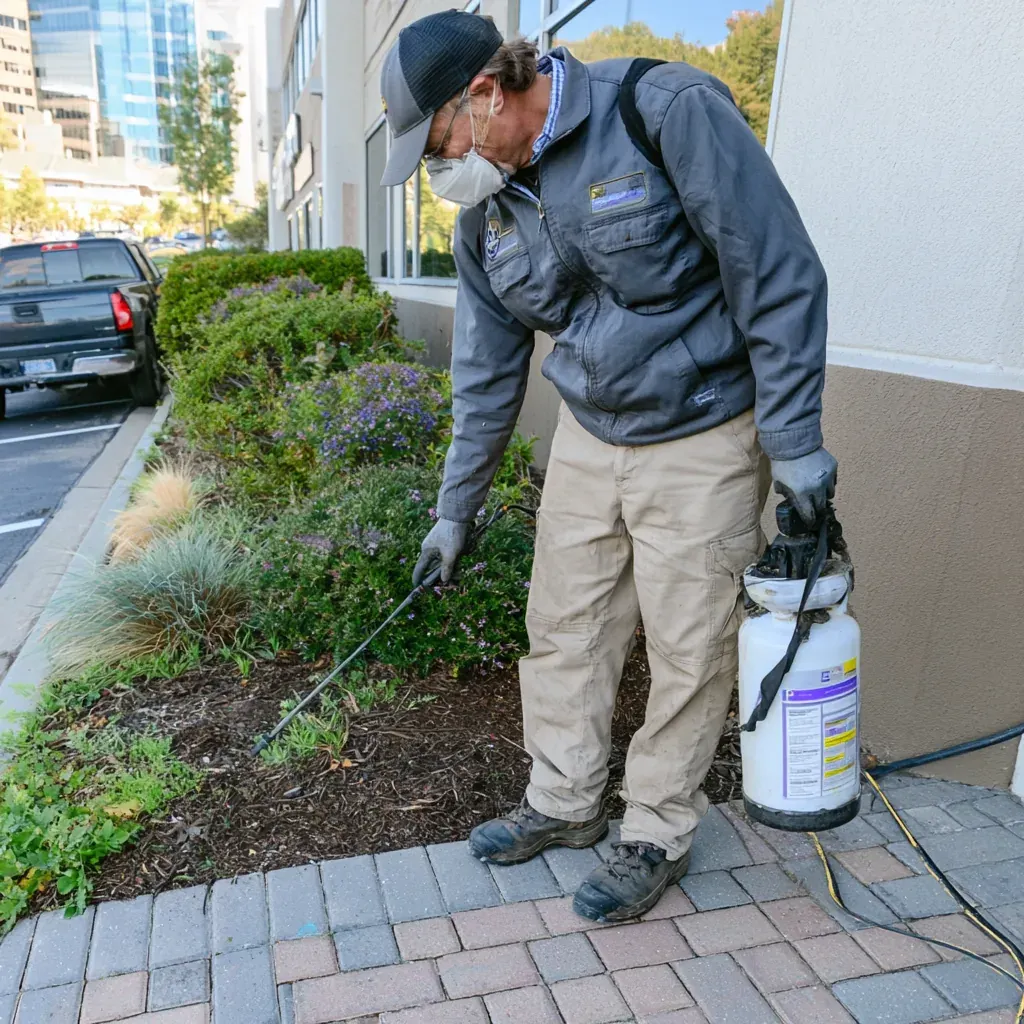
Occupants who cannot leave the room change every decision on the plan.
Healthcare and senior living pest control is planned around occupants who cannot leave the room. That pushes product choice toward low odor formulations and contained placements, it pushes timing to fit shift changes and meal service, and it raises the standard on records: what was used, where, at what rate, and who was told. The licensed local pros we connect you with work to a floor plan and sign each visit off.
In a restaurant you can clear a room. In a care home you cannot. A resident in a bed, a patient on oxygen, somebody recovering from surgery or living with dementia is not going to step outside for an hour, and a room that smells of anything unfamiliar causes distress that outlasts the visit by days. Every choice in the plan follows from that.
So the working method changes shape. More inspection, more monitoring, more exclusion, and treatment that is contained: gel bait in a void, a monitor under a fixture, a vacuum instead of an aerosol, dust in a wall cavity that is sealed after. Broadcast application in an occupied resident room is not a treatment option, it is a complaint waiting to be filed.
The same logic applies in outpatient clinics and dental offices, where the constraint is the treatment room, sterile storage and equipment rather than a resident. Nothing goes on or near a surface that touches a patient, and anything requiring more than a contained placement waits until the practice closes.
Assisted living facilities out toward Godwin and Linden face the same access limits on a smaller scale: fewer staff on a night shift, residents who cannot be moved for a treatment, and hallways that stay occupied around the clock. A facility off Dunn Road near Godwin Presbyterian Church books evening or early-morning windows for exactly this reason, and the pros licensed for institutional work around Fayetteville plan the visit to match, not the other way around.
Low odor is not a marketing phrase in this setting, it is a specification. Formulation choice, application method and quantity all get decided on the basis that somebody with a respiratory condition will be breathing that air an hour later, and that a family member visiting will notice anything unusual immediately.
Disruption gets managed by scheduling rather than by speed. Working around meal service, medication rounds, shift changes and visiting hours means a visit takes longer and produces fewer complaints. Nursing and housekeeping staff who were told in advance which wing is being worked, and what to expect, are also the people who will report the first sighting next month rather than assuming somebody else did.
Fayetteville clinics and senior living facilities schedule this kind of quiet, low-odor work the same way a facility manager out toward Lillington on US 401 would, coordinating around therapy sessions and meal service rather than around a lease. The licensed pros we connect you with also cover Elizabethtown and Roseboro on the same low-disruption standard, since a memory care wing near Tory Hole Park has the same records requirements as one near a downtown clinic — full documentation, minimal scent, and staff who know what to watch for afterward.
Bed bugs arrive with belongings. A new resident's furniture, a suitcase that came from a family home, a recliner donated in good faith, a bag of clothes that came back from a relative's house. Fayetteville sees more of this than a settled market would, because household goods here move frequently and often at short notice when orders come through.
The thing that makes senior living hard is not the insect, it is the reporting. Bites on thin skin get attributed to something else, residents with cognitive decline cannot describe what they saw, and some will not mention it at all because they fear being blamed or moved. So detection has to be active: mattress and chair seam inspection at intake, encasements, interceptors under bed legs, and housekeeping trained to look at a seam rather than only at a floor.
When a room is positive, treat the run of rooms around it and the shared laundry rather than only the one that reported. Heat where it is available and safe, contained treatment where it is not, encasements after, and a follow-up schedule that does not stop at the first quiet week.
Senior living campuses that draw families and residents from well beyond Fayetteville add another wrinkle: a resident transferred from a facility near Lumberton, or visitors driving in from Erwin along the Cape Fear River corridor, can carry bed bugs in on a walker bag or a coat before staff ever see a sign. The pros we connect facilities with treat move-in intake the same way they treat a positive room, checking soft-sided belongings before they ever reach a shared hallway or a laundry cart.
In this sector the record is not an afterthought, it is much of what you are buying. When a family member, an administrator or a surveyor asks what has been happening, the answer needs to be a dated file rather than a recollection. That file also protects the facility, because it demonstrates a pattern of monitoring and correction rather than a reaction to one complaint.
What belongs in it: a floor plan with numbered monitors, a dated log per visit naming areas covered, findings by location, products used with rate and placement, staff notified, corrective actions requested, and whether the previous request was completed. Trend data from the monitors matters more than any single visit, because it shows whether pressure is falling.
It should also record the physical problems the facility owns. A failing door sweep on a service entrance, a dumpster pad that holds water, an ice machine with a slow drain, or a kitchen dry store with cartons on the floor. Those are the recurring causes, and a log that names them turns the next budget conversation into an easy one.
Care homes and senior living communities are generally on monthly service, with kitchen, laundry, waste areas and the exterior worked every visit and resident wings on a rotation, plus a same-week response arrangement for a bed bug report. Outpatient clinics and dental practices commonly run every other month or quarterly, weighted to break rooms, waste storage and the exterior.
For planning, a clinic or small practice usually sits around an estimated $110 to $220 a visit, while a residential care community with a commercial kitchen, laundry and multiple wings is quoted on floor area, wing count and monitor count together. Bed bug work in an occupied facility is always priced separately from routine service, because the labor is not comparable.
One thing worth writing into any agreement: a defined response time for a suspected bed bug report, and confirmation that the same technicians attend regularly. Familiarity with a floor plan and with the staff is worth more here than in any other commercial setting.
This is work we cover across the county, Hope Mills, Spring Lake and Fort Bragg. Nothing extra goes on the invoice for mileage inside that area.
Sites like this generally settle between an estimated $85 and $239 a visit. Size matters, frequency matters more, and the reporting requirement is usually what decides it. There is no charge for the first walk round, and nothing is agreed until the scope is written. Every range is set out on the pricing guide, and the commercial overview covers how a scheduled account actually runs.
Apartments, duplexes and rental portfolios
Multi-site accounts and owner reporting
Docks, racking and inbound freight
Inspection and monitoring, yes. Application, no. Anything applied is done with the room empty, using contained placements in voids and under fixtures, with re-entry confirmed before the resident returns. If the resident cannot be moved even briefly, the honest answer is to schedule around care rather than to work around the person.
Quietly and by scope. Inspect the reported room and the rooms around it plus the shared laundry, use encasements and interceptors so detection continues afterward, and brief staff on a need-to-know basis. Panic spreads faster than the insect, and a facility that has a written protocol ready responds without a scene.
A floor plan with numbered devices, a dated log per visit showing areas covered and findings by location, products used with rate and placement, which staff were notified, and the corrective actions requested with their status. Read across several months the monitor counts show whether pressure is going down, which is the part a surveyor or a family member actually wants to know.
Usually not. A small outpatient or dental practice with no food service often holds well on every other month or quarterly, focused on the break room, waste storage and the exterior. Residential care is different, because it has a commercial kitchen, laundry, waste volume and residents who cannot report clearly, so monthly is the sensible floor there.
No, and it is worth stating in the agreement. Formulation, method and quantity are chosen on the basis that somebody with a respiratory condition will be breathing that air shortly afterward. Where a job would genuinely need something noticeable, the answer is a different method, not a warning notice on a door.
Call to arrange a walk of the kitchen, laundry, waste areas and one wing. You will get a monitor map, a scheduling plan that respects care routines, and records you can hand to a family member.
Call (855) 563-1479