Warehouses & Distribution
Docks, racking and inbound freight
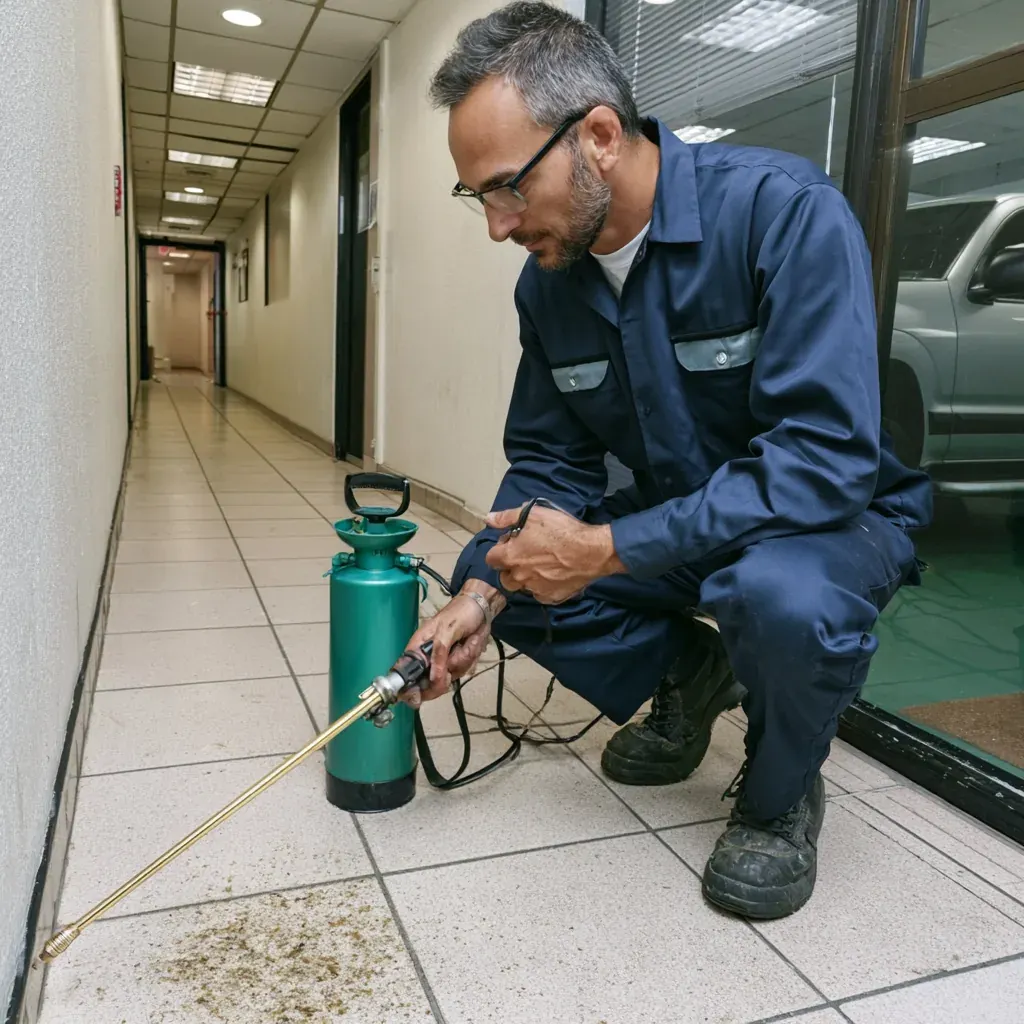
Treating a building beats treating a unit, every time.
Apartment pest control in Fayetteville has to survive turnover. Fort Bragg tenant churn runs on orders rather than a lease year, so units flip faster and with less warning than in a normal rental market, and bed bugs and German cockroaches travel with furniture and cartons. That is why the useful unit of work is the building: the stack of units around the complaint, the shared plumbing chase and the corridor, not one apartment on one afternoon.
Most multifamily advice assumes a rental market that turns in August. Fayetteville does not work that way. Fort Bragg is inside the city, home to the XVIII Airborne Corps, the 82nd Airborne Division and US Army Special Operations Command, and a tenant who gets orders moves when the orders say so. Turnover is faster, less predictable, and clustered in ways a calendar cannot forecast.
For a pest program that has two consequences. Furniture and boxes move through the property constantly, which is exactly how bed bugs and German cockroaches arrive. And a vacancy is often short, so the window to inspect and treat an empty unit properly is measured in days. A property that has a standing turn protocol catches this. A property that calls when a resident complains does not.
Multifamily portfolios around Fayetteville rarely sit in one cluster, and that spreads the turnover problem across very different buildings. A garden-style complex near Hope Mills turns units on a different clock than a walk-up off Cross Creek, and a property manager covering both, plus something out toward Spring Lake, cannot run one inspection calendar and expect it to fit all three. The pros we connect you with build the protocol around each property's actual vacancy rate, not a shared template.
German cockroaches and bed bugs do not respect a lease boundary. They travel along plumbing chases, through the gap where the tub surround meets the wall, behind a shared kitchen wall, along baseboard voids and under corridor doors. By the time one resident calls, the neighbors either side and the units directly above and below are part of the same problem whether anyone in them has noticed or not.
So the sensible scope is the stack, not the apartment. Inspect the complaint unit and its immediate neighbors, treat what is found, and put monitors in the ones that look clean so the next round of information arrives before the next phone call. Treating single units on demand is how a property ends up paying three times for the same population.
Fayetteville's rental stock runs the same way in the outlying markets the licensed pros we connect you with also cover. Down toward Lumberton, older garden-style complexes near Lumber River State Park share plumbing chases across units the same as any Cumberland County property, and a management office in Dunn or Erwin faces the identical stack problem: one clean report from a neighboring unit means nothing if the line behind the wall runs straight through it.
Bed bugs and German cockroaches are hitchhikers. They arrive in a secondhand couch, in a mattress that spent a night on a curb, in the flattened cartons somebody grabbed behind a store to pack with, and in a moving crate that sat in a storage unit next to an infested one. Nothing about the building caused it and nothing about the resident's housekeeping caused it either, which is worth saying out loud when you talk to them.
The practical answer is inspection at the moments things move: at turn, at move-in where you can, and any time maintenance is inside a unit for something else. A maintenance tech who knows what a bed bug cast skin on a mattress seam looks like is the cheapest early warning system a property can have.
Property managers running multifamily buildings out toward Vander know turnover season is when a single infested mattress becomes six units' problem, since shared walls and hallway carts move bugs faster than any single-family lease ever would. The same logistics apply for portfolios stretching toward Lillington or Elizabethtown, where the licensed pros we connect you with treat move-out inspections as part of the maintenance visit, not a separate call placed only after a tenant complains in Fayetteville.
North Carolina puts a continuing duty on the landlord. Under G.S. 42-42 the landlord must make repairs and do what is necessary to put and keep the premises in a fit and habitable condition, and that duty runs for the whole tenancy rather than only at move-in. It cannot be waived. Tenant duties sit separately in G.S. 42-43.
What that does not do is settle every bill. Whether a specific pest treatment is the owner's cost or the resident's turns on the lease and on the cause, and anyone who tells you there is a flat rule either way is guessing. What holds up is a written record: what was reported, when, what was inspected, what was done, and what the resident was asked to do to prepare. Ask residents to report in writing and keep the copy.
An empty unit is the only time you get to see everything. Use it. This is the list worth handing to maintenance.
A building program usually prices as a building. Common areas, exterior, trash rooms and a rotating share of units on each visit, at something like an estimated $150 to $320 a building visit for a small property, with larger sites quoted on unit count and building count together. A single turn treatment on one unit runs closer to an estimated $110 to $240.
The reason per unit math misleads is that the same dollar buys different results depending on scope. Money spent on the exterior, the trash rooms and a monitoring grid stops the calls. Money spent reacting to individual complaints buys the same treatment repeatedly. Ask any quote to show what it does in the units nobody has complained about yet.
We take on premises of this kind throughout the area, Raeford, Eastover and Stedman. Sitting just outside it is still worth a phone call, because routing often makes it work anyway.
Sites like this generally settle between an estimated $85 and $239 a visit. Size matters, frequency matters more, and the reporting requirement is usually what decides it. Nobody bills for the initial visit, and you see the scope in writing first. All the bands are published on the pricing guide, and the commercial overview lays out how the visits get organized.
Docks, racking and inbound freight
Office suites and professional buildings
Storefronts, groceries and convenience stores
You should at least inspect them and put monitors in. Bed bugs move along baseboards, plumbing chases and shared walls, and the units either side plus directly above and below are the usual path. Inspecting them costs little; discovering three months later that they were infested the whole time costs a great deal more.
G.S. 42-42 requires the landlord to keep the premises fit and habitable for the whole tenancy, and that duty cannot be waived, so the obligation to act sits with the owner. Which party carries the cost of a particular treatment is a different question that turns on the lease terms and the cause. Get the reporting and the inspection findings in writing either way.
Because they are moving in with belongings and then spreading through the structure rather than breeding outside and wandering in. Turnover in this market is fast, so the supply keeps arriving. Buildings that get on top of it do two things: inspect at every turn, and treat the run of units around a find instead of only the one that called.
Yes, and it is normal here given how many residents are tied to a duty schedule. Notice goes out ahead of the visit, access is coordinated through the office, and units that miss the pass get picked up on a second sweep rather than skipped for a month. Exterior and common area work does not need anyone home at all.
Less than most people expect for a routine visit: clear access under the kitchen and bath sinks and behind the range. Bed bug work does need real preparation, laundry handled a specific way and clutter reduced, and it is worth having that instruction sheet ready in advance rather than written the day before.
The Greater Fayetteville Apartment Association is a genuine local audience and many of the managers we place work are members. It matters less as a credential than as a signal: those properties tend to run standing protocols and keep records, which is exactly the setup where a building program pays for itself.
Call for a walk of one property and we will connect you with licensed local pros who scope the stack, not the single apartment, and who will put the findings in writing.
Call (855) 563-1479