Noise overhead in the middle of the morning
These are day animals. Movement soon after sunrise, more in the late afternoon, then nothing overnight, points at squirrels. The sound is heavier than a rodent, more of a roll or a thump than a patter.
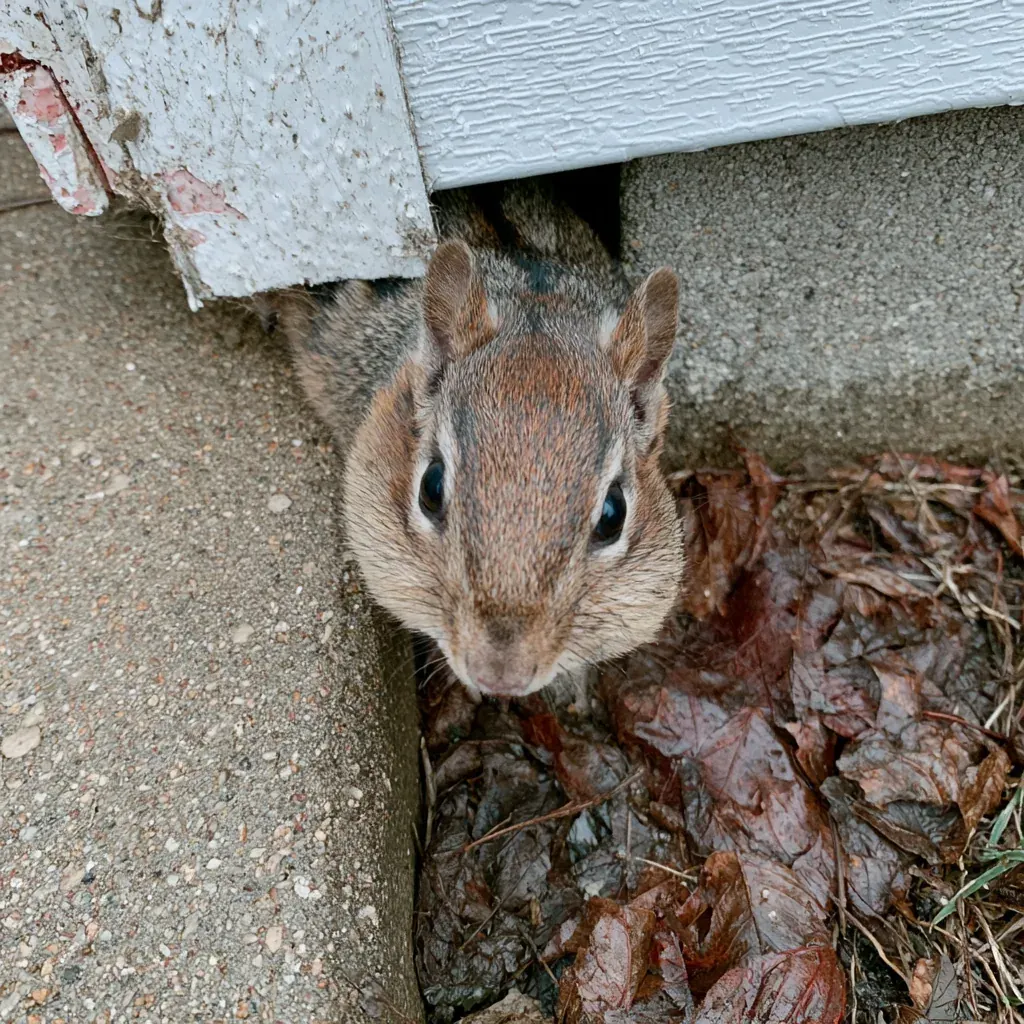
Two busy stretches here, late winter into spring and again in late summer, when young are born and start looking for their own space.
Gray squirrels get into Cumberland County attics by chewing an opening of their own, usually at a soft fascia board, the screen on a gable vent, or the seam where a roofline dies into a wall. You hear them in daylight, which separates them from nearly everything else that lives in an attic. Getting the animal out is the easy half. The half that decides whether you do this again next year is the permanent repair in metal.
These signs usually show up before the pest itself does.
These are day animals. Movement soon after sunrise, more in the late afternoon, then nothing overnight, points at squirrels. The sound is heavier than a rodent, more of a roll or a thump than a patter.
Walk the perimeter and look along the roof edge with binoculars. A squirrel entry is chewed rather than found, so the wood carries tooth marks and the paint is broken back around a rough oval about two inches across. Louvered gable vents usually get the screen peeled at one bottom corner.
They carry food to somewhere they feel safe and eat it there. A gutter with cracked shells in it, or a scatter of caps on a low roof, maps the route before anybody climbs into the attic.
Squirrel incisors grow continuously and cable sheathing is a convenient thing to wear them down on. Intermittent electrical faults in a house that also has attic noise deserve an attic inspection, not only an electrician.
The long established streets in Fayetteville and around Hope Mills carry a mature oak and pine canopy, and a limb within jumping distance of a roof is the whole of the access problem. Squirrels do not need a ladder or a tree touching the house. They need a launch point and a landing, and a canopy that grew up with the neighborhood provides both.
Sandhills weather is hard on the edge of a roof. Long humid summers, heavy afternoon rain and gutters that overflow at the same corner every year leave fascia and soffit boards soft, and soft wood is exactly what a squirrel picks to work on. The animal is opportunistic about where it starts and relentless once it has started.
Slab on grade is as common here as a crawl space, and on a slab home there is no under-floor space for an animal to disappear into. Everything goes to the attic instead, so the attic takes the full pressure and the noise ends up directly over a bedroom ceiling rather than somewhere it can be ignored for a season.
That attic pressure is not confined to Fayetteville proper. Out toward Godwin, older homes along Dunn Road sit slab on grade the same way, pushing squirrels straight into roof spaces near Exit 65 on I-95. Near Wade, houses close to Old Bluff Presbyterian Church show the identical pattern, ceiling noise with nowhere else for the animal to go. The fix is the same everywhere: seal the entry, then repair what got torn open, work best left to the licensed pros we connect you with.
The same repair problem shows up well beyond Fayetteville's city limits, wherever old attics meet mature trees. Homeowners near Broad Street in St. Pauls, a quick run south off I-95 at Exit 33, report the same scratching once squirrels find a gap at the roofline. Out toward Roseboro, near the Howell-Butler House, and further east around Clinton's College Street Historic District, the story repeats on older homes with open soffits. Distance from downtown changes nothing about what the entry hole becomes once it is torn open.
Roofline entry points are only half the story once squirrels get into a wall cavity, and that holds true well beyond Fayetteville. Out toward Linden, older places like Ellerslie and the homes near the Dr. Wayman C. Melvin House show the same chewed sill plates and flattened insulation, since a squirrel nest never stays where it started. Near Parkton, the same open eaves invite the same return visits year after year.
Hope Mills, Spring Lake and Fort Bragg all see this, and so does the rest of our Cumberland County service area.
Flying squirrels. The clock tells them apart more reliably than the animal does. A gray squirrel works in daylight and sleeps at night. A flying squirrel runs the opposite schedule, so noise that begins after dark and comes in bursts until early morning is a different animal with a different plan attached to it. Group size is the other tell. Gray squirrels are usually one or two. Flying squirrels arrive as a colony.
Everything starts with a full exterior inspection, because there is almost never only one opening. The chewed hole you can see from the driveway is the active one. Behind it there are usually two or three older or partial openings at the roof returns, the vent screens and the point where the soffit meets brick veneer. A plan built on one hole fails at the second.
The removal itself is a one-way door fitted over the active opening. The squirrels leave to feed as they normally would and cannot get back in. The attic is then checked for young before anything is closed, because sealing a nest of kits into a ceiling is both cruel and a smell problem you will live with for weeks. Once the space is confirmed empty, the door comes off and the hole closes.
The repair is the job. Heavy gauge steel mesh or sheet metal behind rebuilt wood, replaced rot rather than filler over it, metal screening on every gable and roof vent, and limbs cut back where the launch point is obvious. Wood alone gets chewed again, usually at the same spot, because the animal remembers the location. After that comes the attic work: droppings and nesting material out, damp or flattened insulation replaced, wiring checked.
Nobody needs a schedule for a gray squirrel problem with an obvious start and an obvious end. Anyone who says otherwise is working from a sales sheet.
| How it presents | What that usually needs |
|---|---|
| Something contained, in one part of the property | Treat it once |
| Pressure off the yard or the marsh, year after year | Recurring visits |
| Something living in the crawl space, a void or the attic | Treatment with exclusion work |
Three kinds, in rough order of cost. Gnawed wiring is the one that matters, and it is the reason an attic with squirrel activity gets a look at the cable runs and the junction boxes rather than a quick sweep. Then the insulation, which gets compressed into runways, pulled into nests and soiled, so it stops holding the R value you paid for. Then the structure itself, mostly chewed fascia, rafter edges and vent frames. A squirrel that dies inside a wall void adds a fourth item nobody plans for, and cutting drywall is the only way to fix it.
Plenty of useful homeowner work here, and it is all on the outside. Cut limbs back off the roof, keep the gutters flowing so the fascia stops rotting, replace the soft board before anything finds it, and screen the vents with metal rather than plastic. What backfires is closing the hole while the animals are inside. They chew out again through fresh wood, or they do not, and then you have a decomposing animal in a ceiling. Skip the mothballs and the ultrasonic boxes, and never put out rodent bait for a squirrel. The animal dies where you cannot reach it.
A gray squirrel job around here tends to sit between an estimated $175 and $525. Which end depends on the house rather than on the insect. The inspection is free and the scope goes on paper before any work happens. The pricing guide carries the full bands and what shifts them, and the work itself falls under Wildlife Removal.
Strong, smart and never to be cornered. A raccoon does not need a weak point the way a squirrel does.
Dens low, digs shallow, sprays accurately. Skunks want two things and your property is probably offering both: a dry space under a porch, deck or shed to den in, and a lawn with enough insect life in the top two inches to dig for.
Listen at three times: 7am, mid afternoon and midnight. Squirrels are loud in the first two and silent in the third. Rats are the other way round. Weight helps too. A squirrel moving across a ceiling joist sounds like something with mass, while rats sound like fast light scratching along a wall top.
It fails often enough that nobody in the trade does it. You cannot tell from outside whether every animal is out or whether there are young inside, and a squirrel shut out of a nest will simply open a new hole in the same soft board within a day. A one-way door removes the guesswork.
The inspection and the one-way door are one visit. The door normally stays on for several days so the animals clear out, then a second visit closes everything permanently. If there are young in a nest the timeline stretches, because the work waits until they can leave with the mother rather than being sealed in.
Not through a metal repair. They will come back to the roof, because the tree and the neighborhood have not changed, and they will test the other weak points. That is why the inspection covers the whole roofline rather than the one hole, and why a follow-up look after a wet winter is worth doing.
It splits into the removal and the repair, and the repair carries most of the number because it is carpentry and metal work at height. For a single entry point on an accessible roof, expect an estimated $285 to $625 all in, with attic cleanup and insulation quoted on what is found. That is a guide range from the pros we connect you with, not a quote.
You get a licensed local pro, an honest read on how bad it is, and same day attention where we can manage it. No sales script.
Call (855) 563-1479