What is drawing them to your property
The habitat is continuous, which is the most useful thing to understand about this. Creek lines, ditches, wooded edges and undeveloped land run through and between neighborhoods across Cumberland County, and a snake follows cover along those routes the way anything else does. A yard that backs onto a wooded strip or a drainage line is on a travel corridor, and that is a matter of geography rather than of anything the homeowner did wrong.
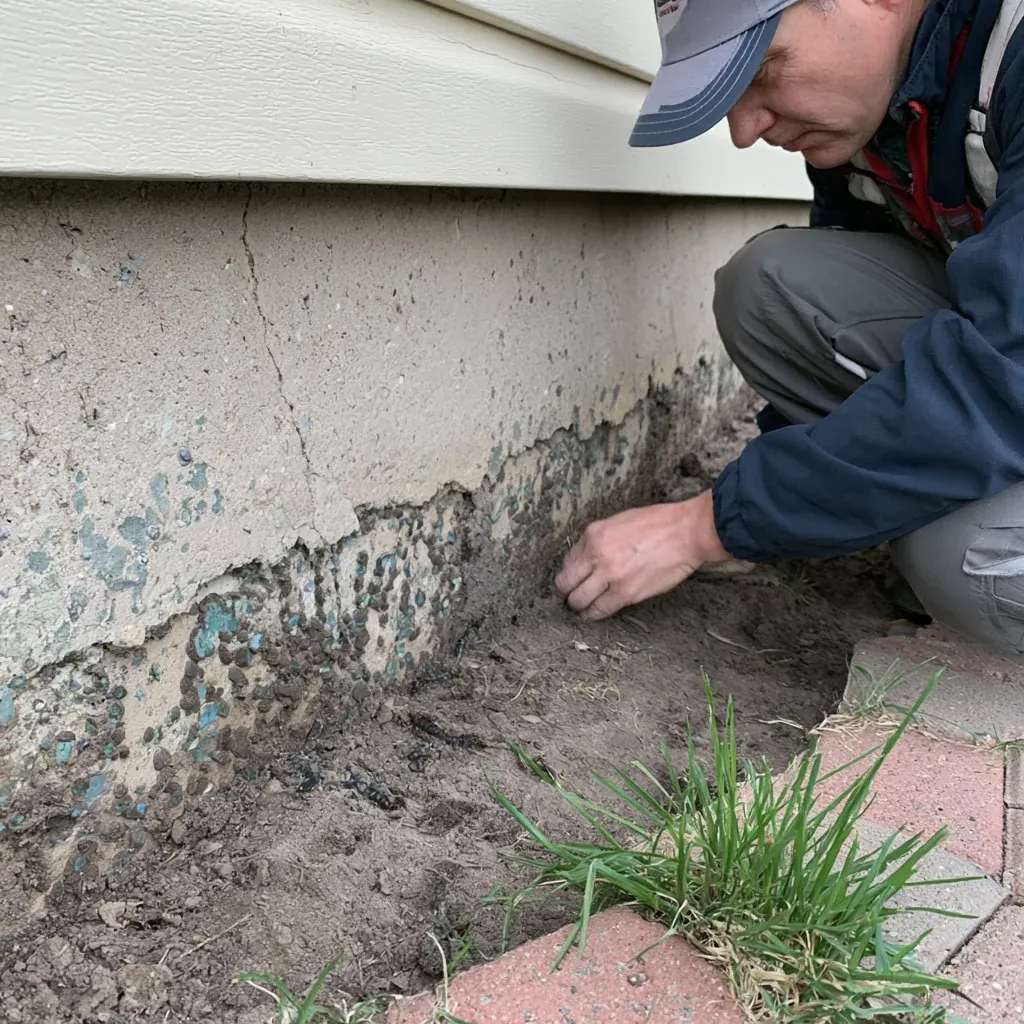
Then there is the local twist on cover. Sandhills soil drains fast at the surface and stays damp underneath, so mulch beds, boards on the ground, the space beneath a deck and the shaded side of a foundation hold a cool damp layer that both snakes and the small animals they hunt use through a hot summer. Remove that layer at the wall and the pressure drops noticeably without a single product being applied.
Fayetteville isn't the only place that damp margin shows up. Drive south toward St. Pauls, a separate place off I-95 at Exit 33, and the older lots along Broad Street carry the same shaded foundation lines and loose board piles that snakes and their prey favor. Farther out near Linden, about 18 miles northeast by way of US 401, properties backing onto the Little River hold that same cool, damp edge. Wherever that layer exists, the licensed pros we connect you with recommend clearing it first, before anyone tries to identify what's using it.
Snake sightings around Fayetteville almost always trace back to a specific edge rather than the whole yard, and that edge looks different depending on the neighborhood. Stacked firewood and stone borders near Hope Mills Lake hold mice and the snakes hunting them just as well as a collapsed shed does outside Eastover. Around Stedman, grass left tall against a fence line does the same job. The pros we connect you with check that edge before anyone tries to name what's living along it.
Sandy road shoulders carry the same pattern well outside Fayetteville. Along US 301 toward Wade, drainage ditches and culvert edges stay warm into the evening and give a snake an easy path between fields without ever crossing open ground. Farther out near Erwin, the banks along the Cape Fear River and the brush lining Juniper Creek offer the same cover with better hunting. None of that tells you the species from a distance, which is the whole reason the pros we connect you with ask for a photo before anyone gets close.
We deal with this across Fayetteville and the surrounding towns, Hope Mills, Spring Lake and Fort Bragg included.
Know what you are looking at
- Diet
- Rodents, insects, frogs, lizards, and other snakes for some species
- Why they are near the house
- Food and cover, in that order
- Identification
- Genuinely difficult from a photo or a description, and often got wrong
- Handling
- Never, regardless of what you think it is. Most bites happen during handling
- Where they turn up
- Crawl spaces, garages, sheds, woodpiles, mulch beds, under steps
- Active period
- Most visible from spring into fall, with movement peaking in warm weather and around the cooler hours of a hot day.
- Usual range
- an estimated $175–$525
What it gets mistaken for
One harmless species for another, and either for a venomous one. Color, pattern and head shape all vary within a species and change with age and lighting, so the shortcuts people repeat at each other are not reliable. Treat every snake as one you cannot identify, because the safe behavior is identical either way: keep your distance, keep pets and children back, and have somebody who does this for a living make the identification. If you want a photo, take it from well outside striking range or through a window.
How it gets dealt with properly
An animal inside a building gets removed by hand by somebody equipped for it, not driven out. Until they arrive, the useful steps are to close the interior door to the room, keep everyone including pets out, and keep the snake in view from a safe distance if you can do that without approaching. Do not attempt to catch it, and do not try to kill it, since a large share of bites happen while people are handling or attacking a snake rather than while walking past one.
Glue boards sold for snakes deserve a specific warning. They catch non-target animals, they are inhumane, and they leave you dealing with a live trapped snake at close range, which is the exact situation you were trying to avoid. Skip them.
The lasting work is habitat and food. Cut the grass short in a band around the building, get the woodpile up off the ground and away from the wall, thin dense ground cover near the foundation, clear the leaning sheet material and stacked pots, fix the drip that keeps one corner wet, and above all deal with the rodents, since removing the food is what makes a property less interesting. Then close the gaps: crawl space vent screens, the space under a garage door, and openings around pipe penetrations at ground level.
Plenty of snakes situations are done in one call. What decides it is whether the pressure came from an event or from conditions that are still there.
Working out which you need
| Your case |
What we would advise |
|---|
| One place, one cause, spotted early | A single visit |
| A pattern rather than an incident | Cover through the year |
| Anything set up inside the structure itself | Both: the animal and the hole |
Worth trying before you call
The yard work is where a homeowner makes the real difference and none of it requires going near an animal. Shorten the grass at the perimeter, get the wood and the clutter off the ground, thin the mulch back from the wall, screen the crawl space vents, and put a seal on the garage door. Running a rodent program at the same time is the single most effective thing on the list. What to leave alone is the snake. No handling, no shovels, no glue boards, and no relying on a phone photo to decide it is safe to pick up.
The health side, honestly
The point worth making is that the harmless species around a house are doing rodent control at no charge, and killing one changes the balance in a direction most homeowners would not choose. The risk from a snake goes up sharply when somebody handles it, reaches blindly into a woodpile or a shrub, or steps somewhere they cannot see, so the sensible precautions are gloves, a flashlight, looking before reaching, and keeping dogs on a leash along overgrown edges. If a bite happens, call emergency services immediately. That is the only advice offered here, and no other medical guidance should be taken from this page.
The money, plainly
Budget an estimated $175 to $525 for snakes locally, and treat that as a range to plan against rather than a price. The inspection is free and the scope goes on paper before any work happens. The pricing guide carries the full bands and what shifts them, and the work itself falls under Wildlife Removal.