Most mosquito complaints in this county are two separate problems sharing one name. There is the water where mosquitoes are produced, and there is the shade where the adults spend the day waiting for you. Deal with one and ignore the other and the yard stays unusable, which is why so many people end up deciding that nothing works around here.
Breeding water is smaller than you expect
It does not take a pond. A saucer under a flowerpot, a tarp with a sag in it, a corrugated downspout extension, a wheelbarrow, a blocked gutter, a wading pool, a tire, a boat cover, a birdbath nobody empties. The species that bother people around houses mostly come out of container water on the property rather than out of the creek at the bottom of the hill.
Roadside ditches count too, and there are plenty of them here. A ditch holding water for a week after a storm is a production site. One that drains in a day is much less of one.
Resting sites are where treatment goes
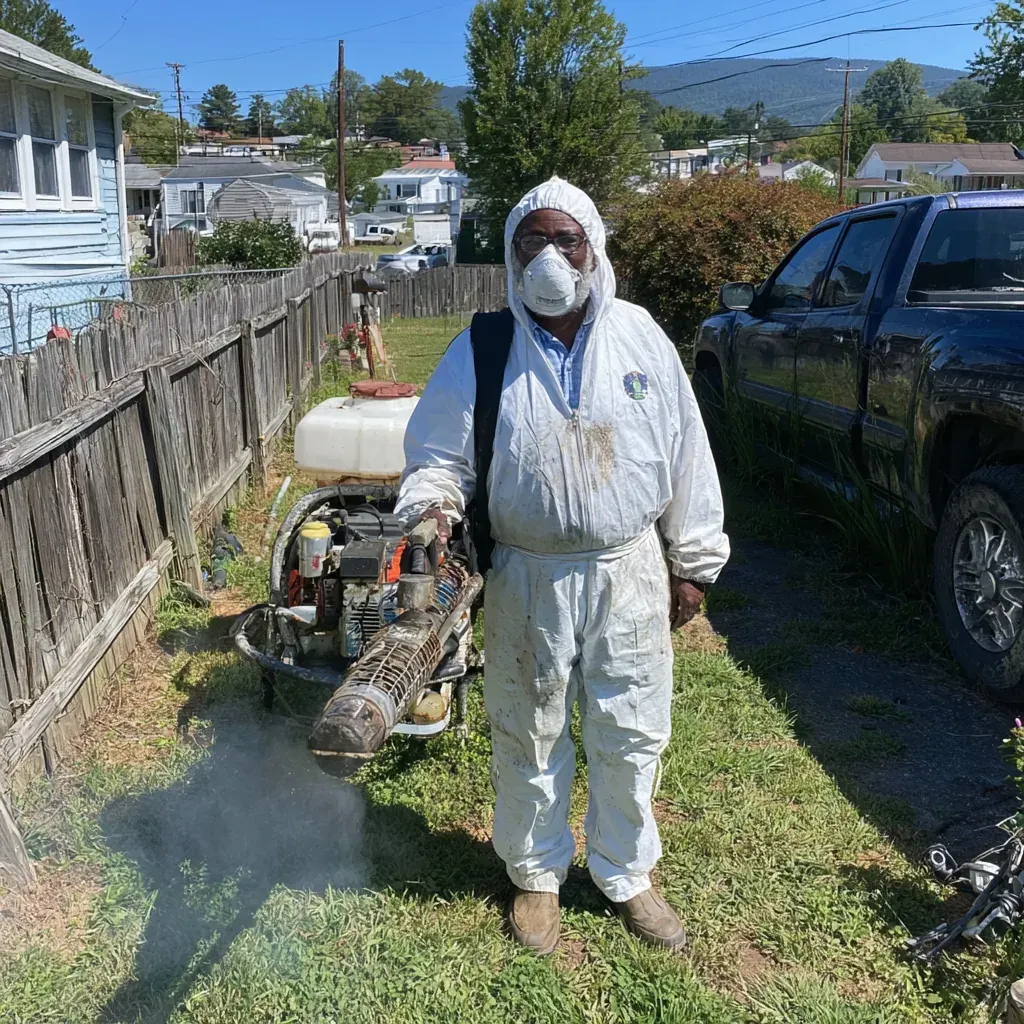
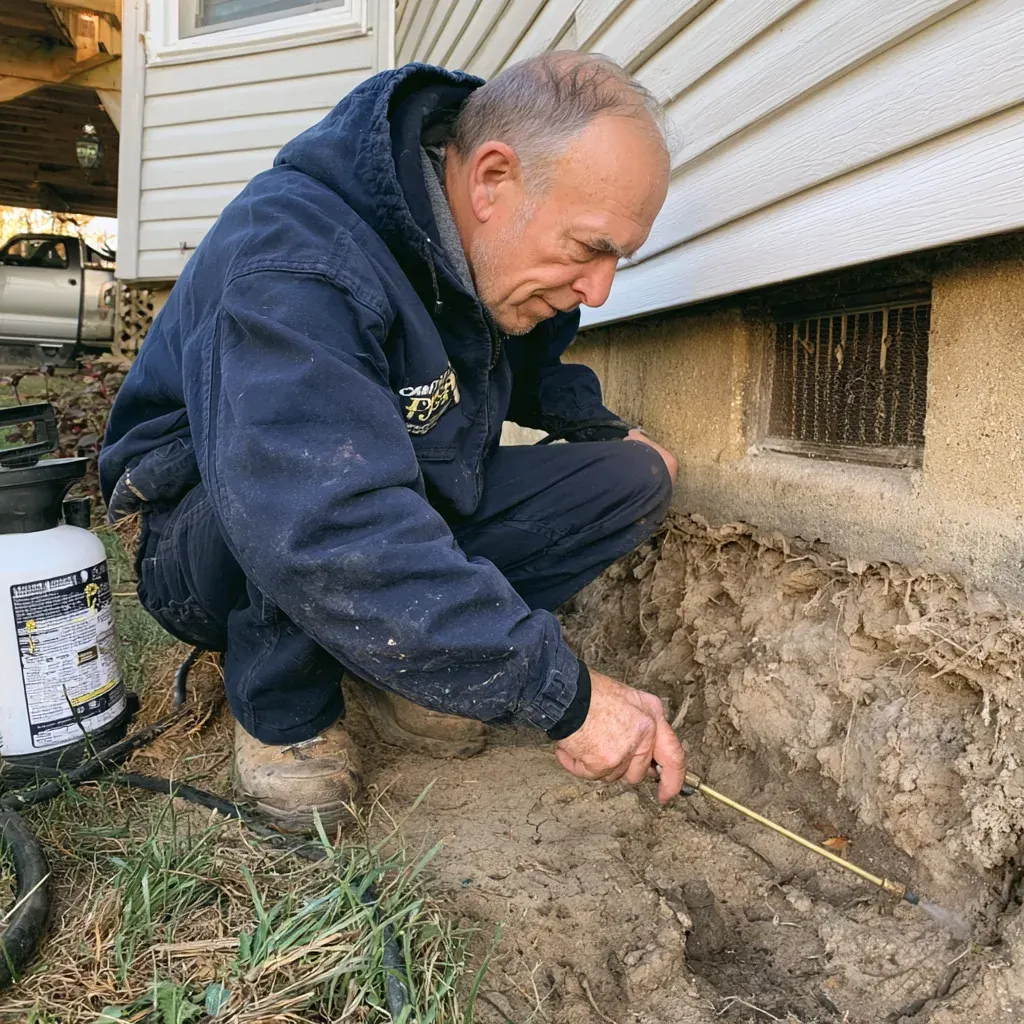
Adult mosquitoes spend the hot part of the day in cool, still, humid shade: the underside of shrub foliage, ivy on a fence, tall grass along a tree line, the dark side of a deck, a crawl space vent well. A barrier treatment targets exactly those surfaces, which is why a good technician spends more time in the shrub line than on the open lawn, and why cutting a hedge back can achieve as much as anything sprayed.
The weekly walk that costs nothing
Once a week in season, walk the property with a bucket and tip out everything holding water. Ten minutes. Flush the birdbath and refill it. Check the gutters after heavy rain, since a blocked section holds water for days. Straighten the tarp. Turn the wheelbarrow over. Look at the saucer under every pot on the porch.
This is unglamorous and it is the highest return work available, because it removes production instead of killing adults after the fact.
Creek bottoms, pine shade and the local pattern
Low ground near the Cape Fear, along Cross Creek, and around Little Rockfish Creek down toward Hope Mills stays damp and shaded, and neighborhoods backing onto that kind of ground carry more pressure than open subdivision lots. Longleaf pine shade and pine straw beds keep humidity up close to the house. None of that is a reason to give up, but it does set a realistic ceiling on what a yard program can achieve.
When the water is next door
This is the honest limit. If the source is a neighbor's neglected pool, a drainage easement or a ditch on the far side of a fence, treating your side reduces the adults resting on your property and does nothing about production. A yard program still helps, and it helps most if you also raise the drainage with whoever is responsible for that ditch. What nobody can sell you is a mosquito free yard beside standing water you do not control.
What a season of service looks like
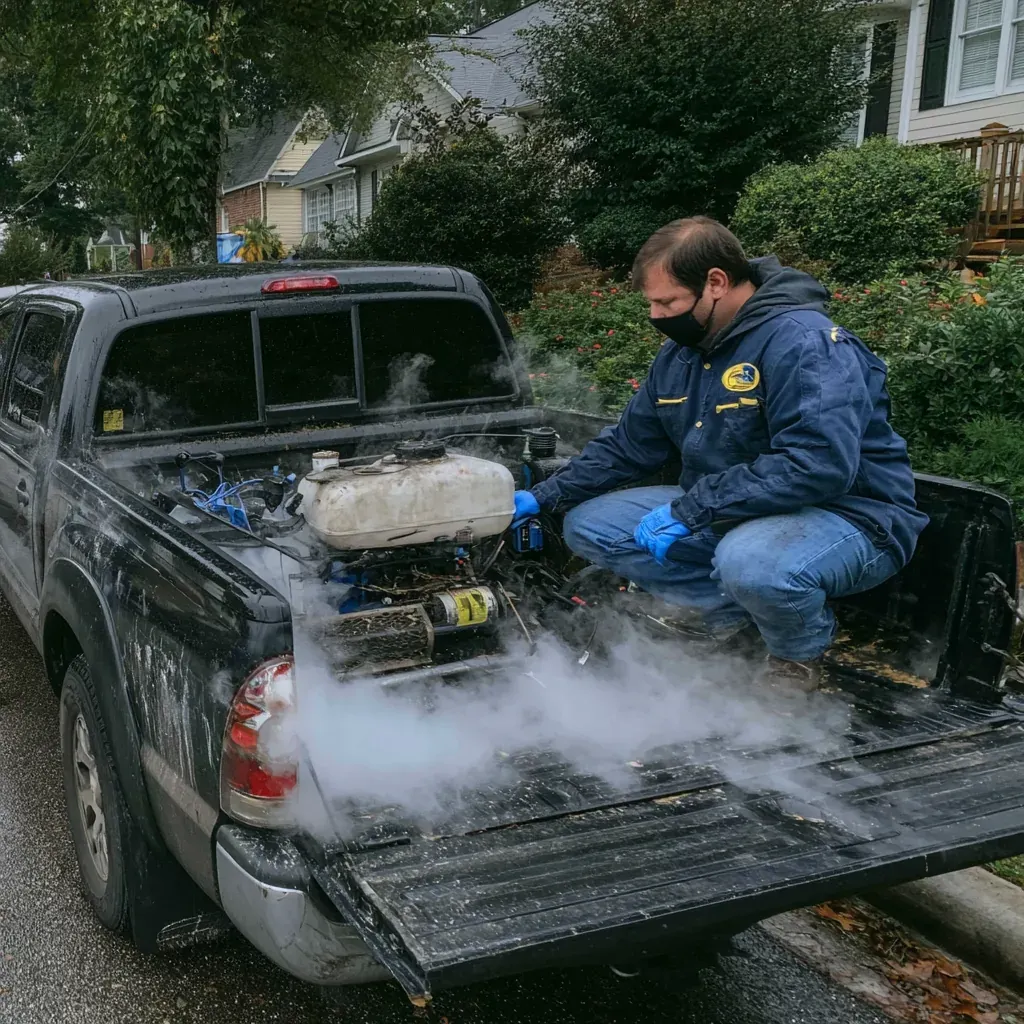
Barrier applications repeated through the warm months, with attention to the shrub line, the fence, the underside of the deck and any dense ground cover, plus larval treatment of water that cannot be drained. Yard work in this market often starts around an estimated $120 a visit for a typical lot, a guide figure and not a quote, and the number moves with how much shaded edge there is rather than with square footage alone.
Dealing with this in your home?
We offer free inspections and honest recommendations across Fayetteville and the surrounding towns. Call (855) 563-1479 and we’ll help you sort it out.