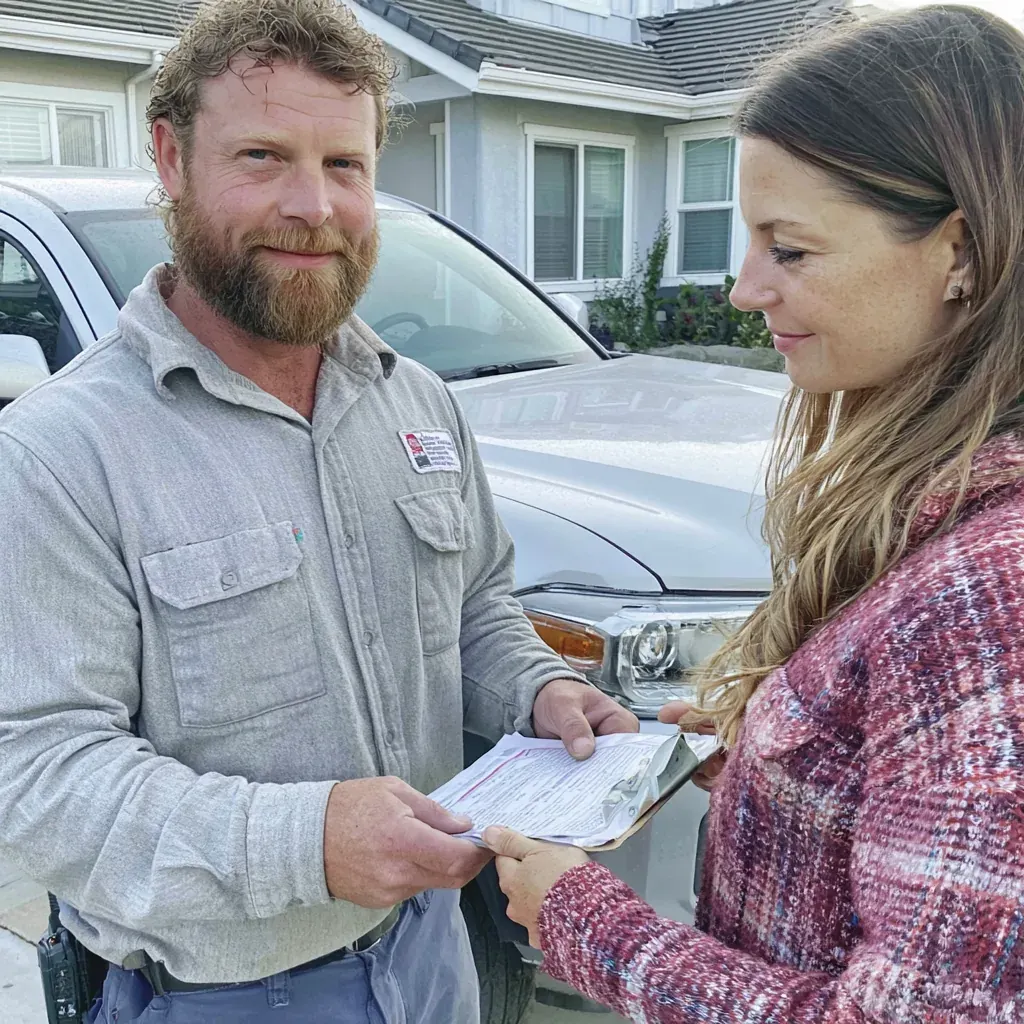
Print the proposal, sit down at the kitchen table with a pen, and read it against six things. North Carolina does not leave the contents of a termite agreement up to the company. Every contract or agreement for the control or prevention of wood-destroying organisms in this state has to be in writing, and it has to contain six specific items at minimum. If one of them is missing, you are not being difficult by asking for it. You are asking for the document the rules already require.
The six items, in one place
Here is the whole list. It fits on a napkin, which is why it is strange how few homeowners in Cumberland County have ever seen it.
- The license number and phase or phases of the licensee, plus the full name of the company.
- A foundation diagram of the home indicating whether the infestation is active or inactive.
- The location of visibly damaged timbers, marked on that same diagram.
- Whether re-inspections are going to be made, and the approximate interval between them.
- The conditions under which re-treatments will be made.
- The total price for the treatment service.
License number and phase, not just a logo
Structural pest control licenses in North Carolina are issued by phase, so a company can be licensed for one kind of work and not another. The number and the phase on the paper are how you check that the outfit standing in your yard is licensed for the work being sold, rather than for something next to it. Certified applicators and licensees are certified in five-year periods, and the structural pest control year itself runs from 1 July to 30 June, so a credential has a life and can lapse.
If you want to verify what you are reading, the NCDA&CS Structural Pest Control Division answers the phone at 984-236-4625. Nobody who is properly licensed minds that call being made.
The foundation diagram is the part people skip
A diagram sounds like paperwork. It is closer to a map of the argument. Somebody has to walk the outside of the house, go under the floor if there is a crawl space, and draw the footprint of the structure with the findings placed on it. That drawing is also why the rules require the technician to measure and graph or sketch the structure when evidence is found or a proposal is issued, because the application rate and the price both depend on real dimensions rather than a guess from the driveway.
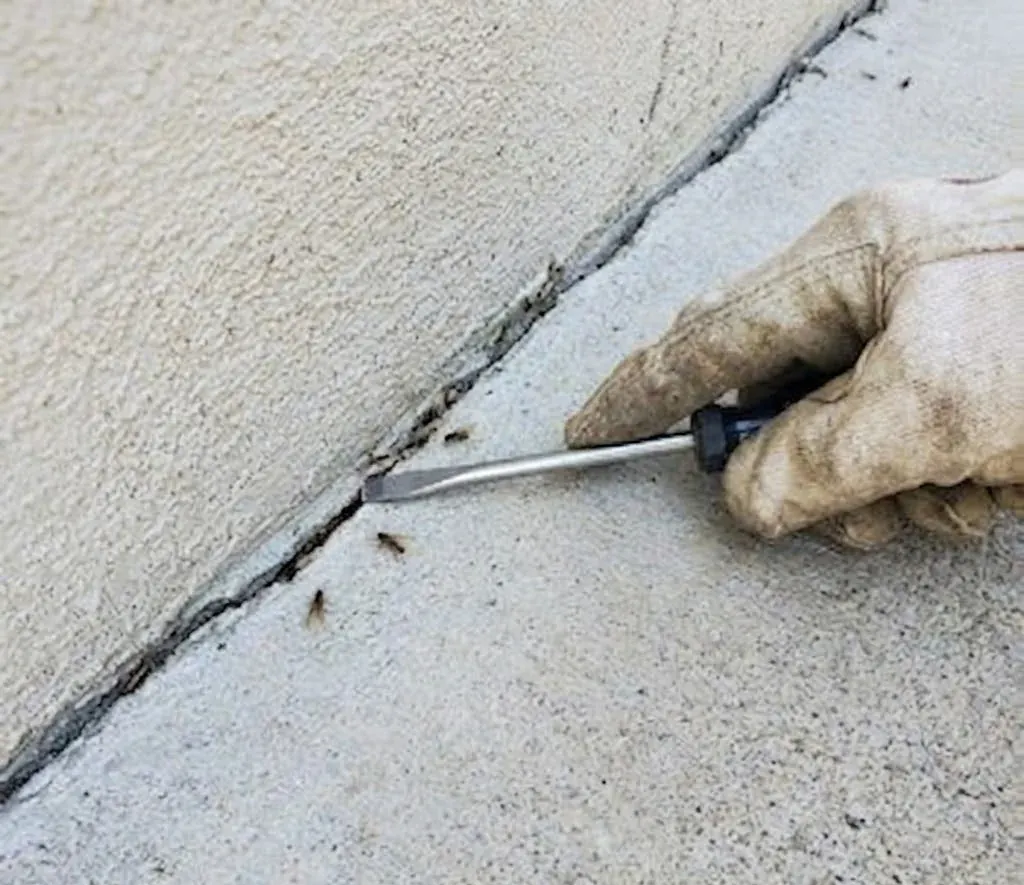
On a slab home the diagram should be doing work around the bath trap, the plumbing penetrations, and any joint where the slab has shrunk back from the foundation wall. Slab on grade is one of the most common construction types in this state, and a diagram that treats a slab home as a featureless rectangle has not looked at the places termites actually use.
Active or inactive is not a small distinction
The diagram has to say whether what was found is active or inactive. Past evidence on a house that was already treated years ago is a different situation from a live colony working a joist right now, and the price, the urgency and the follow-up should all read differently. If the paperwork is vague on this point, ask which one it is and ask for the answer to be written down. A verbal reassurance is not part of the agreement.
Re-inspections: whether, and how often
The agreement has to say whether re-inspections happen and roughly how often. Whether is a real option, note. An agreement can honestly say there are none, and some do. What it cannot do is stay silent while a salesperson implies somebody will be back every year. Annual inspection is what the state recommends for prevention generally, so if you are paying for continuing coverage, a yearly look at the structure is a fair thing to expect in writing.
Conditions for re-treatment, and the 30 day clock
This is the item that decides what your money actually bought. Most agreements in the trade are re-treatment only, which means the company will treat again if termites turn up during the agreement period, with no obligation to repair anything that got eaten. Re-treatment plus damage repair covers correction up to a stated amount, not every company offers it, and the structure usually has to meet certain criteria to qualify. An agreement can also carry no warranty at all, and where that is the case the absence has to be clearly indicated.
There is a clock attached. Under the rules the re-treatment obligation runs within 30 days of written notice. Written notice is the operative phrase. A phone call in July that nobody logged is not the same as a dated letter or email, so put it in writing the day you find something and keep your copy.
One total price
The total price for the treatment service belongs on the agreement. Not a per-linear-foot figure you are left to multiply out, and not a starting-at number. Ranges are normal in advertising, and you will see termite work quoted locally in wide bands, but the document you sign should end in a figure you have agreed to. If there are renewal charges after the first year, ask what they are and ask where they are written.
Take it to the kitchen table
The state's own advice on termites is calmer than most sales conversations: do not panic, and do not be rushed. Termites will not cause significant structural damage in a matter of weeks, and picking a company you trust matters more than signing tonight. So take the proposal inside, check it against the six items, and mark up anything that is not there.
When you are ready to compare, the licensed local pros we connect you with work across Fayetteville, Hope Mills, Spring Lake and the rest of Cumberland County, and they will put the diagram and the terms in front of you before anything gets treated. Reading the paperwork first is not a delay. It is the part that decides what you own afterward.
Dealing with this in your home?
We offer free inspections and honest recommendations across Fayetteville and the surrounding towns. Call (855) 563-1479 and we’ll help you sort it out.